40 Days of Prayer Devotionals – Day 1

Devotional Day 1

Day 1 – The Heart of Moses (Deuteronomy 9)

Deuteronomy 9 puts Moses’ heart front and center. Moses recounts Israel’s history of unfaithfulness despite God’s faithfulness to His covenant promises. Starting with the Golden Calf and continuing with their failure to take the Promised Land, Moses confronts Israel with their idolatry, unfaithfulness, and lack of fear of and trust in God.

The Golden Calf

If you remember, the Lord redeemed Israel from the hand of the Egyptians in the Exodus. A clear indication that He is an all-powerful God worthy to be worshipped. Instead of recognizing God’s power and worshipping the One True God, Israel fashioned a Golden Calf and bowed down to it.

The Failure to Take the Promised Land

If confronting them with their idolatry was not enough, Moses also reminds Israel of their failure to trust and fear God. God had promised them and their forefathers – Abraham, Isaac, and Jacob – a land of their own possession. At the site of it’s inhabitants, Israel shrunk back. Instead of trusting God to provide military victory, they feared the people.

Forty Days of Prayer

After each failure, Moses prostrated himself 40 days before the Lord for the people. Why intercede for a rebellious people, asking the Lord to preserve them?

Moses did so because he loved and cared for them. He desired they experience the Lord’s blessings. As well as he was zealous for God’s glory. For those reasons, Moses twice spent forty days and nights in prayer for the nation of Israel.

The Challenge

Shouldn’t we care for and love those in our nation? Shouldn’t that love drive us to our knees praying the Lord would change their hearts? We think so. For that reason, we want to challenge you to intercede for your nation, your state, your city, your community, your neighbors, your church family and your immediate family. Won’t you join us as we first ask God to change our hearts to be more like Moses’ and then by interceding in prayer for those around us from April 1st – May 10th?

Resource

If you would like more information about 40 Days of Prayer, including how you can download a PDF copy of the information and link with us on social media, visit our website: sycamoredecatur.com/40DaysofPrayer

What Do You Treasure?

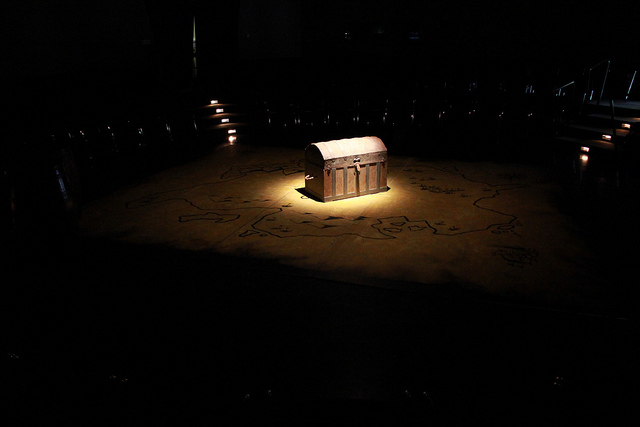
Treasure Chest

What do you treasure? Is it earthly treasure or heavenly treasure? We would all like to think that we treasure the things of heaven, but that is not always true. Since that is the case, Jesus commands us not to store up earthly treasure. Instead we are to store up heavenly treasure.

In order to work against storing up earthly treasure, we need to know what we might have a tendency to treasure. I believe we can figure that out by thinking through a few questions.

What Do You Have Tendency to Treasure?

(1) What are the things you protect the most?

  • What do you keep behind lock and key at your house?
  • What do you rarely use for fear it might get messed up?

(2) What are the things you put before Godly activity?

What I mean by godly activity is: Reading your Bible, Prayer, Worship, and Christian fellowship

  • What takes the place of your Bible reading or prayer?
  • What is it that you are willing to do instead of coming to the worship service?
  • What is it that keeps you from times of fellowship with other brothers and sisters in Christ throughout the week?

(3) What do you pour the most energy and effort into?

  • Your house or yard?
  • A car you are fixing up?
  • Finding the best deal?
  • Things you create such as art, pictures, books, or blogs?

(4) What are the things that tug at your mind or emotions?

  • What are you constantly thinking about?
  • Planning to do?
  • Day-dreaming about?

Conclusion

Answering these questions honestly can help you determine what you have a tendency to treasure. Figuring that out is important so that you can guard yourself from storing up earthly treasures.

Question for Reflection

  1. Would you be willing to share what you have a tendency to treasure?

Resource

Image

Why Are We Not Doers of the Word?

The Bible

In his epistle, James challenges us to be doers of the Word; to be people who live according to God’s commands (James 1:19-26).

After teaching through this section of James, I have been thinking, if God expects us to live according to His Word, why do some disregard this command? I thought of three responses, but I am sure there are more, so let me know what you think.

Why We Are Not Doers of the Word

(1) We are ignorant of what God’s Word says on a particular issue.

This can be corrected by studying God’s Word. To get the most out of God’s Word we must saturate ourselves in it, which we can do by:

  1. Reading it
  2. Studying it
  3. Singing it
  4. Hearing it preached

In order to learn as much as possible about God’s Word, it is important Christians be:

  1. Apart of a church.
  2. Be committed to attending that church.
  3. Get together apart from church times to study Scripture.
  4. Center their conversations around what God is teaching them through their study of God’s Word.

(2) We know the truth, but we are rebelling against God’s Word.

This can be corrected through accountability. It is the job of church members to hold each other accountable, and speak into each others’ lives when they see blatant sin.

Life changing accountability requires:

  1. Deep community.
  2. Commitment to one another.
  3. A strong desire to see God glorified.

Without deep community, commitment, and a strong desire to see God glorified, accountability will not take place.

(3) We are unbelievers who do not see a necessity to live out God’s Word.

This can only be corrected through salvation. Salvation comes through evangelism and the Holy Spirit working on our hearts.

What Are Your Thoughts?

These are three reasons I came up with regarding why we do not live according to God’s commands. After thinking through them and the questions below, let me know your thoughts.

Questions for Reflection

  1. How do you saturate yourself in God’s Word?
  2. How often is God’s Word apart of your everyday conversations?
  3. How much more do you think God would be glorified and your church act as a witness to the community, if you saw accountability as a necessary part of your church body?
  4. How are you personally attempting to reach people with the gospel in your own circle of influence?

Resource

Image

Pray, Love, and Serve: Moses’ Example

Pray Love Serve Cross

How do you react when those in your church, family, circle of friends, or community act contrary to God’s Word? Do you throw up your hands and give up? Do you brow beat them? Or do you lovingly correct, pray for, and serve them?

Last night at Bible Study, we briefly discussed Deuteronomy 9. It is Moses’ reminder to the people why God is giving them the Promised Land. He wants to make it clear it is not because of their righteousness. Rather it is because the Lord wishes to drive the wickedness out of the land and honor His promise to their fathers – Abraham, Isaac, and Jacob (4-6). To show the stubbornness of the people, Moses recounts the story of the Golden Calf and their failure to take the land.

The Golden Calf

After spending forty days and nights on the mountain with God receiving the Ten Commandments, Moses comes down to find the people worshipping an idol – a Golden Calf. The same people who just witnessed the great power of God in the Exodus. The same people the Lord just redeemed as His own possession. The same people who watched Moses ascend to the top of the mountain to commune with God. In just forty short days and nights, they forgot the Lord and turned to worship an idol.

The Failure to Take the Land

The second story Moses recounts is their failure to trust the Lord to give them the land. If you remember, they sent spies into the land. After gathering the requested items, they returned with a daunting report. Those in the land are giants and too numerous for us to overtake. Again, they forgot the power of their God, even as He was providing for them in the wilderness and telling them He would give them the land.

Moses’ Example

Talk about being frustrated. I am sure Moses was livid, in a righteous way of course. His actions though are surprising and act as an example for us. Yes, Moses corrected the people, but he also interceded for them and continued to serve them.

Why would he do a thing like that? Why intercede for them asking the Lord to preserve them when they were blatantly rebellious?

He did so because he loved and cared for them. Even though they were rebellious, he desired they experience the blessings of the Lord, worship the Lord, and glorify the Lord. For those reasons, Moses twice spent forty days and nights prostrate before the Lord in prayer, continually corrected and served them.

The Challenge

Do you love those in your church, family, circle of friends, or community enough to seek their welfare? Do you desire to reach out to them with the gospel? Do you desire to pray the Lord would not destroy them, but change their hearts and make them His? Do you serve them in a way that shows the love of Jesus? I know those are tough questions, but they are crucial questions.

If we find we do not love those around us in a way that causes us to reach out to them with the gospel, pray for them, and serve them, we need to get on our knees and ask that God would change our hearts.

Moses did not manufacture his love for the people. God changed his heart as he communed with Him. Likewise, as we commune with God through prayer and Bible study, He will change our heart.

So then, if you are having trouble loving, praying for, and serving those in your community, open His Word and seek His face in prayer, asking that He would change your heart.

Question for Reflection

  1. How could you motivate those in your church to reach out to, serve, and pray for those in your community?

Resource

Image

Where Do You Find Your Identity?

Who Do You Think You Are?

Recently, I have been reading Driscoll’s new book: Who Do You Think You Are? His book deals with identity. Specifically, where we should find our identity.

Reading his book over the past few days has me asking the question: Who do I think I am? I want to put that question to you as well: Who do you think you are? In other words, where do you find your identity? Do you find it in your possessions? Do you find it in your job? Do you find it in others? Or do you find it someone else?

When someone asks you who are you, what do you say? Do you respond by saying, I am a farmer, a business man, a missionary, a pastor, an addict, an alcoholic, an abused person, or an angry person?

It is common, we respond in these ways, but should we, or should we find our identity in something else? In order to answer this question, we must start at the beginning, the beginning of the Bible and time.

The Beginning

Genesis is the first book of the Bible. It starts with the creation account. After God created everything else, He creates man. In Genesis 1:26-27 God says,

“Let us make man in our image, after our likeness. And let them have dominion over the fish of the sea and over the birds of the heavens and over the livestock and over all the earth and over every creeping thing that creeps on the earth.” So God created man in his own image, in the image of God he created him; male and female he created them.

Notice God makes man in His image, which means we are God’s image bearer. No one else bears God’s image. Humans are the only ones’ created in the Image of God.

As God’s image bearers, we are created to reflect His goodness and character to the world for His glory. When we love others, we reflect God’s love to the world for His glory. When we forgive others, we reflect God’s forgiveness to the world for His glory. When we are merciful, we reflect god’s mercy to the world for His glory. And so on and so forth.

Genesis 3

As we move on through Genesis, we come across the temptation of man in Genesis 3. The entire chapter focuses on the fall. For the sake of time, let’s just look at verses 1-7.

“Now the serpent was more crafty than any other beast of the field that the LORD God had made. He said to the woman, “Did God actually say, ‘You shall not eat of any tree in the garden’?” And the woman said to the serpent, “We may eat of the fruit of the trees in the garden, but God said, ‘You shall not eat of the fruit of the tree that is in the midst of the garden, neither shall you touch it, lest you die.’ ” But the serpent said to the woman, “You will not surely die. For God knows that when you eat of it your eyes will be opened, and you will be like God, knowing good and evil.” So when the woman saw that the tree was good for food, and that it was a delight to the eyes, and that the tree was to be desired to make one wise, she took of its fruit and ate, and she also gave some to her husband who was with her, and he ate. Then the eyes of both were opened, and they knew that they were naked. And they sewed fig leaves together and made themselves loincloths.”

Satan told Adam and Eve they would “be like God.” Adam and Eve believed him and ate the fruit. When they did, they forgot they were already like God; they forgot they had been made in His image. Instead of recognizing they were already like God, they sought to create their own identity apart from God by eating the fruit God had forbidden.

Just like Adam and Eve faced an identity crisis – they forgot who they were – we wrestle with our identity as well. In fact, man has been wrestling with their identity ever since our first parents sought their identity outside of God in the garden.

Problem with Seeking Our Identity Outside of God

What is the problem with seeking our identity outside of God? When we seek our identity outside of God, we go from a God given identity to a Man sought identity. Instead of becoming like God, we become like our idol – the thing that represents God to us, but is not.

When we seek identity in something other than God – Job, Hobbies, Nationality, Cultural Tastes, Status – we deify that something. It becomes our god. It is what we live for and seek to glorify. Our identity then becomes rooted in our idolatry, a false god instead of the one true God.

This is a problem because we are not created to image our idols. We are created to image God for His glory. When we seek our identity in an idol, we take away from God’s glory. As well as we don’t accomplish our purpose in life – to glorify God.

Questions for Reflection

  1. Do you find your identity in God?
  2. Do you seek your identity in something other than God?
  3. When others ask you who you are, how do you respond? Do you say I am a Christian or something else?

Resources

Post adapted from: Who do you think you are? Ch. 1

Image

What is Your Purpose in Life?

Got Purpose

Why did God created you? In other words, what is your purpose in life? I know I think about the reason God created me. I am sure you do as well. How do we answer the question?

For What Purpose Did God Create Us?

Glorifying God and enjoying Him forever is how I answer the question.

What does it mean to glorify God?

It means: We worship Him; we praise Him; we lift Him up; we honor Him; we adore Him; we revere Him. These are all synonyms that help us understand what it means to glorify God.

If our purpose is to glorify God, that means our purpose is not:

  • To get a great job.
  • To have a great family.
  • To live in a great house.
  • To make a lot of money.
  • To live a comfortable life.
  • To be secure.
  • To have everything go just our way.
  • To have others praise us.
  • To have others lift us up.
  • To have others worship us.

Some of these are good – Job, family, house – and if God so blesses us with them, we should be thankful. These things, however, are not our main purpose in life. Our purpose is to glorify God and enjoy Him forever.

Now that is a massive claim, so where do I get this from?

The Biblical Evidence

The Biblical Evidence for Glorifying God

Let’s start with Psalms 86:8-13. There we learn:

  • There are no other gods like Him, nor can they do works like His (8).
  • He is the Creator and Sustainer of the universe (9).
  • His ways are truth (11).
  • He is the one who loves us and saves us (13).

Since the Christian God is unique, our Creator and Sustainer, His ways are always true, and He loves and saves us, we are to glorify and worship Him.

Another Scripture that helps us understand our purpose in life is Isaiah 43:7. It reads,

“everyone who is called by my name, whom I created for my glory, whom I formed and made.””

Isaiah teaches us that everyone is created by God and they are created for His glory.

Furthermore, 1 Corinthians 6:20 tells us that we are not our own. We were bought with a price. The price we were bought with was not silver or gold but the blood of Jesus. For that reason, we should follow God’s commands, glorifying Him with our actions.

Finally, 1 Corinthians 10:31 exhorts us to do everything we do to the glory of God. Whether we are eating, drinking, having fun, working, or whatever else we do, we are to do it for God’s glory.

The Biblical Evidence for Enjoying God Forever

Our purpose in life is also to enjoy God forever. I get this from:

Psalms 16:9 & 11 which tells us the Lord is the One who gives us life. As well as He is the one who provides us with joy, with pleasures forevermore.

“Therefore my heart is glad, and my whole being rejoices; my flesh also dwells secure…You make known to me the path of life; in your presence there is fullness of joy; at your right hand are pleasures forevermore.”

Revelation 21:3-4 is another Scripture that tells us we are to enjoy God forever. There we learn the Lord will wipe away every tear from our eyes. Death will be no more, along with no more mourning, crying, or pain. Instead, we will live in a New Heaven and New Earth, enjoying God and His creation forever.

“And I heard a loud voice from the throne saying, “Behold, the dwelling place of God is with man. He will dwell with them, and they will be his people, and God himself will be with them as their God. He will wipe away every tear from their eyes, and death shall be no more, neither shall there be mourning, nor crying, nor pain anymore, for the former things have passed away.”” (Rev. 21:3-4)

What the Evidence is Telling Us

From these Scriptures, we see that our purpose in this life is to glorify God and enjoy Him forever, which means it is not all about us, but it is all about Him. Finding out this life is all about God can be a tough pill to swallow, especially since our natural desire is to glorify and promote ourselves, in order to seek self-worship.

Even though God’s Word goes against our natural desires, it is God’s Word. It never lies. It is always true. If His Word is inerrant, we must trust it, believe it, and submit to it.

How Can We Glorify Him?

With our newly discovered purpose, we need to know how we can glorify God. Let me offer a few ways:

  • By praising Him.
  • By worshipping Him.
  • By living according to His commandments.
  • By calling others to Christ.
  • By enjoying Him and Him alone, being completely content with Him.

Diagnostic Questions & Challenge

Before we end, let me provide a few diagnostic questions for you to consider.

  1. Do you seek to glorify God in all that you do?
  2. Do you ask whether your actions are glorifying God before you do them?
  3. Do you search Scripture to see whether or not you are living in accordance with God’s Word?
  4. Do you enjoy God and the things of God?
  5. Do you enjoy reading His Word?
  6. Do you enjoy fellowshipping with His people?
  7. Do you enjoy hearing God’s Word preached?
  8. Do you enjoy singing praises to God?
  9. Do you enjoy telling other about God?

If you enjoy and seek to glorify God, you should be able to answer these questions in the positive.

I am afraid, however, there are many who call themselves Christians who can’t answer these questions positively. In other words, they don’t seek to glorify God, nor do they enjoy Him or His people. I believe this is especially true in the Bible Belt where people are quick to call Jesus their Savior, but fellowshipping with His people, reading His Word, and submitting to His commands are absent.

If we are truly Christians, we will live to glorify God and we will enjoy God and the things of God. With that in mind, let’s glorify God and enjoy Him forever.

Resource

Westminister Shorter Catechism Question 1

Image