Head or Heart Knowledge?

I recently went to The Gospel Coalition Conference in Chicago, where I attended a dinner, and received 19 free books. Yeah, I know, it was pretty awesome! Five of the books happened to be the Essential Edwards Collection by Doug Sweeney and Owen Strachan. This set is an excellent look into the life and writings of Jonathan Edwards. You can check them out here.

In the first book, Lover of God, this quote appears by Jonathan Edwards:

“He that is spiritually enlightened truly apprehends and sees it, or has a sense of it. He does not merely rationally believe that God is glorious, but he has a sense of the gloriousness of God in his heart. There is not only a rational belief that God is holy…but there is a sense of the loveliness of God’s holiness. There is not only a speculatively judging that God is gracious, but a sense how amiable God is upon that account, or a sense of the beauty of this divine attribute (Works 17, 413)” (Essential Edwards Collection, 34).

Explanation

Edwards is distinguishing between an intellectual knowledge and a heart knowledge of God. He believes intellectual knowledge of God without heart knowledge is no real knowledge at all.

You see, you can define premillennialism, postmillennialism, and amillennialism better than anyone in the field; beat everyone in the church in a Bible drill, including the pastor himself; have the entire Pentateuch memorized in Hebrew, and still not have a personal relationship with the Lord.

Knowing the Lord should involve more than our mind. Knowing the Lord should involve our entire being. It should involve our mind, emotions, and soul. We should truly delight in God, knowing that He is our Savior. Just the thought of His Son willingly enduring the cross for our sins, should send us to our knees to praise Him. Pondering His attributes should cause us to fear Him, while at the same time bringing sheer joy to our souls. We should take delight in reading His word and seeking His face in prayer because He is our Lord and Savior, the Creator of the universe, and the One in whom we find our strength and rest.

Let’s Get Real

If you have never felt a sense of pure joy at the thought of Him saving you from the pits of hell, praised Him for His divine attributes, or even thanked Him for the roof over your head, the job you have, the money in the bank, and the food you eat, then you may need to rethink your relationship with the Lord.

Challenge

I invite you, as we speak, to take an honest look at your relationship with the Lord. That is what Jonathan Edwards did, and His life changed for all eternity.

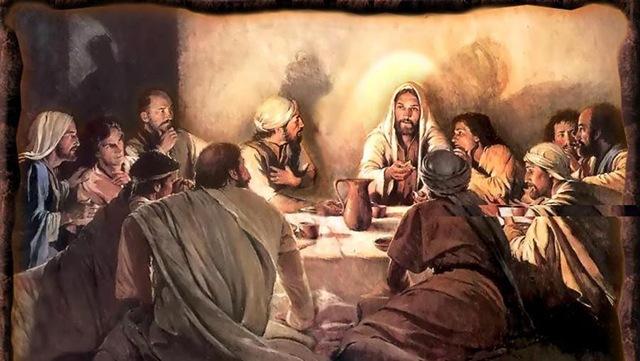
Maundy Thursday

Today is Maundy Thursday. Have you ever wondered what that means? Or what is significant about this day?

What is Maundy Thursday?

Maundy Thursday occurs the Thursday before Easter and commemorates the Last Supper of our Lord. On the day before Jesus’ crucifixion, Jesus and the Disciples met in the upper room to take the Last Supper, which occurred on the day of Unleavened Bread (Luke 22:7). The day when the Passover lamb had to be sacrificed (Luke 22:7).

The Passover

If you remember, the Passover was instituted during the Exodus event (Ex 12:14). Before God brought Israel out of Egypt, a final plague was delivered on the Egyptians. God declared that every firstborn in the land would be killed unless the blood of a lamb was smeared on the doorposts and lintel of their homes. As the Lord passed through the land, He would Passover the houses with the blood, while executing judgment on those who did not have the blood on the doorposts and lintel.

That night, at twilight, a lamb was to be slain and its blood spread on the doorposts and lintels, while its body was roasted to eat. As the Israelites waited, they were to eat the roasted lamb, with bitter herbs and unleavened bread with their belt fastened, sandals on their feet, and their staff in hand. In other words, they were to be ready to leave as they watched and waited on the deliverance of the Lord.

That night, the Lord passed through the land killing the firstborn of all who did not have the blood smeared on their doorposts and lintel. After which, the Exodus of Israel from Egypt occurred. At that time, the Israelites were delivered from the bondage and slavery of Egypt and set free to worship their God.

Jesus Re-institutes the Passover

In order to commemorate the Exodus, the feast of Unleavened Bread was instituted. It was this feast that the disciples and Jesus were celebrating. But something new was happening during the celebration. Jesus takes the wine and says that it represents His blood (Luke 22:20). He takes the bread and says it represents His body (Luke 22:19). At this time, Jesus was re-instituting the Passover Meal around Himself. In other words, He was telling the disciples that He would be the one to deliver His people from the slavery and bondage of sin, through a New Exodus (Eze 20:32-38; 37:15-28; Jer 16:14-15; Isa 40:1-13; 62:10-12). Thus, instituting a new covenant with His blood that would provide all who believed in Him with a new heart (Jer 31:31).

Taking the Lord’s Supper

When we take the Lord’s Supper tonight, in celebration of Maundy Thursday, we should take it in a state of celebration for Jesus’ work on the cross because it is His sacrifice that delivers us from the bondage of sin.

We also should take the Lord’s Supper with the same expectation and hope as the Israelites in Egypt. They were in a state of expectation, waiting and watching for the Lord’s deliverance as they ate their meal. We too, as we take the Supper, must wait in a state of expectation for our Lord’s return. We too must watch and be ready for Him to lead us in a final Exodus.

God’s Glory in Salvation

Recently, I have been working to prepare a sermon on Ephesians 1:3-14. If you don’t have your Bible’s handy, you can read the text here. The main idea of the sermon is that God is glorified in His remarkable plan of redemption, by electing a people for Himself before the foundations of the world, saving them through the redeeming sacrifice of Jesus Christ, and sealing them through the work of the Holy Spirit.

God is Glorified in Election

God is glorified, firstly, because He chose and predestined a people for Himself before the foundations of the world. Election is not a popular topic; especially, in our consumer driven individualistic society. We are taught to make our own decisions, and we believe this right extends to our salvation as well. However, Ephesians 1 tells us that in God’s sovereign plan He has predestined those who would join His church before the foundations of the world.

Application

This means that we can rest assured that our work in evangelism is not in vain, nor do we have to depend on our own power to bring others to a saving relationship with Jesus Christ. God has elected a people for Himself, and He will bring those people to salvation for His glory.

Our job is to be instruments in His sovereign plan by obeying His command to proclaim His gospel to the ends of the earth (Matt. 28)

God is Glorified in Redemption

God is glorified, secondly, in the redemption of the elect through His Son, Jesus Christ. Jesus died on the cross, to provide a way for man to once again have a relationship with God. If we believe that Christ has the power to save us from eternal destruction through His death on the cross, then we experience a repaired and restored relationship with God. Here we see that salvation only comes through faith in Jesus’ death, burial, and resurrection.

Application

This means that we cannot work for our salvation. There is nothing we can do outside of having faith in Jesus Christ. And our last point makes it clear that God provides us with that faith through His electing grace for His glory.

God is Glorified in Sealing

God is glorified, thirdly, in the sealing of His church by the power of the Holy Spirit. Those God has elected to salvation are saved through the blood of His Son Jesus Christ, and are kept in Christ until their death by the work of the Holy Spirit.

Application

This means that we do not have to work to gain salvation, nor work to keep our salvation. We are secure in Christ because of the sealing power of the Holy Spirit.

However, this does not mean that walking the church aisle and praying a prayer with the pastor ten years ago precludes you from living a life pleasing to God. It is still necessary to reflect Christ in our thoughts and actions. What makes a Christlike life possible is the sanctifying power of the Holy Spirit dwelling in us and working to remove the idols of our hearts.

Come As You Are!

In order to attain salvation, we do not have to clean ourselves up. Salvation is not like trading in your old car for a new one. You don’t have to spend time fixing yourself up in order to gain a higher trade in value. We can come to God just as we are, and expect to get the highest price we would ever get for a beat up old car, eternal life and a relationship with the God of the universe.

Charge

If you are trying to get your life right before you approach God, don’t. Come just as you are. Accept the call of God on your life, believe in His Son for salvation, and you will be saved. To God be the Glory!

Conviction: The incredible true story

Today in class my teacher presented us with a list of four reasons we as pastors (and everyone else) should be sharing the gospel. His list was as follows:

  1. Obedience to Scripture – “Evangelism for the pastor is not a gift, nor is it an option. It is a command; one he should be careful to obey!” (MacArthur Pastoral Ministry, 253)
  2. Love for Christ – We talk about the things that we love the most. If Jesus is not much on my lips, he is not much on my heart.
  3. Love for mankind – If we don’t share the gospel, we are saying that we don’t care about the eternal salvation of the lost. In word we say we love mankind, but functionally our actions do not show it.
  4. Personal Example – As ministers (this includes family leaders), we are called to set the example for the rest of the body. If we are not evangelizing, we cannot expect our congregates (or family) to evangelize either.

After pondering these points, I found myself convicted. I claim to love Christ, but is He the first topic of discussion when it comes to talking to non-believers? I claim to love mankind, but do I prove it through my actions? I want to be an example, but am I?

My Prayer

Lord, please help me to be obedient to Your Word, actively show my love for Christ by speaking of Him often, love mankind just as you do, and be an example for others. Amen!

What is the Gospel? Rethinking its Content

In the first installment of this series entitled, What is the Gospel?, I introduced the series and gave readers a brief sketch of where we are headed. In this second installment, I turn our focus to the content of the Gospel message.

If you ask most Christians today what the content of the Gospel is, you will most likely hear John 3:16 quoted. “For God so loved the world, that He gave His only begotten Son, that whoever believes in Him shall not perish, but have eternal life.” After which you may hear an explanation that goes like this: God sent His Son to die on a cross for our sins, in order that we might have eternal life. Our job is to believe that Christ is our Savior and we will be saved. While this is correct, I will argue that John 3:16 is only part of the Gospel.

Now don’t get me wrong, I believe John 3:16 is a crucial part of the Gospel message, but I don’t believe John 3:16 represents the entire message.  Rather, it is the climax of God’s redemptive plan. In order to understand the full content of the Gospel we have to zoom out, way out, and look at the whole counsel of God’s Word because the Gospel traverses from Genesis to Revelation.

Tracing the Gospel from Genesis to Revelation

The Proto-Evangelion

Starting with Genesis 3:15, we are introduced to the proto-evangelion, or first gospel. After Adam and Eve attempted to subject God to their rule in the garden by disobeying God’s commandment to not eat from the tree of good and evil, ultimately showing that they rejected God’s rule and understanding of what is best for them, God provides hope for a restored relationship through the promised defeat of Satan. We read, “He shall bruise you on the head, and you shall bruise him on the heel.” Here hope exists in the midst of punishment and despair. God has promised to defeat Satan one day through one man’s actions, which restores God’s relationship with both man and creation. As Scripture unfolds, we learn more about God’s plan of redemption.

Abraham through David

Through His covenant with Abraham, the nation of Israel is born and a people are set aside as God’s chosen people (Gen. 12). Through these chosen people, a line is preserved from which Jesus is born (Matt. 1). Along the way, God honors His covenant with Abraham, renewing it with Isaac (Gen. 26) and Jacob (Gen. 28). He also provides the Mosaic Covenant (Ex. 20), in order to inform His people of the way they should live and as a means of removing their sin. He later makes a covenant with David (2 Sam. 7). The Davidic covenant brings promises of an unending royal lineage to rule on the throne of the kingdom. After which, many leaders and kings arose throughout redemptive history, but none were God’s chosen Son who would redeem His people.

The temple sacrifices of goats and bulls were not able to change the hearts of the people either. They were temporary measures by which God’s wrath was appeased. They allowed a Holy God to live amongst an unholy people, but they could not satisfy the wrath of God eternally (Heb. 8-10 see especially 10:1-18).

A New Covenant is Promised

God also knew that His people could not keep His commandments because their heart had not been changed. However, in Jeremiah 31, a New Covenant is promised. One that would put the law of God in the hearts of the people, giving them a new heart, allowing them to enter into a right relationship with God.

Jesus’ Birth to His Return

In God’s perfect timing, Jesus was born to Mary, a virgin. He lived a perfect life, and willingly subjected Himself to a painful death on the cross, in order to pay for our sins. What the sacrifices and Law of the Old Testament could not accomplish, Jesus did, in His death on the cross and resurrection from the dead (Isa. 53; Gal. 3:16-29; Heb. 10). By humbling ourselves and believing that Jesus is our Savior, we are saved from eternal punishment, just as John 3:16 tells us, but much more happens at that time. Our relationship with God is restored (Heb 10:22). And ultimately, at the return of Jesus Christ, all creation will be restored (Is 65; Daniel 9; Rev 21-22). The world will be recreated, and not only will man’s relationship with God be perfect, but God’s relationship with creation will be redeemed and made right (Isa. 65). Jesus’ death on the cross and resurrection from the dead accomplishes much more than giving us eternal life; it redeems all creation, so that man and creation are able to accomplish their God-given purpose, which is to glorify God (Ps. 86:9; Isa. 60:21; Rom. 11:36; 1 Cor. 6:20; 10:31; Rev. 4:11).

Summary

In summary, the content of the Gospel includes everything from Genesis to Revelation. It is a story that tells of God’s plan to redeem fallen man and creation. It began in Genesis 3:15, climaxes in the death and resurrection of Jesus Christ, and will serve to restore all creation when Christ returns. As one can see, the Gospel includes John 3:16, but it also includes much more.

Resources

In order to help you continue to think through the breadth of the Gospel message, I have attached an article by D.A. Carson on the Gospel.

The Biblical Gospel – D.A. Carson

Looking Forward

In my next post, I will consider The Functional Centrality of the Gospel.

What is the Gospel? An Introduction

The Gospel, or the good news of Jesus Christ, is a life changing message we must seek to understand because it is mankind’s only hope in this life and the next. Without the Gospel, mankind would be damned to eternal punishment, having no hope for salvation. And without the Gospel, mankind could not fulfill their purpose, namely, to exalt and glorify God.

It is only through the death of Jesus Christ that sinful men have access to God. Jesus’ blood redeems mankind, making them holy and repairing their relationship with God. No amount of work or religious activity can restore man’s relationship with God. It is only through the saving power of the Gospel.

Since the Gospel is the only means for salvation and a restored relationship with God, it is important that we understand the content of this message and how we might obtain Jesus Christ’s salvation.

In the series that follows, I will discuss the Content of the Gospel, the Functional Centrality of the Gospel, and how the Gospel provides us with a right relationship with God.

photo © Daniel Steger for openphoto.net CC:Attribution-ShareAlike