Our Story is Written by God

Out of these two statements, which one interests you the most:

(1) I am writing my own story.
(2) I am a character in a story.

Most of you were probably drawn to the first statement because we want to write our own story. As Americans, this is natural because we are constantly told we have to carve out our own path in life. We are told we have to do things for ourselves. No one else is going to make this happen for you, you have to make it happen for yourself. This mentality is written into the fabric of our culture. From tales of the Gold Rush, to the idea of Capitalism, to images of self-made millionaires, we are constantly told we are in control of our own destinies.

It is Not Our Story

Even though our culture tells us we are the one’s writing our own story, we have to understand that we are character’s in God’s story. God is the writer of the story, and we are the characters. His story starts at creation (Gen. 1:1). It ends with those in Christ living for all of eternity in a recreated world (Rev. 22). Everyone’s life on earth occurs somewhere in between those two events, and we are all apart of the overarching story of God.

I know that some of you may be thinking, why is that? Why am I apart of God’s story? Why am I not creating my own story? Let’s answer that question.

We are Apart of God’s Story Because We are Created in His Image

Look with me at Genesis 1:26-27:

Then God said, “Let us make man in our image, after our likeness. And let them have dominion over the fish of the sea and over the birds of the heavens and over the livestock and over all the earth and over every creeping thing that creeps on the earth.”

So God created man in his own image, in the image of God he created him; male and female he created them.

These verses tell us that God is the Creator and we are His creation. We were created by God in His image. As His creation, we are subject to Him, because He is our Creator. We are not gods. We do not forge our own path. Rather, we look to God, who is our Creator and the writer of the story, and we ask what path He would have us take.

Application

If God is the writer of our story, the place we are at right now is by design. It is apart of God’s sovereign plan for our life. In Psalm 139:13-16, we read:

For you formed my inward parts;
you knitted me together in my mother’s womb.
I praise you, for I am fearfully and wonderfully made.
Wonderful are your works;
my soul knows it very well.
My frame was not hidden from you,
when I was being made in secret,
intricately woven in the depths of the earth.
Your eyes saw my unformed substance;
in your book were written, every one of them,
the days that were formed for me,
when as yet there was none of them.

So we see that where we are at right now is because God wants us there. It is apart of God’s sovereign plan that I live in Decatur, TX, pastor Sycamore Baptist Church, buy my groceries at Wal-Mart, along with everything else that occurs in my life because God is the writer of my story. He is the writer of your story as well.

If this is true, if God is the writer of the story, and we are characters in His story, we should be content where He has us, because He has us there for a reason.

In addition, if we are characters in God’s story, and His story is accessible to us in His Word, then we need to be a people of the Word, so we will know both the overall story, as well as our own purpose in God’s story, which I will discuss in my next post in this series.

Before I end, let me give you a few questions for reflection.

Questions for Reflection

  1. Are you attempting to write your own story, or find your place in God’s story?
  2. Do you believe where you are right now is apart of God’s plan for your life?
  3. Do you agree with the Psalmist’s statement that our days are written even before we were formed?
  4. Do you see your current situation as a way to glorify God, or do you see it as a hurdle to get you to the place you really want to be?

Resource

Bill Clem, Disciple: Finding your identity in Jesus, 11-35.

Judge Not is Not a Shield to Hide Behind

It is not uncommon to hear people say:

Aren’t we all sinners? What gives you the right to make moral judgments about someone else? Isn’t that God’s job?” “Do not judge, or you to will be judged.”

A Real Life Example

I posted an article one time on Facebook that questioned homosexuality. One comment I received said, “Aren’t you a Christian? I thought Christians were not supposed to judge others.” After which, my friend, or used to be friend, de-friended me.

Some people who make these claims know where this verse is found, and other do not, but both groups are using this verse out of context. Incase you did not know, the verse is found in Matthew 7:1.

Why is this verse commonly used, or might I say, misused?

People desire to shield their sin. They want to keep others at bay. They desire to have “unrestrained moral freedom, autonomy, and independence” [1]. In short, they don’t want anyone to question their behavior, thoughts, or ideals.

What Does This Verse Really Mean?

Even though people use this verse to dissuade others from judging their behavior, the verse actually does not mean we cannot ever judge another person. Let’s look at this verse in context, and you will see what I mean.

Judge not, that you be not judged. For with the judgment you pronounce you will be judged, and with the measure you use it will be measured to you. Why do you see the speck that is in your brother’s eye, but do not notice the log that is in your own eye? Or how can you say to your brother, ‘Let me take the speck out of your eye,’ when there is the log in your own eye? You hypocrite, first take the log out of your own eye, and then you will see clearly to take the speck out of your brother’s eye.”

After reading this verse in context, it should be apparent that what Jesus is addressing here is not all judgment, but hypocrisy. He was after the Pharisees who judged others without first dealing with their own sin.

In these verses, we see first, Jesus rebukes the Pharisees by telling them to “Judge not.” Then, He tells them “the measuring stick they used to measure the lives of others will be the same measuring stick held up against their lives by God Himself” [2]. After which, we are told that the Pharisees sin is greater than the sin of those they were judging. They had a log in their eye, which is by far greater than a speck.

The key to these set of verses comes in verse 5 when Jesus tells them to remove the log in their eye first before dealing with the speck in their brother’s eye.

Essentially, Jesus is giving them two commandments:

  1. Stop judging others in a hypocritical fashion.
  2. Get the sin out of your own life [3].

So then, Jesus is not telling us that we cannot judge others. Rather, He is telling us that we are not to be hypocritical. We are not to judge others, when there are massive sins in our lives that we are not willing to deal with.

It is like a father chastising his daughter for her suggestive and scandalous dress, then after she leaves, he looks at pornography. His actions are hypocritical. He is not dealing with his own sin before dealing with the sin of his daughter.

Can We Judge?

The answer is yes. In fact, it is our duty to judge others, so that they will grow in their Christian life. We are to spur one another on to growth and godliness, and we are to keep each other accountable. Hebrews 10:24-25 says,

And let us consider how to stir up one another to love and good works, not neglecting to meet together, as is the habit of some, but encouraging one another, and all the more as you see the Day drawing near.

In order to stir one another up and hold them accountable, we have to look into people’s lives and make judgments about how they are living.

However, if we are not humbly submitting our own lives to the Word of God for review, and if we are not willing to allow others to help us in that task, then we are not to judge others. If we are examining our own lives, and we are dealing with our own sins, living a life of genuine repentance, then we can judge others.

So then, we can judge others, but not before we deal with the sin in our own lives.

The Proper Way to Judge

When we judge others, we must do it in a loving way. We are not judging them in order to make ourselves look better. We don’t come at them from a morally superior position. No, we approach them in love, humbly recognizing we are all sinners, we have all fallen short of God’s glory, and we all need Jesus Christ as our Lord and Savior. If we approach people from that position, then we have a right, neigh a duty, to speak into their lives, so that we may wage war on the flesh together.

Conclusion

Jesus did not say these words, in order to keep us from ever making any moral judgments about others. Nor is He giving us this verse so we can shield our own sin from review. Rather, He is attacking the Pharisees, who were hypocrites because they did not deal with the massive amount of sin in their lives (log) before passing judgment on others, whose sin was not as great (speck). So then, when we look at this verse in context, we see that we can judge others, as long as we are first judging ourselves, and as long as we are approaching them in a loving manner.

Resource

[1] Eric Bargerhuff, The Most Misused Verses in the Bible, 26.
[2] Ibid., 27.
[3] Ibid.

Image

God Doesn’t Need Our Worship

In the Bible Belt, it’s easy to say you are a Christian. There is relatively no persecution or monetary cost for claiming to be a follower of Jesus. In most places it is even expected by our friends and family that we be a Christian. As humans, we often do outwardly what our family and friends expect of us without changing inwardly, but this is not the type of change the Lord desires.

Israel was the First

Bible Belt Christians are not the first ones to perform religious acts without an inward change. There were many in Israel who did the same. They offered sacrifices to God because it was expected of them, not because they were truly broken and thankful for God’s salvation.

In Psalm 50, the Lord rebukes those who offered sacrifices to Him out of duty rather than thanksgiving. He says in verses 16-21:

16  But to the wicked God says:
“What right have you to recite my statutes
or take my covenant on your lips?
17  For you hate discipline,
and you cast my words behind you.
18  If you see a thief, you are pleased with him,
and you keep company with adulterers.

19  “You give your mouth free rein for evil,
and your tongue frames deceit.
20  You sit and speak against your brother;
you slander your own mother’s son.
21  These things you have done, and I have been silent;
you thought that I was one like yourself.
But now I rebuke you and lay the charge before you.

22  “Mark this, then, you who forget God,
lest I tear you apart, and there be none to deliver!
23  The one who offers thanksgiving as his sacrifice glorifies me;
to one who orders his way rightly
I will show the salvation of God!”

What Does the Lord Desire Then?

Instead of offering sacrifices for sacrifices sake, the Lord desired that they be offered in thanksgiving for their salvation, as well as those offering them be living in a way that honors Him (Ps. 50:23).

For the Lord desires sacrifices from a broken spirit and a contrite heart.

In other words, He does not want the sacrifices of those who are proud, believing they can bring about their own salvation. Rather, He desires sacrifices from those who know they are guilty and need atonement for that guilt. He wants sacrifices from those who realize they are sinners, and as such, cannot, on their own, repair their relationship with God, because they cannot cover their own sins (Ps. 51:17).

We are No Exception

The Lord desires the same from us today. Even though we do not go to a temple to offer sacrifices, the same principle applies. The Lord does not desire those who have no thought of Him to pile into churches each Sunday because their family and friends expect them to be there. Rather, He desires those who know they can’t provide their own salvation to worship Him.

It is Not Enough Just to Show Up to Church

It is not enough to just show up to church. We are not doing God any favors. He does not respect us for attending, if we have not first given our heart to Him, knowing He is the One, who alone provides us with salvation. As He told the Israelites, He does not need their sacrifices, He is the ruler of the universe, every beast of the field is His (Ps. 50:7-11).

Likewise, He does not need us in church to make Him feel better about Himself. He does not really need us at all. We are the ones who need Him, and when we realize that, then and only then is He glorified by our worship. 

Questions for Reflection

  1. Do you attend church because it is expected of you? Or do you go because you really desire to worship God?
  2. Do you believe God needs your worship? If so, why?

The Sanctifying Work of the Holy Spirit | Part 4

In my last post in this series, I wrote about the Monergistic Work of the Holy Spirit in the process of Sanctification. In this post, I will talk about how we work alongside the Holy Spirit to bring about change in our lives.

The Synergistic Work of the Holy Spirit

The Synergistic Work of the Holy Spirit refers to how we and the Holy Spirit work together to bring about change in our lives. In order to understand how we work alongside the Holy Spirit, we need to look at the concept of Dependent Responsibility.

Dependent Responsibility

We cannot change on our own apart from the Holy Spirit. That’s because change only occurs in us as the Holy Spirit lives in us and gives us the power to change (Ezekiel 36:27; 1 Cor. 6:19; John 15:4-5). The Holy Spirit’s empowering doesn’t absolve us from work. Rather, it means we must depend on the Holy Spirit to enable us to do God’s will. We don’t let go and let God as some say. Instead we work alongside God as He is empowering us to work [1].

Scriptural Support for the Idea of Dependent Responsibility

In Philippians 2:12-13 we read,

Therefore, my beloved, as you have always obeyed, so now, not only as in my presence but much more in my absence, work out your own salvation with fear and trembling, for it is God who works in you, both to will and to work for his good pleasure.

And in Philippians 4:13 we read,

I can do all things through him who strengthens me.

If you notice, in each verse the reason we can work out our own salvation and the reason we can do all things is because God works in us and strengthens us . So, while it is our responsibility to work, we couldn’t work unless God was working in us and empowering us to work. We are responsible, yet dependent at the same time.

How Does This Work Out Practically?

One way this works out on a practical level is through reading God’s Word. Romans 12:2 says,

Do not be conformed to this world, but be transformed by the renewal of your mind, that by testing you may discern what is the will of God, what is good and acceptable and perfect.

In this verse, Paul gives us a command. He commands us to “be transformed by the renewal of [our] mind.” The command Paul gives isn’t in the present tense, instead it is given as a passive imperative. What does that tell us? It tells us that while we are commanded to be transformed, we must rely on someone else to do the transforming. The person we rely on is the Holy Spirit.

But relying on the Holy Spirit to transforms us doesn’t mean we don’t work. We do work. We work by depending on the Holy Spirit and by reading God’s Word. So, if we want to be transformed, we must read God’s Word.

Other ways we work is by attending worship services, praying, gathering with Christians in community, etc. As we do all those things, we not only depend on the Holy Spirit, but He also works to reveal our sin, convict us, and empower us.

Conclusion

So then, we see that we are responsible to be transformed, but transformation doesn’t occur through our effort alone. Instead it occurs as we work alongside the Holy Spirit. As we depend on Him and as we practice the spiritual disciplines (reading God’s Word, praying, attending worship, gathering with Christians in community, etc). When we do those things, when we work alongside the Holy Spirit in those ways, He exposes our sin, convicts us, and gives us the power to turn from our sin to live like Christ.

Resources

[1] Dependent Responsibility is a term coined by Jerry Bridges in The Transforming Power of the Gospel, kindle location 196 (ch 1) and 1530 (ch 8).

Jerry Bridges, The Transforming Power of the Gospel, Ch. 8-11.

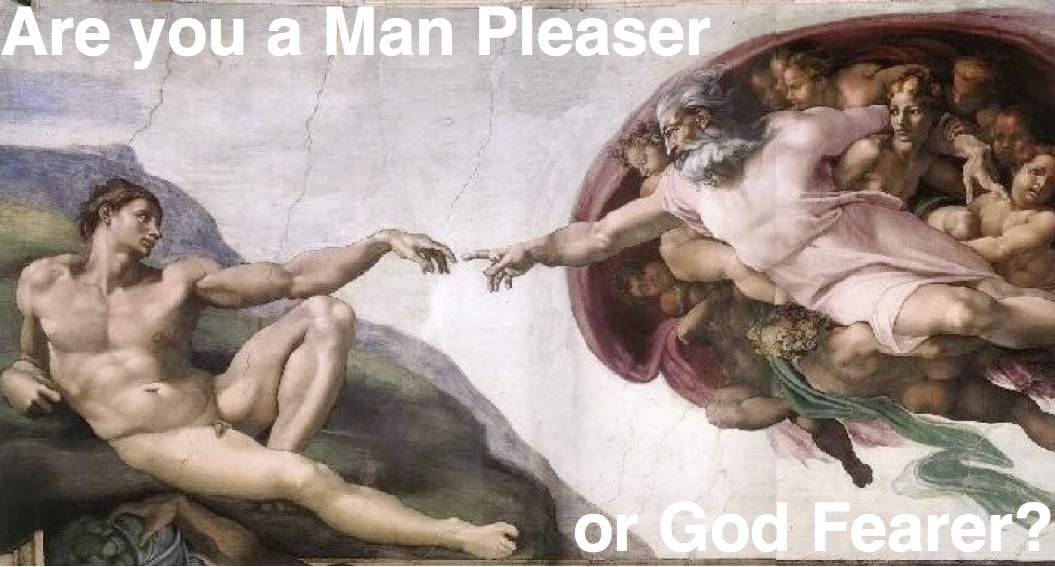
X-Ray Questions: Whose opinion of you counts?

This week we continue our X-Ray Questions series, as we look at the question: Whose opinion of you counts? You can read the other posts in this series by clicking here.

X-Ray Question:

(13) Whose opinion of you counts?

From whom do you desire approval and fear rejection? Whose value system do you measure yourself against? In whose eyes are you living? Whose love and approval do you need?

Understand

When you lose God, you enter a jungle of distortion. You tend to live before your own eyes or before the eyes of others – or both. When you lose or take God out of the equation, what is left is to seek the approval of man, which will ultimately leave you wanting.

Even for us who have not removed God completely from the picture, the approval of man has a strong pull on our lives, often causing us to seek it, rather than God’s approval. Since man’s approval has such a strong pull on our lives, we must fight the desire within to seek man’s approval, finding our approval in the Lord alone.

If we do not fight, we will compromise our convictions, not speaking up when we know Scripture speaks against a certain issue. When we remain silent on issues because we fear we will lose the respect of men, we are like the authorities who did not stand up to the Pharisees. John says,

Nevertheless, many even of the authorities believed in him, but for fear of the Pharisees they did not confess it, so that they would not be put out of the synagogue; for they loved the glory that comes from man more than the glory that comes from God. (John 12:42-43 ESV)

May we make it a point to seek the glory that comes from God more than the glory that comes from man.

Social Idols

The “social idols” which encompass approval and fear can take numerous forms:

  • Acceptance or Rejection
  • Being Included or Excluded
  • Praise or Criticism
  • Affection or Hostility
  • Adoration or Belittlement
  • Intimacy or Alienation
  • Being Understood or Caricatured

Awareness of these “social idols” is the first step, but we must also ask God to reveal to us where we may be seeking to please others rather than Him. In other words, we must plead with God in our prayers to reveal to us if the opinion of man is an idol that is present in our lives.

Repent

If after we pray, God reveals to us that approval is an idol in our lives, we must repent and turn from that idol. We do so by realizing true approval comes from God alone. The approval man gives us is temporary and situational. We may have man’s approval one day, but the next day they may reject us because we have not lived up to their expectations.

In contrast to the world, those who have repented of their sins and professed Jesus Christ as their Lord and Savior will never be rejected by God. As a result, they should never fear the loss of God’s approval.

Why want believers be rejected by God?

Because God accepts us based on Christ’s cross work, not our own work. When we believe in Jesus as our Lord and Savior, His righteousness is imputed to us, so that we too become righteous (2 Cor. 5:21). As those who are righteous, we are just as Jesus is even now in the world (1 John 4:17), meaning we are sons of God, just as Jesus is the Son of God. Those who are God’s children have nothing to fear. Instead they are to be confident on the Day of Judgment, knowing that God abides in them and they in God (1 John 4:15-18).

Scripture

Here are a few passages from God’s word to meditate on this week, as you consider the question: Whose opinion of you counts?: Prov. 1:7; 9:10; 29:25; John 12:43; 1 Cor. 4:3-5; 2 Cor. 10:18.

Resource

All X-Ray questions taken from David Powlison’s book Seeing with New Eyes.

Faithfully Preach the Text

I was sent the following quote as an encouragement this week. It is by John Broadus, who was the President of Southern Seminary from 1889 to 1895. Read what he has to say regarding our faithfulness in preaching the text:

It is so easy and pleasant for men of fertile fancy to break away from laborious study of phraseology and connection, to cease plodding along the rough and homely paths of earth, and sport, free and rejoicing, in the open heaven; the people are so charmed by ingenious novelties, so carried away with imaginative flights, so delighted to find everywhere types of Christ and likenesses to the spiritual life; it is so common to think that whatever kindles the imagination and touches the heart must be good preaching, and so easy to insist that the doctrines of the sermon are in themselves true and Scriptural, though they be not actually taught in the text, – that preachers often lose sight of their fundamental and inexcusable error, of saying that a passage of God’s Word means what it does not mean. So independent too one may feel; so original he may think himself. Commentaries, he can sneer at them all; other preachers, he has little need of comparing views with them. No need of anything but the resources of his own imagination, for such preaching is too often only building castles in the air.

Resource

Quote originally published at For Christ and Culture