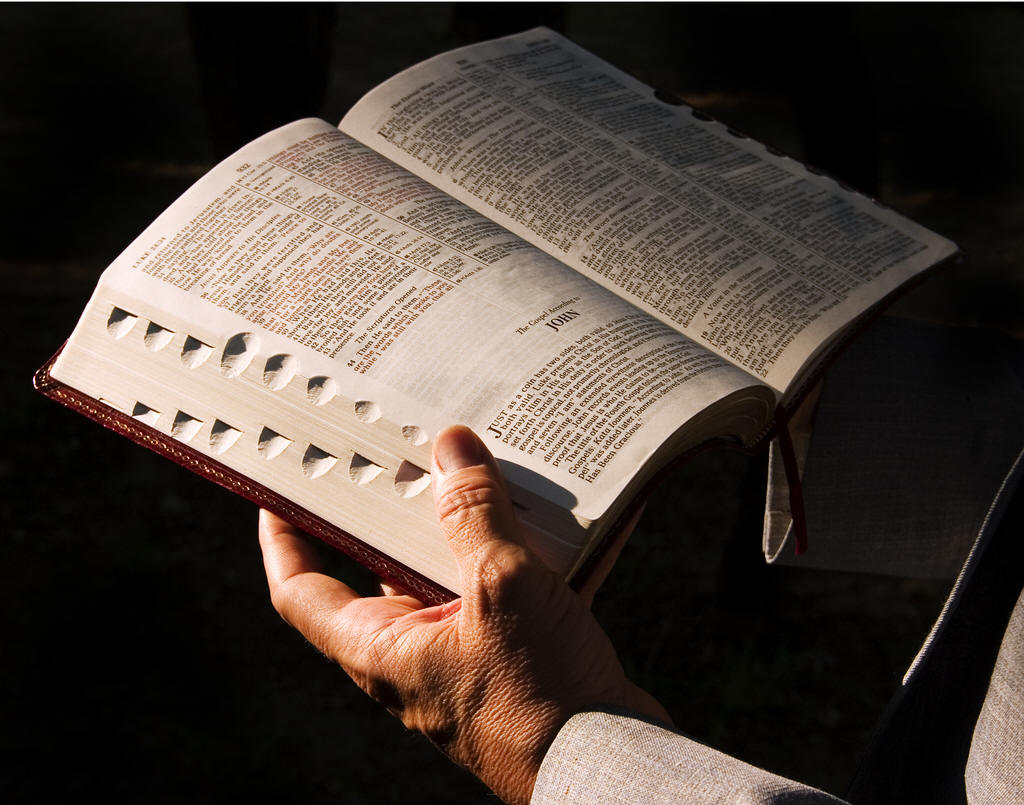
Prayer: The Minister’s Duty

Yesterday, as I was preparing to give a devotional at our church business meeting, I read through the book Joel Beeke and Brian Najapfour edited entitled Taking Hold of GodReformed and Puritan Perspectives on Prayer

In the chapter: Prayerful Praying Today written by Beeke, I found this quote by Charles Bridges (1794-1869). He writes on the need for revival in prayer based on Acts 6:4, which says,”We will give ourselves continually to prayer, and to the ministry of the word.”

Writing specifically to ministers, and commenting on that verse, Bridges writes,

Prayer is one half of our Ministry; and it gives to the other half all its power and success. it is the appointed medium of receiving spiritual communications for the instruction of our people. Those who walk most closely with God are most spiritually intelligent in the “the secret of his covenant.” Many can set their seal to Luther’s testimony, that he often obtained more knowledge in a short time by prayer, than by many hours of laborious accurate study. It will also strengthen our habitual engagedness of our hearts in our work, and our natural exercises and capacities for it. Living near to the fountain-head of influence, we shall be in the constant receipt of fresh supplies of light, support, and consolation – to assist us in our duties, to enable us for our difficulties, and to assure us of our present acceptance, and a suitable measure of ultimate success. 

Convicted

After reading Beeke and the quote from Bridges, conviction set in. I don’t pray enough. So today, I renewed my commitment to being a minister who prays more.

Challenge

Want you do the same if your prayer life is lacking? Half our duties as a minister is to be in prayer for our people, our work, our community, our family, and our personal growth in God’s Word. If we are not spending the necessary time, then we are neglecting half our God given duties. Neglecting half your work as a business man, farmer, or school teacher would not be acceptable, so why should it be acceptable for a pastor?

Questions for Reflection

  1. Is prayer a priority in your ministry?
  2. Do you spend time in prayer each day asking the Lord to strengthen you, give you insight, and wisdom?
  3. Do you too need to renew your commitment to pray more?

Resources

Taking Hold of GodReformed and Puritan Perspectives on Prayer, edited by Joel Beeke and Brian Najapfour, 228.

Image

Prayer: Assurance, Questions, and a Right Perspective

In 1 John 3:21-22, John tells us that those who are confident before God have their prayers answered. Confidence comes to those who have examined themselves with the test of love John provides in 1 Jn 3:16-19. After examining themselves they have found that they are able to persuade their hearts that they are God’s children because they see evidences of biblical love present in their lives. As a result, they can and should go boldly before God in prayer, knowing they will receive what they ask of God because they keep His commandments and do what is pleasing before Him. John writes,

Beloved, if our heart does not condemn us, we have confidence before God; and whatever we ask we receive from him, because we keep his commandments and do what pleases him.
(1 John 3:21-22 ESV)

God is Not Our Cosmic Genie in the Sky

With these verses, John is not turning God into a Cosmic Genie and supporting a Health Wealth Gospel, which is evident because after telling us God answers our prayers, he provides the reason our prayers are answered at the end of verse 22.

What is the Basis for Answered Prayer?

The basis for answered prayer is two-fold and requires we:

(1) Keep God’s commandments

(2) Do what is pleasing to Him

When a person keeps God’s commandments and does what is pleasing to Him, they show they are a true believer. True believers will pray according to God’s will because His will has become their will.

In addition to seeking God’s will, when John tells us that answered prayer comes to those who do things that are pleasing to God, it includes things we ask for in our prayers. This means believers would not ask God to make them into a millionaire, give them a new car because it makes them look cool, or ask God to cause a jury to acquit them, when they are guilty of their crime. These things are not done in obedience to God’s commandments, nor are they done to please God; rather, they are done to please oneself.

So, those who desire to obey God’s commandments and do those things which please Him, will have their prayers answered because their prayers will be inline with God’s commandments and with what pleases Him.

When God Does Not Answer Prayer

In talking about answered prayer, the question usually arises: What about those times when we are confident before God, coming boldly to the throne room of prayer, obeying His commandments and seeking to do those things that please Him, as well as we are praying according to God’s will, but our prayer is seemingly not answered right away, why does this occur?

In other words, what are we to think when God does not seemingly answer our prayers?

Charles Spurgeon, one of the greatest preachers of all time, when faced with this question gives this counsel:

If you have been knocking at the gate of mercy and have received no answer, shall I tell you why the mighty Maker has not opened the door and let you in? Our Father has reasons peculiar to himself for keeping us waiting. Sometimes it is to show His power and His sovereignty, that men may know that Jehovah has a right to give or to withhold. More frequently the delay is for our profit.

You are perhaps kept waiting in order that your desires may be more fervent. God knows that delay will quicken and increase desire, and that if He keeps you waiting, you will see your necessity more clearly, and will seek more earnestly; and that you will prize the mercy all the more for its long tarrying. There may also be something wrong in you that has need to be removed, before the joy of the Lord is given. Perhaps your views of the gospel plan are confused, or you may be placing some little reliance on yourself, instead of trusting simply and entirely in the Lord Jesus. Or, God makes you tarry awhile that He may the more fully display the riches of His grace to you at last.

Your prayers are all filed in Heaven, and if not immediately answered; they are certainly not forgotten, but in a little while shall be fulfilled to your delight and satisfaction. Let not despair make you silent, but continue instant in earnest supplication [1].

In another place He also says,

Still remember that prayer is always to be offered in submission to God’s will; that when we say that God hears prayer, we do not intend that He always gives us literally what we ask for. We do mean, however, that He gives us what is best for us. If He does not give us the mercy we ask for in silver, He bestows it upon us in gold. If he does not take away the thorn in the flesh, He says, “My grace is sufficient for thee, and that comes to the same in the end [2].

So, if it seems that God does not answer our prayer, there are a number of reasons for that, but we always are to pray that God’s will be done and rest in that.

Conclusion

In these verses, John seeks to assure believers who are confident before God, obey His commandments, and do what is pleasing to Him, that God will answer their prayers, even if it does not seem like He does. As a result, we are to come boldly before God in prayer, lifting our requests up to Him. After which, we are to remain confident He has heard us, and we are to know that He will answer in due time and in the way He sees fit, if He has not answered already.

So then, may we all examine ourselves to see if we are true believers. If we are true believers, may we all go boldly to God this week in our time of prayer, knowing the Lord hears us and will answer us in due time.

Resources

[1] Spurgeon on Prayer: How to converse with God, compiled and edited by Harold J. Chadwick, 59-60.

[2] Spurgeon on Prayer: How to converse with God, compiled and edited by Harold J. Chadwick, 304.

Image

Is it Important to Publicly Read Scripture and Pray in Our Congregations?

Today, we have a guest blogger: Pastor Bob Dimmitt. He has written on the necessity of the Public Reading of Scripture and Prayer, as well as he has offered us a few tips. Here is what he has for us:

I believe it is important in the development of our churches that more men become involved in our Sunday Morning and Sunday Evening Worship through the public reading of Scripture and prayer.

The Public Reading of God’s Word

The public reading of God’s Word is an important part of our churches corporate worship. Even so, many churches have neglected this discipline, even though Scripture itself commands it. 1 Timothy 4:13 says, “Until I come, give attention to reading, to exhortation, to doctrine.

In commenting on this verse a noted Pastor once said,

“Of course we of this generation cannot know by firsthand experience how the Word of God was read in other times. But it would be hard to conceive of our fathers having done a poorer job than we do when it comes to the public reading of the Scriptures. Many have read the Scriptures so badly that a good performance draws attention by its rarity.

It could be argued that since everyone these days owns his own copy of the Scriptures, the need for the public reading of the Word is not as great as before. If that is true, then let us not bother to read the Scriptures at all in our churches. But if we are going to read the Word publicly, then it is incumbent upon us to read it well. A mumbled, badly articulated and unintelligent reading of the Sacred Scriptures will do more than we think to give the listeners the idea that the Word is not important….”

In this pastor’s opinion, not only do churches fail to obey Paul’s command to Timothy to read Scripture, when they do attempt it, they do a poor job, giving the congregation the idea that the Word is just not that important. If this is the case, how can we show the congregation Scripture is important?

Tips for the Public Reading of Scripture

1. Assign or acquire your text ahead of time.

If you are a pastor, assign ahead of time a specific date and Scripture to be read. If you have been asked to read Scripture in a service and you have not been assigned a specific text, then ask the pastor, or worship leader to provide you with the text you will read at least one week before it is your turn.

2. Read from a designated version.

If your congregation has invested in pew Bibles, then read from the version offered. It is also a good idea to read from the version the pastor uses, since most people will bring that version to church with them.

3. Practice in advance.

Several days, if not a full week before your turn to read the passage in the service, practice reading the passage to yourself aloud. If the passage is short enough, then work on committing it to memory. Memorizing the passage and reading it aloud several times will help in learning the flow of the passage, allowing you to read it smoothly in the service.

4. Read with emotion and meaning.

When reading the passage, read with emotion and meaning without being dramatic. Know the emotion and emphasis you bring to the reading will be felt and seen by the congregation. If you are fumbling through the passage, or reading it in a monotone voice, you are sending the signal that the passage is not important to you.

Public Prayer

Following the public reading of Scripture should be a public prayer. The one reading the Scripture should be the one to lead the congregation in this prayer. As you do, don’t think that your prayer has to be long. John Newton once said,

“The chief fault of some good prayers is, that they are too long; not that I think we should pray by the clock, and limit ourselves precisely to a certain number of minutes; but it is better of the two, that the hearers should wish the prayer had been longer, than spend half the time in wishing it was over.”

With Newton’s advice in mind, let’s look at some tips for praying in public.

Tips for Public Praying

1. In private we offer our own prayers and confessions to God, but in public our prayers are different.

In private we will use language such as: I, my, me, mine, but in public the language is different, we should use language such as: us, we, our, ours. Private prayer can also be silent, and groaning. Public prayer cannot be silent nor can it be groaning. It must be audible, in a language understood by all, at a speed accessible to everyone, with phrases that do not jar, and at a length everyone can sustain.

2. Public prayer is didactic.

We are teaching our people something when we pray. If we fill them with sickly repetitions, they will think that that is OK. If we do not pray in the Holy Spirit then they will not learn. If we pray in public for certain themes, then they will pray the same.

In addition, when they see and hear you emotionally engaged in prayer, that will teach them much about Christian experience. When we pray in this way, our prayers are deep and whole. The result is that the congregates theology will be challenged by your whole praying, so that praying is a kind of discipleship.

3. Public prayer is pastoral.

It is one of the means we lead the people into holiness and comfort. We must think of the various needs of the members of the congregation, as well as the congregates themselves.

In addition, we should know that prayer does things: It brings down blessings on people. It makes people more loving and understanding. It restores the backslider. It takes up all the needs of the congregation.

  1. Public prayer must be fresh, but prepared.

We can prepare our prayers without preparing them. We can consciously include every main element of biblical prayers – adoration, confession and thanksgiving – as well as we can incorporate the passage that we read into our prayer.

Example if the passage dealt with the resurrection then that can be a theme; you thank God for the resurrection, the reality of the resurrection, and what the resurrection means to us. If the passage deals with spiritual growth, make that the main theme of your prayer asking God to do for us what Paul asked God to do for those he loved.

Conclusion

The reading of Scripture and Prayer in our congregations publicly is an important act. One that not only fulfills the Scriptures command, but serves as a means to teach and care for those in the congregation. It is my prayer that we all take this duty more seriously.

Bob Dimmitt is the Senior Pastor of Ferguson Avenue Baptist Church (FABC) in Savannah, GA. He has served there for the last 12 years. Prior to serving as the pastor of FABC he was a jail chaplain in Hawaii, Virginia, and Savannah. You can learn more about Bob and FABC through their website: www.fabchurch.com 

What’s Next?

Last Friday, I graduated. After a two and half year sprint to the finish, I finally walked across the stage to receive my degree. After which, a celebration with friends and family ensued. Amidst all the fun, excitement, sadness, and recollection of memories, a question continued to arise: Now what? To which I answered: I don’t know.

Truly, I do not know what is next for my wife and me, but as I ponder and pray for the Lord’s will to be done, I am reminded of a few verses from the book of James. He writes,

Come now, you who say, “Today or tomorrow we will go into such and such a town and spend a year there and trade and make a profit” – yet you do not know what tomorrow will bring. What is your life? For you are a mist that appears for a little time and then vanishes. Instead you ought to say, “If the Lord will, we will live and do this or that.” (James 4:13-15)

As I reflect on these verses in James, my answer to the question posed by my family and friends must not only be I don’t know, but also I will do whatever the Lord wills. Since I do not know the Lord’s will, I now wait patiently in prayer asking the Lord to reveal His plan to me.

May we all cast our future on the Lord, seeking His will for our lives instead of our own, not seeking to take what is in the world for ourselves, but to serve others by attending to both their physical and spiritual needs.

Gospel Conversations & Biblical Fellowship

The typical conversation between guys this time of year centers around sports, especially, football. Now I don’t believe we should never talk about sports, but as Christians our conversations should go deeper than the latest ESPN highlight. We should be talking about the Bible and the things the Lord is showing us in our lives, as well as we should be encouraging each other in the faith. We can’t do this if we do not break through the surface and dig down to find out what is actually going on in someone’s walk with the Lord. In order to help us have more biblical conversations, I want to provide a few practical questions we can ask each other.

Questions

(1) What has Jesus been teaching you this week through your reading of the word, prayer, and life situations?

(2) How has your reading, classes, interactions with others and prayer caused you to worship God this week?

(3) How can I be praying for you?

(4) What sins has God revealed to you this week?

(5) Has God answered any prayers lately?

My hope is that these questions will spur you on to have more gospel conversation and biblical fellowship with others this coming week.

Image: Idea go / FreeDigitalPhotos.net

Christian Meditation: What is it and what does it involve?

About a month ago, I had the opportunity to talk with one of my good friends about our time with the Lord. During our discussion we attempted to answer the question: What does it mean to commune with the Lord? As we came to an answer, we opened the door to a second question dealing with meditation in the Christian life.

After thinking and reading about Christian Meditation for the last month, I finally am at a place where I want to share my thoughts, but first lets answer our original question – What does it mean to commune with the Lord? – before moving on to an in-depth look at Christian Meditation.

Communing with the Lord occurs:

(1) When we spend time reading His Word

(2) When we spend time in prayer

(3) When we spend time meditating on God’s Word

It is on this last point that I would like to focus because I am afraid we do not understand what it means to meditate on Scripture, nor do we understand the benefits and purpose. As a result, I would like to provide you with a definition of Christian meditation, its scriptural warrant, a guide to meditation, and the advantages of meditating on God’s Word.

Chewing the Cud

Chewing the cud is a process that takes time and effort. In order for a cow to digest his meal, he must chew on it for an extended period. Swallow it, allow for digestion to occur, then bring it back up and chew on it some more. This process is repeated until it is able to be fully digested.

I believe we should take this same approach with Scripture. Like chewing the cud, meditation takes time and effort. It is a focused time where we chew on a small part of Scripture for an extended period to come to a place where we understand God’s Word more deeply with the purpose of obedience, repentance, sanctification, and increased heavenly affections.

Scripture

This Book of the Law shall not depart from your mouth, but you shall meditate on it day and night, so that you may be careful to do according to all that is written in it. For then you will make your way prosperous, and then you will have good success. (Joshua 1:8)

What Does It Mean To Meditate on God’s Word?

Meditation, in a Christian sense, can be defined as “an holy exercise of the mind, whereby we bring the truths of God to remembrance, and do seriously ponder upon them, and apply them to ourselves” (Thomas Watson Heaven Taken By Storm, 42).

Watson’s definition can be broken down into three parts:

(1) Remember God’s truths

(2) Think deeply upon God’s truths

(3) Apply God’s truths to our lives

How to Practice Meditation

Meditation is not the process of clearing your mind, so the universe can come in. It does not involve chants, postures, or New Age music. Meditation is active, and it has content, namely, God’s Word. In order to meditate properly, you need to:

First, separate yourself physically from the World. Meditating on Scripture at Starbucks is not going to work. You need to free yourself of all distractions and get alone somewhere.

Second, read Scripture, or repeat a verse you have recently memorized so your mind is saturated with God’s Word.

Third, gather your thoughts and remember the truths about God you just read. The purpose is to begin to think deeply about God’s Word. A singular focus on Scripture is what we should be after.

Fourth, examine your life to discover how the truths about God, sin, humanity, and salvation apply.

Fifth, pray and ask God to help you apply the truths of Scripture to your life through the work of the Holy Spirit. Without the Holy Spirit working in your life, you have no hope of knowing where you need to change.

Finally, change must occur. Meditation “is not just about seeing where [you] lack or what [you] need to change;” it must include actual change in your lives (Neimeyer, 172).

The outcome should be a recognition of your sin, a willingness to repent, a deeper understanding of God’s provisions and holiness, along with increased affections for your Savior.

Meditation Allows One to Progress in the Christian Life By

(1) Motivating one to repent from sin

As the sin in your life becomes more vivid, and your understanding of the gospel becomes more ingrained, you will be motivated to repent of your sin.

(2) Causing one to grow in holiness

As you repent of your sins, you will grow in holiness becoming more like your Lord and Savior, Jesus Christ.

(3) Improving one’s relationship with others

By thinking on Christ’s love for you, your love for others will grow.

Meditation Enhances

(1) Your Prayer Life

(2) Your Personal Reading of the Word

(3) Your Hearing The Word Preached

Conclusion

Given all the benefits of Meditation – a deeper understanding of God’s Word, a clearer realization of your sin, a more vivid picture of the Gospel, increased repentance, a greater love for others, a deeper prayer life, and increased affections for your Lord and Savior – we should be spending the effort to meditate on God’s Word more regularly.

Resource

This post was developed from an article in the Puritan Reformed Journal from January 2010 Vol 2, Num 1. Written by Jennifer C. Neimeyer and is Entitled: Thomas Watson: The Necessity of Meditation found on pages 166-181.