Every Knee Will Bow

This morning I was reading Psalm 22 as part of my devotional. This Psalm is often referred to as a Messianic Psalm because it points forward to the work of Christ on the cross.

Similarities with Jesus’ Crucifixion

The first line of this Psalm is quoted by Jesus when He was hanging on the cross. In Matthew 27:46 Jesus says,

“My God, my God, why have you forsaken me?”

As you read through the rest of the Psalm one notices a similarity to what happens to Jesus and how those crucifying Jesus act. Jesus’ bones are out of joint, His strength has dried up, He is thirsty, His hands and feet are pierced, but His bones are not broken (14-17). Those in the crowd mock Him, they call out for Him to ask God to deliver Him from the cross, and they divide His garments by casting lots (7-8, 18).

The Lord has not forsaken Jesus

It seems the Lord has forsaken Jesus on the cross, but He has not. His plan has always been for Jesus to die for the sins of mankind (Rom. 8:28-30; Eph. 1). A plan worked out from before the foundations of the earth.

Every Knee Will Bow

Instead of forsaking Jesus, the Father resurrects Jesus and exalts Christ to His heavenly throne with the promise that everyone will worship Him (Psalm 22:27-28; Phil. 2:8-11). In verse 29, the Psalmist says,

All the prosperous of the earth eat
and worship;
before him shall bow all
who go down to the dust,
even the one who could not
keep himself alive.

Indeed, all will bow down to worship Him, even those who are not Christians. Every man, woman, and child will bow their knee before the Lord when He returns. Isaiah predicted it (Isa. 45:23), Paul confirmed it (Rom. 14:11; Phil. 2:10), and John wrote about the coming day when the Lamb (Jesus) would sit on His throne and every creature would recognize Him as Lord (Rev. 5:13).

There will be a day when Jesus will return, and there will be a day when every knee will bow to Him as Lord, whether you recognize Him now as Lord or not.

A Plea

Now is the time my friends to confess Christ as Savior and Lord of your life. If the Lord has given you the faith to believe in Him, then believe. For you can either confess Jesus as Lord and Savior now, or in the after life, but after this life is over, our chance of reconciliation with God and eternal life goes with it (Ecc. 3:17; 9:4-6).

Assurance

Those who are believers in Christ, be assured of your salvation. Place your hope fully in Christ and Christ alone, knowing He is our Savior and Lord. Know that the Lord will return and He will defeat the enemy, Satan. Know and trust that He will reign on His throne forever and ever, and that we will experience true joy for all of eternity as we worship and praise Him. Come Lord Jesus, come!

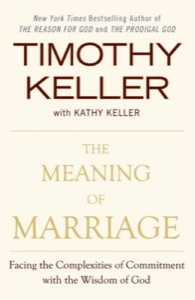
Image: Suat Eman / FreeDigitalPhotos.net

Thinking Out Loud: How is God a Christian’s Judge?

A perplexing question has had me racking my brain for several days now. In what way are we as Christians judged by God? The text that has motivated this question is 1 Peter 1:17, which says

And if you call on him as Father who judges impartially according to each one’s deeds, conduct yourselves with fear throughout the time of your exile,” (1 Pe 1:17).

Context

Verse 17 comes in the midst of Peter telling his readers to place their hope in Christ alone (13), to not be conformed to their former way of life (14), but instead to be holy as God is holy (15-16). So then, the context deals with Christian conduct. More specifically, Peter wants his readers to understand that their profession of Jesus Christ as their Savior should also result in transformed living.

Verses 13, 14, 15-16 provide commands to live a certain way, as well as they provide the motivation for such living. Verse 17 seems to follow suit. It provides a command, “conduct yourselves in fear”. It also provides a motivation, God is both the Father of those who profess Christ to be their Savior and the Judge of all.

How Can God Be The Judge of Christians?

Verse 17 says God judges all impartially according to their works, which should lead to us conducting ourselves in fear during our earthly stay. Commentators and preachers differ in regard to what this judgment on Christians could be.

  • Some hold it is a judgment regarding rewards (Rom 14:12; 2 Cor. 5:10-11).
  • Others skip over the phrase, “who judges impartially according to each one’s deeds,” opting only to deal with the word fear. They then conclude fear means we need to live in reverence to God.
  • While others hold a tension between fear referring to reverence for God, and also a fear of God’s judgment.

What I Think

Based on Peter’s mentioning of God as Father and Judge, the context calling for believers to live a transformed life as a result of their salvation, as well as Romans 2:6-11, 1 Corinthians 9:24-27, and John 3:36, I think Peter is presenting a tension here. A tension both John and Paul present in their writings and one that is evident in the passages above.

The tension I think Peter is presenting is that our faith in Christ should produce good works (Gal. 5:21; 1 Cor. 6:9-11). It is these works that are judged, proving that we are Christians. So then, on the one hand, our fear is to be one of reverence and respect for God. On the other hand, we are to fear God as judge, knowing that if we do not finish the race (1 Cor. 6:9-11), we will not inherit the kingdom of God. Even if at one time we did great works for the kingdom, we must continue to live a righteous life throughout our time here on earth. In other words, we must finish the race. God is not a partial judge, no matter how much good we have done for the kingdom.

I don’t believe our righteous living earns us salvation, but I do believe it proves our salvation since it would not be possible to live righteously without the Holy Spirit residing in us. The Holy Spirit would not reside inside of us, if we did not believe Christ to be our Savior.

Final Questions: I Want Your Thoughts

Those are my thoughts. I want to know what you think. To help facilitate that, here are my final questions:

  • Am I on the right track believing there is a tension between God as Father and Judge, or am I missing something?
  • Do you also see a tension between our faith and works, with our works, or obedience, proving our faith?
  • Do you believe fear in 1 Peter 1:17 is referring to reverence only, or both reverence and judgment?
  • Do you believe Peter is talking about our rewards in heaven? If so, how would those rewards motivate us to live holy lives now?
  • What do you make of verses like 1 John 4:18-21, which tells us those who fear have not been perfected?

Image: digitalart / FreeDigitalPhotos.net

Leaders Articulate Your Vision (Again)

This morning one of my friends sent me a link to the video below in which John Piper exhorts leaders to articulate their vision for their church, small group, missions agency, etc on a regular basis and in fresh new ways. The encouragement and reminder from Piper is well worth watching this two minute clip.

The Work of a Christian Leader from Desiring God on Vimeo.

The Meaning of Marriage

Today I want to highlight a video webcast on Tim and Kathy Keller’s new book The Meaning of Marriage. In this book and webcast, Tim and Kathy tackle the preconceived notions people in our culture have about marriage setting those next to the Christian view of marriage, in order to provide today’s singles and married couples with the correct view of marriage. The book is excellent, as well as this video webcast. Check it out by clicking the code below, when you do another window will open with the full size video in it.

http://cdn.livestream.com/embed/penguinbooks?layout=4&clip=pla_dcb3291d-403b-419b-b9b7-fa5e56579dd2&height=340&width=560&autoplay=false

Watch live streaming video from penguinbooks at livestream.com

Continue In The Faith

Perseverance is the badge of true saints. The Christian life is more than a beginning in the ways of God. It is also a continuance in the faith as long as life lasts. It is the same with a Christian as it was with the great Napoleon who said, “Conquest has made me what I am, and conquest must maintain me.” The only true conqueror who will be crowned is the one that continues until war’s trumpet is blown no more.

The Target of Our Spiritual Enemies

Perseverance is, therefore, the target of all our Spiritual enemies.

The world does not object to you being a Christian for a time if she can tempt you to give up your journey and settle down in her Vanity Fair.

The flesh will seek to entangle you and prevent you from pressing on to glory. “It is weary work being a Christian. Come, give it up. Must I always be humbled? Am I never to be indulged? Give me at least a vacation from this constant warfare.”

Satan will make many fierce attacks on your perseverance. It will be the target of all his arrows. He will strive to hinder you in service. He will insinuate that you are doing no good. He will endeavor to make you wary of suffering. He will whisper, “Curse God, and die” (Job 2:9). He will attack your steadfastness: “What is the good of being so zealous? Be quiet like the rest.” He will assail your doctrinal beliefs: “Why do you hold to these denominational creeds? Sensible men are getting more liberal. They are removing the old landmarks. Blend in with the times.”

Conclusion

Wear your shield, Christian, close to your armor. Pray to God that, by His Spirit, you may endure to the end.

Resource

Spurgeon, Morning and Evening: May 26, Evening

Gospel Conversations & Biblical Fellowship

The typical conversation between guys this time of year centers around sports, especially, football. Now I don’t believe we should never talk about sports, but as Christians our conversations should go deeper than the latest ESPN highlight. We should be talking about the Bible and the things the Lord is showing us in our lives, as well as we should be encouraging each other in the faith. We can’t do this if we do not break through the surface and dig down to find out what is actually going on in someone’s walk with the Lord. In order to help us have more biblical conversations, I want to provide a few practical questions we can ask each other.

Questions

(1) What has Jesus been teaching you this week through your reading of the word, prayer, and life situations?

(2) How has your reading, classes, interactions with others and prayer caused you to worship God this week?

(3) How can I be praying for you?

(4) What sins has God revealed to you this week?

(5) Has God answered any prayers lately?

My hope is that these questions will spur you on to have more gospel conversation and biblical fellowship with others this coming week.

Image: Idea go / FreeDigitalPhotos.net