
How Do You Know If You Rely On God?

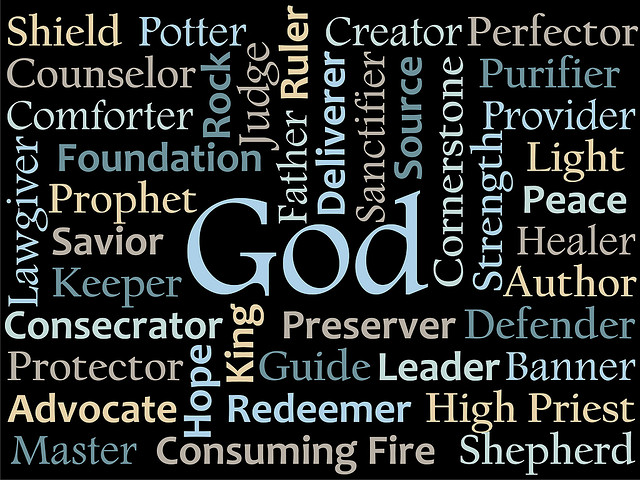
God Word Art

Self reliance is and has always been the beat of our heart. We don’t believe we need others, or God for that matter. Take these quotes for instance:

“It is folly for a man to pray to the gods for that which he has the power to obtain by himself.”

― Epicurus

“I care for myself. The more solitary, the more friendless, the more unsustained I am, the more I will respect myself.”

― Charlotte Brontë, Jane Eyre

“Trust your instincts, and make judgements on what your heart tells you. The heart will not betray you.”

― David Gemmell, Fall of Kings

“Remember, this is important: Never trust that you will be saved by anyone.”

― Amanda Boyden, Pretty Little Dirty

But is this true? Should we rely on ourselves alone? Can we save ourselves, care for ourselves, and do all by ourselves without anyone else’s help?

I don’t think so. We were created to be dependent creatures. That doesn’t mean we are to depend on others for handouts, or to do all for us. Rather it means we were primarily created to be cared for and sustained by our Creator. By design, we are to rely on God.

How do you know you rely on God? There are several questions you can ask yourself. Let me offer three.

(1) Do you pray and read God’s Word?

Our God is not silent. His will is found in His word and through prayer. He doesn’t leave us to wonder. We know exactly what is good for us. What is right for us. What God expects of us. How we should live and act.

So do you search God’s Word for answers? Do you bow before the Lord in prayer? If you do these things on a regular basis, you know you rely on God.

(2) Do you hope in God?

There are several things we could hope in, one of which is ourselves. Those who do push everyone away, thinking they can do it all on their own; that they are their own savior.

A classic example of this are those who are too proud to ask for help when they are in financial trouble. It doesn’t matter what happens or how bad it gets, they aren’t willing to go to their family, friends, or church for help. They would rather loose everything and go without.

People can also hope in others. It’s not wrong to ask others, or the church for help. We should in times of need. The problem arises when we think others are our hope, our salvation. Israel had that problem. Instead of hoping in the Lord, they hoped in other nations. Time and time again you read of prophets calling them back to the Lord, but they didn’t listen.

Israel’s problem is still our problem. We hope in others to save us, but men can’t save us. The only person who can save us is God. We should put our hope in Him. He will never leave us, nor forsake us. He will always deliver on His promises.

So who do you hope in? Yourself? Others? God? Your answer will determine who you rely on.

(3) Do you live according to God’s Will?

If you rely on the Lord, you won’t live according to your will, or societies will, but according to God’s Will. You will do this because you recognize God’s will isn’t a hindrance, but a grace. It’s a trustworthy gift given that causes us to flourish.

Questions for Reflection

  1. Who do you rely on?
  2. Do you see God, others, or yourself as your functional Savior?
  3. Do you live according to God’s will?
  4. Do you pray and read God’s Word often?

Resources

Post adapted from my sermon Rely on God

Image

Pray, Love, and Serve: Moses’ Example

Pray Love Serve Cross

How do you react when those in your church, family, circle of friends, or community act contrary to God’s Word? Do you throw up your hands and give up? Do you brow beat them? Or do you lovingly correct, pray for, and serve them?

Last night at Bible Study, we briefly discussed Deuteronomy 9. It is Moses’ reminder to the people why God is giving them the Promised Land. He wants to make it clear it is not because of their righteousness. Rather it is because the Lord wishes to drive the wickedness out of the land and honor His promise to their fathers – Abraham, Isaac, and Jacob (4-6). To show the stubbornness of the people, Moses recounts the story of the Golden Calf and their failure to take the land.

The Golden Calf

After spending forty days and nights on the mountain with God receiving the Ten Commandments, Moses comes down to find the people worshipping an idol – a Golden Calf. The same people who just witnessed the great power of God in the Exodus. The same people the Lord just redeemed as His own possession. The same people who watched Moses ascend to the top of the mountain to commune with God. In just forty short days and nights, they forgot the Lord and turned to worship an idol.

The Failure to Take the Land

The second story Moses recounts is their failure to trust the Lord to give them the land. If you remember, they sent spies into the land. After gathering the requested items, they returned with a daunting report. Those in the land are giants and too numerous for us to overtake. Again, they forgot the power of their God, even as He was providing for them in the wilderness and telling them He would give them the land.

Moses’ Example

Talk about being frustrated. I am sure Moses was livid, in a righteous way of course. His actions though are surprising and act as an example for us. Yes, Moses corrected the people, but he also interceded for them and continued to serve them.

Why would he do a thing like that? Why intercede for them asking the Lord to preserve them when they were blatantly rebellious?

He did so because he loved and cared for them. Even though they were rebellious, he desired they experience the blessings of the Lord, worship the Lord, and glorify the Lord. For those reasons, Moses twice spent forty days and nights prostrate before the Lord in prayer, continually corrected and served them.

The Challenge

Do you love those in your church, family, circle of friends, or community enough to seek their welfare? Do you desire to reach out to them with the gospel? Do you desire to pray the Lord would not destroy them, but change their hearts and make them His? Do you serve them in a way that shows the love of Jesus? I know those are tough questions, but they are crucial questions.

If we find we do not love those around us in a way that causes us to reach out to them with the gospel, pray for them, and serve them, we need to get on our knees and ask that God would change our hearts.

Moses did not manufacture his love for the people. God changed his heart as he communed with Him. Likewise, as we commune with God through prayer and Bible study, He will change our heart.

So then, if you are having trouble loving, praying for, and serving those in your community, open His Word and seek His face in prayer, asking that He would change your heart.

Question for Reflection

  1. How could you motivate those in your church to reach out to, serve, and pray for those in your community?

Resource

Image

3 Marks of the Truly Convicted

Do you know what it means to be convicted of your sin? Do you really understand just how sinful you are and why you need a Savior?

I think there are many who do not understand the extent of their sinfulness and the separation that sin brings. This is particularly evident when people claim they are good people, when they believe they can approach God without first being redeemed by Christ, and when they see nothing wrong with the way they live.

The Bible however paints a different picture of mankind. Paul tells us in Romans that no one is righteous, no not one (Rom. 3:10). He goes on to tell us that we have all sinned and fallen short of the glory of God (Rom. 3:23). The Psalmist agrees when he tells us that we are all sinners from our mother’s womb. Born utterly corrupt without a righteous bone in our body (Ps. 51:5).

In order to be saved from our sin, we must agree with Paul and the Psalmist. True conviction doesn’t and cannot occur until we do. Using Paul and the Psalmist as a launching pad, let me give you what I see as three necessary marks of the truly convicted.

3 Marks of the Truly Convicted

(1) The truly convicted are aware of a severed relationship with God

Sin hinders our relationship with God because a holy God cannot have a relationship with sinful man. Just like oil and water don’t mix, a holy God and sinful men can’t mix.

Those who are truly convicted of their sin understand their relationship with God is severed and hinders their fellowship.

(2) The truly convicted admit they are guilty of sin against God

Isaiah understood he was guilty because of his actions. In Isaiah 6:1-5, we read,

In the year that King Uzziah died I saw the Lord sitting upon a throne, high and lifted up; and the train of his robe filled the temple. Above him stood the seraphim. Each had six wings: with two he covered his face, and with two he covered his feet, and with two he flew. And one called to another and said:

“Holy, holy, holy is the LORD of hosts;
the whole earth is full of his glory!”

And the foundations of the thresholds shook at the voice of him who called, and the house was filled with smoke. And I said: “Woe is me! For I am lost; for I am a man of unclean lips, and I dwell in the midst of a people of unclean lips; for my eyes have seen the King, the LORD of hosts!”

After coming face to face with the reality of God’s holiness, Isaiah pronounces a woe on himself, saying he is lost and a man of unclean lips. He understood his sinful actions against God where offensive and left him guilty.

Just like Isaiah, those who are convicted of their sins admit the same.

(3) The truly convicted admit their complete perversity and corruption

When we are convicted of our sin, we recognize we are wholly depraved and there is nothing good in us. Once we recognize our condition, we then seek cleansing from our guilt and defilement. Such was the attitude of the Psalmist.

In Psalm 51, he asks the Lord to have mercy on him and to wash him because he understood himself to be a sinner, who was evil in the Lord’s sight. Utter and complete corruption characterized his life of which he understood the implications, namely, a severed relationship with God, which would result in eternal damnation.

Those who are convicted of their sin, agree with the Psalmist and plead with God to cleanse them as well.

Questions for Reflection

  1. Are you willing to admit you are completely and utterly corrupt?
  2. Do you believe that you stand guilty before God because of your sin?
  3. Do you generally see yourself as a good person in God’s eyes? Or do you see yourself as a sinner in need of a Savior?
  4. Does the realization of your sinful drive you to plead with God to cleanse you?

Resources

Post adapted from Evangelism and the Sovereignty of God, by J.I. Packer, 66-81.

Image

How the Gospel Deals with Conflict | Part 4

This last week, I have been discussing conflict. I have dealt with where conflict occurs (Part 1), why we need to get rid of conflict (Part 2), and I gave 8 ways to get rid of conflict (Part 3). In this last post, I want to provide you with encouragement.

Conflict Doesn’t Mean We Will Lose Our Salvation

We know that conflict is going to happen. We are sinners, who will disagree and argue with each other. Just because conflict is going to happen doesn’t mean that we should not deal with it. We have already seen that we should. Even though conflict is going to occur, it’s occurrence doesn’t mean we will lose our salvation.

In other words, we don’t have to be perfect. Notice at the end of in verse 3 Paul tells us that these two women’s names are in the book of life.

Yes, I ask you also, true companion, help these women, who have labored side by side with me in the gospel together with Clement and the rest of my fellow workers, whose names are in the book of life.

What is the book of life, how do we get our names in it, and what does the existence of the book tell us?

First, what is the book of life?

You all have seen the cartoons where Peter is standing at the Pearly Gates as people come to enter heaven. What is normally before him is a book. In the cartoon, the book acts like a guest list to a party. If your name is on the list, then you are in. If it is not, well, you are excluded. While the cartoon’s depiction of Peter standing at the Pearly Gates checking to see if your name is in the book of life is probably not how it happens, the book of life is a reality.

Revelation 20:11-15 says,

Then I saw a great white throne and him who was seated on it. From his presence earth and sky fled away, and no place was found for them. And I saw the dead, great and small, standing before the throne, and books were opened. Then another book was opened, which is the book of life. And the dead were judged by what was written in the books, according to what they had done. And the sea gave up the dead who were in it, Death and Hades gave up the dead who were in them, and they were judged, each one of them, according to what they had done. Then Death and Hades were thrown into the lake of fire. This is the second death, the lake of fire. And if anyone’s name was not found written in the book of life, he was thrown into the lake of fire.

From this text we learn that the book of life is a list of all those who will experience eternal life. If your name is in it, you will experience eternal life. If it is not, you will experience eternal damnation.

Second, how do we get our names in the book?

There are criteria that need to be met. We must believe in Jesus Christ as our Lord and Savior.

We must understand why Jesus came to die.

The reason He had to die is because we are all sinners. We all have rebelled against God. We have all turned our back on Him. None of us are righteous, not one of us. We can’t earn that righteousness. There are no amount of works that we can do to make ourselves righteous. The only way that we can be made righteous is through our belief in Jesus Christ.

We have to admit we are sinners, repent of our sins, and trust in Jesus Christ.

All those who believe that they are sinners and repent of that sin. All those who believe that Jesus by His sacrifice on the cross paid the price for our sins, and all those who confess that Jesus is their Savior, trusting that His sacrifice on the cross was sufficient to pay the price for their sins will be saved, their relationship with God will be restored, and they will experience eternal life.

All those who understand why Jesus came to die, admit they are sinners, repenting of that sin, and trust in Jesus Christ will have their names written in the book of life.

Third, what does the existence of the book tell us?

It tells us that once our name are written in the book of life, they are not removed. They are just as permanent as the words on the page in the Bible sitting on your shelf at home.

The permanence of our names is important to remember as we experience conflict with others, because conflict, or any other sin that we may commit as Christians, doesn’t remove our names from the Book of Life. God doesn’t have a cosmic eraser He takes to the page every time we mess up. In Christ our relationship is secure.

There are several reasons it is important for us to remember our names are permanently written in the book of life:

  1. It is important to remember so we don’t fall into a works based righteousness, thinking we have to do something to keep our names in the book.
  2. It is also important to remember so that we will not try to hide our conflict with others.
  3. Lastly, it is important to remember because this knowledge should free us up to admit our sin because we know that Christ has paid the price for our sins, and we know that our sins will not remove our names from the Book of Life.

So then the existence of the book creates a sense of permanence, which should keep us from acting self-righteously, and it should free us up to deal with our conflict head on.

Questions for Reflection

  1. Do you believe your name is written in ink in the Book of Life and cannot be removed?
  2. Have you ever thought conflict or other sins would remove your name from the book of life?
  3. Have you trusted in Jesus Christ as your Savior?
  4. Do you understand why He had to die in your place?

Resources

A helpful resource to consult would be: Pursuing Peace: A Christian Guide to Handling Conflicts by Robert Jones

Image

How the Gospel Deals with Conflict | Part 3

In part two of this series, I gave 5 reasons we need to rid conflict from among ourselves. Today I want to give you 8 ways to rid conflict from among us.

8 Ways to Rid Conflict from Among Us

Here is where the gospel comes to bare on our everyday lives. Up to this point in our letter, Paul has been explaining and expanding on the gospel. So let’s take some of what Paul has taught us in Philippians and apply it to this situation because that is exactly what Paul wants the Philippians to do.

In Chapter 2 Paul gives us the means by which we can be unified with one another. There he grounds his exhortation in the example of Christ, and in verses 5-11, he essentially gives us a gospel outline. Let’s look at the gospel outline before we dive into the 8 ways to rid conflict from among us.

The Gospel Outline:

INCARNATION – Jesus left heaven, came to earth, where He was a servant and lived a perfect life as a man. The king took up residence with those in His kingdom.

THE CROSS  But not only did the king take up residence with the people in His kingdom. He also went to the cross for them. So we have the second part of our gospel outline, which is: Jesus’ death on the cross

THE RESURRECTION/EXALTATION/REIGN – But things did not end there. Jesus was resurrected after three days, after which He was exalted by the Father to reign over His people. So we have the third component to our gospel outline: Jesus’ resurrection, exaltation, and reign.

As we look at this outline, and the text there in chapter 2 we learn a number of things about how to handle conflict and be unified with one another:

(1) We are to humbly count others to be more significant than ourselves

Jesus counted us to be more significant than Himself. So much so that He left His heavenly abode, took up the body of a man with all its sufferings, hardships, diseases, heartaches, and death. Then He willingly went to the cross to pay the price for mankind’s sins when He could have skipped out on it. But you remember what He said to the Father in the garden,

Not my will, but yours.”

And with that, He subjected Himself to beatings, ridicule, and death.

So then, because Jesus counted others to be more significant than Himself. We are to do the same. When we do, we remind ourselves that everything is not about us, which is often why there is conflict in the first place. You see, counting others more significant than ourselves kills our pride and shows us that others do matter.

(2) We are to do nothing from selfish-ambition

Jesus’ ambitions were not for Himself. He went to the cross for us. He told His disciples that the Son of man did not come to be served, but to serve. We too are to be about the business of serving others, which means everything we do should not be for our own benefit.

Selflessness is important to practice because conflict occurs or continues when we seek our own benefit.

Occurs – It occurs because we want things our way. When someone hinders us from getting our own way, we feel offended and conflict ensues.

Continues – Conflict continues because we are not willing to concede our desires and wants. As well as it continues when we are not willing to confront the person who has offended us because we don’t like how uncomfortable it makes us.

When we do those things, we are allowing our own selfishness to take over. But that is not what the gospel models for us. Jesus died to Himself, so that we might live. We are to do the same. We are to die to our own wants and desires and feelings of uncomfortableness.

So, if we want to rid conflict from among ourselves, we have to kill our selfishness.

(3) We are to be humble not seeking to puff ourselves up

The gospel should humble us. Especially, when we think about salvation, because we did not save ourselves. When we are humble, we can admit our wrong, because we are not worried about our pride or our appearance.

Why?

Because we know that we are saved through the gospel and not through our own self-righteousness. We know that we are accepted in Jesus as sinners through faith alone. As sinners, we can admit our wrong. We can admit we have sinned against another and ask for forgiveness.

(4) We are to look out for the interests of others

Jesus looked out for our interests when He went to the cross to pay the price for our sins. He was not thinking about Himself. Rather, He was thinking about others and how He could benefit them. We are to do the same.

However, when there is conflict, we are not looking out for the interest of the other party we are in conflict with, nor are we looking out for the interest of those who need the gospel. We are only thinking of our own interests.

When conflict occurs or continues because we are only thinking of our own interests, accountability and growth in the church body will decrease, and we end up being a hindrance to the spread of the gospel.

All this means that if we want to remove conflict from among us, we must look out for the interests of others.

(5) We are to keep our gaze on heavenly things, not earthly things

In Philippians 2:10-11, Paul tells us that one day every knee will bow to Jesus when He returns. As well in Philippians 3:20 he tells us that our citizenship is in heaven and we are to focus on that citizenship.

When our focus is on heavenly things, we see this world for what it really is:

(1) Sinful – By realizing this world is sinful, we know that others will sin against us. This knowledge doesn’t make their sin any less hurtful, but it does mean that we don’t expect perfection. And when others do sin against us, we can forgive them knowing that they are not perfect just like we are not perfect.

(2) Temporary – By realizing this world is temporary, we know that a greater hope awaits in the future – a life everlasting. Those things that we put all our hope in on this earth are revealed for what they really are – temporary! So why argue and fight over temporary things? Our citizenship is in heaven. Our hope is there.

(6) We are to pray for one another

Paul is always praying for the Philippians. He opens his letter with a prayer for them. He tells them that he prays for them every time he remembers them.

We should use Paul’s example of prayer as a model. When conflict arises, we are to pray for the other person and ourselves. We are to pray that God would reveal our sins to us, and that God would reveal their sins to them.

(7) We are to include a third-party to help us mediate the conflict

In verse 3, Paul tells another person in the church, presumable an elder, to assist in the matter. This is important because when it comes to conflict, we often think that we are right and the other person is wrong. We don’t see our fault. We only see theirs. So we need a third party to help mediate the conflict, further the conversation, as well as provide scriptural counsel.

(8) Lastly, we are to preach the gospel to ourselves

By reminding ourselves of the gospel:

  • We remind ourselves of numbers 1-6.
  • We remind ourselves of Christ’s actions, which we should follow.
  • We remind ourselves that this world is not all there is.
  • We remind ourselves that God forgave us, so we should forgive others.

Questions for Reflection

  1. Can you think of another gospel-centered way to deal with conflict?
  2. Have you experienced conflict in your church? If so, which one of these points relates to your experience?
  3. How might you counsel someone who is currently dealing with conflict?

Resources

A helpful resource to consult would be: Pursuing Peace: A Christian Guide to Handling Conflicts by Robert Jones

Image
How the Gospel Deals with Conflict | Part 2

In part one of this series, I brought out the fact that conflict can and does happen in the church, even among solid believers, who are laboring for the gospel.

Today I want to give you five reasons we need to rid conflict from among ourselves.

5 Reasons We Need to Rid Conflict from Among Ourselves

In verse 2 of Philippians 4, Paul strongly appeals to Euodia and Syntyche to be of the same mindset in the Lord. Then in verse 3, he asks the person he calls a “true companion” to help these women work out their differences. The fact that Paul includes this specific situation in the letter, appeals to these women publicly to work on their disagreement, and asks the church’s elder to help, tells us it is important for us to rid conflict from among ourselves.

So let’s ask and answer the question: Why is it so important for us to deal with conflict when it arises?

(1) Conflict hinders family unity

Those who are in the Lord should be united because they are family. The same Lord has died for all of us. The same Lord has called us to Himself. The same Lord will return for us, and it is this same Lord that we will be united to and live forever with in the new creation.

So then, we all experience the same thing because we are all in the same family, and those in a family should not be in conflict with one another.

(2) Conflict hinders our care for one another 

As family, we are to take care of each other, looking out for one another’s well being. When there is conflict, we cannot and do not properly care for one another. Nor do we hold each other accountable, or minister to one another’s needs, whether they be physical or spiritual.

So then, we need to rid conflict from among us so we can properly care for one another.

(3) Conflict hinders our working together to spread and advance the gospel 

In verse 3, Paul reminds these two women that they have labored with him to advance the gospel, giving them a reason they should settle their differences. You see, those who are in conflict don’t have a desire to work with each other. When that occurs, gospel ministry is hindered.

So then, we need to rid conflict from among us so we can work together to spread and advance the gospel.

(4) Conflict hinders our witness to the community

In Philippians 2:14-15, Paul writes:

“Do all things without grumbling or disputing, that you may be blameless and innocent, children of God without blemish in the midst of a crooked and twisted generation, among whom you shine as lights in the world,

Conflict hinders our ability to work together, as well as it hinders our appearance to the world. The gospel is supposed to change us. It is supposed to create a community of believers who love and care for one another. If there is conflict, and we allow it to stew, there will be no evidence of love and care for one another. This means that nothing positive comes out of extended conflict in the church. It just gives the world an excuse to write the church off.

Recently, I read an article in a European publication about a church that had major internal conflict. Their conflict was so bad that they had actually hired two preachers.

But that is not the half of it. These two groups still met in the same building at the same time. They constructed two different pulpits. One in front of each of the two aisles in the church.What was supposed to be a time for the church to be fed from the Word of God turned out to be nothing more than a shouting match as these two preachers took the pulpit at the same time.

Of course, the article did not have kind words to say about the two groups. The churches conflict became more of a media spectacle than anything, ruining their gospel influence in the community. While that is an extreme case, it shows that conflict in a the church does real damage to our witness.

So then, if we want to shine as lights in the world, we need to quickly rid conflict from our midst.

(5) Conflict hinders our ability to glorify Christ

As Christians, our purpose in this life is to glorify Christ. If we are in conflict with one another, relationships are hindered, the gospel is not spread, accountability and growth does not occur, and we are not a light to the world. All this means that we are not glorifying Christ.

So then, we need to rid conflict from among us so we will not hinder our ability to glorify Christ, which is our God-given purpose.

Questions for Reflection

  1. Can you think of another reason we should rid conflict from among us?
  2. Have you experienced conflict in your church? If so, which one of these points relates to your experience?

Resources

A helpful resource to consult would be: Pursuing Peace: A Christian Guide to Handling Conflicts by Robert Jones

Image