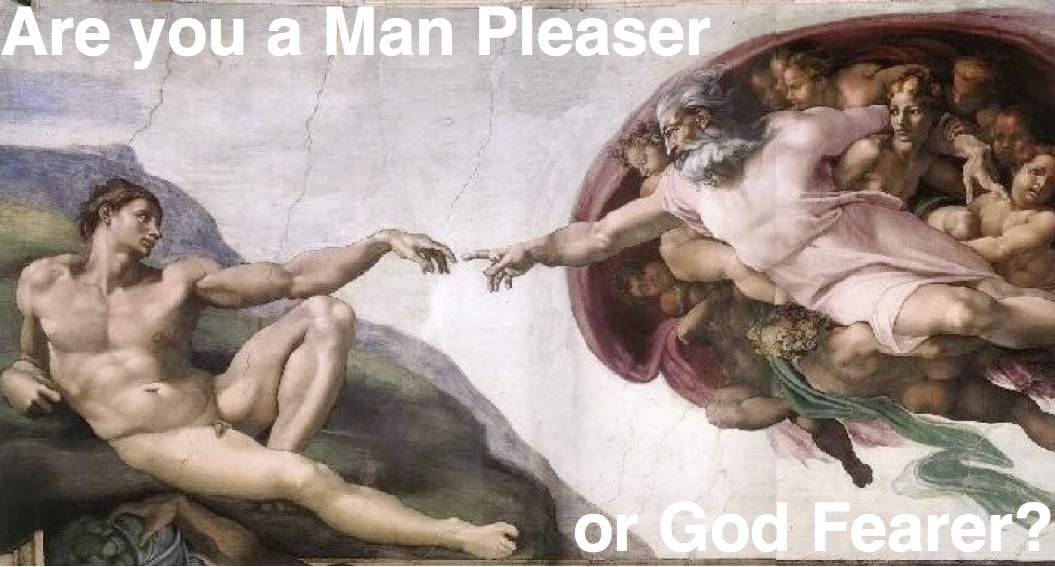
God Doesn’t Need Our Worship

In the Bible Belt, it’s easy to say you are a Christian. There is relatively no persecution or monetary cost for claiming to be a follower of Jesus. In most places it is even expected by our friends and family that we be a Christian. As humans, we often do outwardly what our family and friends expect of us without changing inwardly, but this is not the type of change the Lord desires.

Israel was the First

Bible Belt Christians are not the first ones to perform religious acts without an inward change. There were many in Israel who did the same. They offered sacrifices to God because it was expected of them, not because they were truly broken and thankful for God’s salvation.

In Psalm 50, the Lord rebukes those who offered sacrifices to Him out of duty rather than thanksgiving. He says in verses 16-21:

16  But to the wicked God says:
“What right have you to recite my statutes
or take my covenant on your lips?
17  For you hate discipline,
and you cast my words behind you.
18  If you see a thief, you are pleased with him,
and you keep company with adulterers.

19  “You give your mouth free rein for evil,
and your tongue frames deceit.
20  You sit and speak against your brother;
you slander your own mother’s son.
21  These things you have done, and I have been silent;
you thought that I was one like yourself.
But now I rebuke you and lay the charge before you.

22  “Mark this, then, you who forget God,
lest I tear you apart, and there be none to deliver!
23  The one who offers thanksgiving as his sacrifice glorifies me;
to one who orders his way rightly
I will show the salvation of God!”

What Does the Lord Desire Then?

Instead of offering sacrifices for sacrifices sake, the Lord desired that they be offered in thanksgiving for their salvation, as well as those offering them be living in a way that honors Him (Ps. 50:23).

For the Lord desires sacrifices from a broken spirit and a contrite heart.

In other words, He does not want the sacrifices of those who are proud, believing they can bring about their own salvation. Rather, He desires sacrifices from those who know they are guilty and need atonement for that guilt. He wants sacrifices from those who realize they are sinners, and as such, cannot, on their own, repair their relationship with God, because they cannot cover their own sins (Ps. 51:17).

We are No Exception

The Lord desires the same from us today. Even though we do not go to a temple to offer sacrifices, the same principle applies. The Lord does not desire those who have no thought of Him to pile into churches each Sunday because their family and friends expect them to be there. Rather, He desires those who know they can’t provide their own salvation to worship Him.

It is Not Enough Just to Show Up to Church

It is not enough to just show up to church. We are not doing God any favors. He does not respect us for attending, if we have not first given our heart to Him, knowing He is the One, who alone provides us with salvation. As He told the Israelites, He does not need their sacrifices, He is the ruler of the universe, every beast of the field is His (Ps. 50:7-11).

Likewise, He does not need us in church to make Him feel better about Himself. He does not really need us at all. We are the ones who need Him, and when we realize that, then and only then is He glorified by our worship. 

Questions for Reflection

  1. Do you attend church because it is expected of you? Or do you go because you really desire to worship God?
  2. Do you believe God needs your worship? If so, why?

Human Depravity Leads to Accountability

Last week, David Brooks wrote an opinion piece in the NY Times entitled: The Age of Innocence. He opens his column by saying the following:

“The people who pioneered democracy in Europe and the United States had a low but pretty accurate view of human nature. They knew that if we get the chance, most of us will try to get something for nothing. They knew that people generally prize short-term goodies over long-term prosperity. So, in centuries past, the democratic pioneers built a series of checks to make sure their nations wouldn’t be ruined by their own frailties.”

In America, we decentralized power building checks and balances that served “to frustrate and detain the popular will.” In Europe, they did exactly the opposite. They centralized power, which “was held by small coteries of administrators and statesmen, many of whom had attended the same elite academies where they were supposed to learn the art and responsibilities of stewardship.”

Even though the checks instituted in America and Europe where different, Brooks says, they “were based on a similar carefully balanced view of human nature: People are naturally selfish and need watching.” He then goes on to quote James Madison, who essentially says the reason we are naturally selfish is because we are depraved.

After setting the scene, Brooks then addresses the problem, which is that people no longer believe they are depraved. “They think depravity is nonexistent and they take self-government for granted.” Leaders no longer “believe their job is to restrain popular will.” Rather, they believe they are to “flatter and satisfy it,” which has caused many of today’s voters “to regard their desires as entitlements.

This has caused massive problems in today’s society. Governments have made promises they cannot afford to keep, as well as it’s people believe they are entitled to benefits for which they are not willing to pay.

The reason this has occurred is because people no longer believe they are depraved. Their worldview has no room in it for human depravity. Causing themselves to believe they are capable of self-policing. But this is simple not true.

We are depraved and we will always be depraved.

In Romans 3:10 Paul says, “None is righteous, no, not one.” Even as Christians, unrighteousness lives in our flesh and wars within us, never leaving us. Speaking of the unrighteousness that lives in his flesh Paul says in Romans 7:21-25:

“So I find it to be a law that when I want to do right, evil lies close at hand. For I delight in the law of God, in my inner being, but I see in my members another law waging war against the law of my mind and making me captive to the law of sin that dwells in my members. Wretched man that I am! Who will deliver me from this body of death? Thanks be to God through Jesus Christ our Lord! So then, I myself serve the law of God with my mind, but with my flesh I serve the law of sin.”

So, yes, as believers in Jesus Christ, we are Overcomers (1 Jn 2:13; 5:4-5), but we still are at war with our flesh, and, at times, will succumb to our flesh, as Paul makes evident in Romans 7.

So What are We to Do?

I think David Brooks’ column has a lot of insight for us here, not on a political level, but on an individual level. In his piece, he tells us that we as a nation have forgotten our depravity. I think we as a church from time to time forget that as well. While we live on this earth, we still dwell within a sinful tent; our flesh is still warring with our spirit. As a result, we too need a system of checks and balances.

This system has to exist outside of ourselves, for we cannot police ourselves anymore than our governments can police themselves. So what I want to challenge you to do is to find another person, preferably of the same sex, and someone other than your spouse, and form an accountability relationship.

Who to Look For?

When looking for someone to form this relationship with, you should pick a person who you can trust and who will hold you accountable. Someone to whom you can confess your sins and pray with about those sins. Someone who will check up on you throughout the week, as you do the same with them.

What to Do?

Once you find someone, start meeting with them once a week, or once every two weeks, whatever your schedule allows. These meetings do not have to be elaborate, they can be simple. To give you an idea of what a meeting would look like, you could read a passage of Scripture together, discuss it, talk about any sins that may be present in your life that the biblical writer brings out, and pray with one another. It is that simple! And a simple act like that can, and will, reap huge dividends in your spiritual growth.

My Challenge

So, I challenge you to begin praying this week for God to provide you with an accountability partner. If you already have someone in mind, I challenge you to get started.

Will You Celebrate on Judgment Day?

Will you celebrate on Judgment day? This is the question I asked my congregation in my last sermon, and the question I want you to think about as well.

Exposition

This last week I preached over 1 John 4:13-21. In that section, John provides his readers with confidence for the Day of Judgment by giving two tests.

These two tests ask the questions:

(1) Do you have the Holy Spirit residing in you?

The way in which you know you have the Holy Spirit residing in you, is by confessing that Jesus is the Son of God (1 John 4:15). The reason our profession provides us with assurance that we are children of God is because without the Holy Spirit, we would not make that confession (1 John 4:2-3).

(2) Do you love your brother?

The reason loving our brother provides us with assurance that we are the children of God is because without God first working His love in us, we would not love others (1 John 4:16-17). God has to first break our hard hearts with the gospel, changing our will and affections, before we will love our brothers in the way that God loves us – self-sacrificially (1 John 4:19). When we love others in the same way that God loves us, then God’s love is said to be perfected with us (1 John 4:17). Perfect love casts out fear for the Day of Judgment (1 Jn 4:18).

So then, if we can answer yes to these two tests, then we can be assured that we will celebrate on the Day of Judgment.

Application

Even though, we who are assured of their salvation will celebrate on Judgment Day, it is clear from the book of Revelation that a Day of Judgment is coming. God will judge the nations and those who are not His children will be destroyed and thrown into the lake of fire. Those who are His children will live for all of eternity with Him in the new heavens and new earth (Revelation 20:11-21:5). Knowing that this judgment is coming, we should seek to evangelize our neighbors, friends, and families.

In addition, knowing that we are going to celebrate on Judgment Day should cause us to look forward to that day because we know at that time we will live for all of eternity with our heavenly Father and His Son, Jesus Christ, who is our Savior, for all of eternity in a new heavens and a new earth free from the bondage of sin, death, persecution, illness, and heartache.

The Sanctifying Work of the Holy Spirit | Part 4

In my last post in this series, I wrote about the Monergistic Work of the Holy Spirit in the process of Sanctification. In this post, I will talk about how we work alongside the Holy Spirit to bring about change in our lives.

The Synergistic Work of the Holy Spirit

The Synergistic Work of the Holy Spirit refers to how we and the Holy Spirit work together to bring about change in our lives. In order to understand how we work alongside the Holy Spirit, we need to look at the concept of Dependent Responsibility.

Dependent Responsibility

We cannot change on our own apart from the Holy Spirit. That’s because change only occurs in us as the Holy Spirit lives in us and gives us the power to change (Ezekiel 36:27; 1 Cor. 6:19; John 15:4-5). The Holy Spirit’s empowering doesn’t absolve us from work. Rather, it means we must depend on the Holy Spirit to enable us to do God’s will. We don’t let go and let God as some say. Instead we work alongside God as He is empowering us to work [1].

Scriptural Support for the Idea of Dependent Responsibility

In Philippians 2:12-13 we read,

Therefore, my beloved, as you have always obeyed, so now, not only as in my presence but much more in my absence, work out your own salvation with fear and trembling, for it is God who works in you, both to will and to work for his good pleasure.

And in Philippians 4:13 we read,

I can do all things through him who strengthens me.

If you notice, in each verse the reason we can work out our own salvation and the reason we can do all things is because God works in us and strengthens us . So, while it is our responsibility to work, we couldn’t work unless God was working in us and empowering us to work. We are responsible, yet dependent at the same time.

How Does This Work Out Practically?

One way this works out on a practical level is through reading God’s Word. Romans 12:2 says,

Do not be conformed to this world, but be transformed by the renewal of your mind, that by testing you may discern what is the will of God, what is good and acceptable and perfect.

In this verse, Paul gives us a command. He commands us to “be transformed by the renewal of [our] mind.” The command Paul gives isn’t in the present tense, instead it is given as a passive imperative. What does that tell us? It tells us that while we are commanded to be transformed, we must rely on someone else to do the transforming. The person we rely on is the Holy Spirit.

But relying on the Holy Spirit to transforms us doesn’t mean we don’t work. We do work. We work by depending on the Holy Spirit and by reading God’s Word. So, if we want to be transformed, we must read God’s Word.

Other ways we work is by attending worship services, praying, gathering with Christians in community, etc. As we do all those things, we not only depend on the Holy Spirit, but He also works to reveal our sin, convict us, and empower us.

Conclusion

So then, we see that we are responsible to be transformed, but transformation doesn’t occur through our effort alone. Instead it occurs as we work alongside the Holy Spirit. As we depend on Him and as we practice the spiritual disciplines (reading God’s Word, praying, attending worship, gathering with Christians in community, etc). When we do those things, when we work alongside the Holy Spirit in those ways, He exposes our sin, convicts us, and gives us the power to turn from our sin to live like Christ.

Resources

[1] Dependent Responsibility is a term coined by Jerry Bridges in The Transforming Power of the Gospel, kindle location 196 (ch 1) and 1530 (ch 8).

Jerry Bridges, The Transforming Power of the Gospel, Ch. 8-11.

X-Ray Questions: Whose opinion of you counts?

This week we continue our X-Ray Questions series, as we look at the question: Whose opinion of you counts? You can read the other posts in this series by clicking here.

X-Ray Question:

(13) Whose opinion of you counts?

From whom do you desire approval and fear rejection? Whose value system do you measure yourself against? In whose eyes are you living? Whose love and approval do you need?

Understand

When you lose God, you enter a jungle of distortion. You tend to live before your own eyes or before the eyes of others – or both. When you lose or take God out of the equation, what is left is to seek the approval of man, which will ultimately leave you wanting.

Even for us who have not removed God completely from the picture, the approval of man has a strong pull on our lives, often causing us to seek it, rather than God’s approval. Since man’s approval has such a strong pull on our lives, we must fight the desire within to seek man’s approval, finding our approval in the Lord alone.

If we do not fight, we will compromise our convictions, not speaking up when we know Scripture speaks against a certain issue. When we remain silent on issues because we fear we will lose the respect of men, we are like the authorities who did not stand up to the Pharisees. John says,

Nevertheless, many even of the authorities believed in him, but for fear of the Pharisees they did not confess it, so that they would not be put out of the synagogue; for they loved the glory that comes from man more than the glory that comes from God. (John 12:42-43 ESV)

May we make it a point to seek the glory that comes from God more than the glory that comes from man.

Social Idols

The “social idols” which encompass approval and fear can take numerous forms:

  • Acceptance or Rejection
  • Being Included or Excluded
  • Praise or Criticism
  • Affection or Hostility
  • Adoration or Belittlement
  • Intimacy or Alienation
  • Being Understood or Caricatured

Awareness of these “social idols” is the first step, but we must also ask God to reveal to us where we may be seeking to please others rather than Him. In other words, we must plead with God in our prayers to reveal to us if the opinion of man is an idol that is present in our lives.

Repent

If after we pray, God reveals to us that approval is an idol in our lives, we must repent and turn from that idol. We do so by realizing true approval comes from God alone. The approval man gives us is temporary and situational. We may have man’s approval one day, but the next day they may reject us because we have not lived up to their expectations.

In contrast to the world, those who have repented of their sins and professed Jesus Christ as their Lord and Savior will never be rejected by God. As a result, they should never fear the loss of God’s approval.

Why want believers be rejected by God?

Because God accepts us based on Christ’s cross work, not our own work. When we believe in Jesus as our Lord and Savior, His righteousness is imputed to us, so that we too become righteous (2 Cor. 5:21). As those who are righteous, we are just as Jesus is even now in the world (1 John 4:17), meaning we are sons of God, just as Jesus is the Son of God. Those who are God’s children have nothing to fear. Instead they are to be confident on the Day of Judgment, knowing that God abides in them and they in God (1 John 4:15-18).

Scripture

Here are a few passages from God’s word to meditate on this week, as you consider the question: Whose opinion of you counts?: Prov. 1:7; 9:10; 29:25; John 12:43; 1 Cor. 4:3-5; 2 Cor. 10:18.

Resource

All X-Ray questions taken from David Powlison’s book Seeing with New Eyes.

The Sanctifying Work of the Holy Spirit | Part 3

In my last post in this series, I discussed progressive Sanctification. In this post, we discover how the Holy Spirit Himself works in us to bring about change.

The Monergistic Work of the Holy Spirit

The Monergistic work of the Holy Spirit is the work He does by Himself upon our hearts to bring about change in our lives.

Grounding it in Scripture

Before exploring the specific work of the Holy Spirit, let’s first ground the idea that He works on us by Himself in Scripture. Psalm 119:36-37 says,

Incline my heart to your testimonies,
       and not to selfish gain!
Turn my eyes from looking at worthless things;
       and give me life in your ways.

The Psalmist asks God to do something he cannot do – change His heart. He asks because he knows only God (Holy Spirit) can change his heart.

The writer of Hebrews agrees with the Psalmist. In Hebrews 13:20-21 he writes,

Now may the God of peace who brought again from the dead our Lord Jesus, the great shepherd of the sheep, by the blood of the eternal covenant, equip you with everything good that you may do his will, working in us that which is pleasing in his sight, through Jesus Christ, to whom be glory forever and ever. Amen.

While there is a lot here, what is important to notice right now is that the Lord is the one who equips us to do His will. Without Him equipping us, we wouldn’t give up our will for His.

So, in just these two references, we see that we aren’t the only ones working in the process of sanctification. God is also, and I would argue primarily the One, working in us through the third person of the Trinity, the Holy Spirit (John 7:39; 14:26; Acts 1:8; 2:4; Rom. 5:5; 8:9; 8:11; 8:14; 15:13; 15:16; 1 Cor. 2:12; 3:16; 12:13; 2 Cor. 1:22; Gal. 3:3; Eph. 1:13; 1 Thess. 4:8; 2 Tim. 1:14; 1 John 3:24; 4:13).

What is the Work the Holy Spirit Does in Us?

(1) He Makes us Aware of Our Sin & Brings Conviction

He makes us aware of and convicts us of specific sins in our lives, so that we can deal with those sins. Sins we may not even have known existed before the Holy Spirit brought them to our attention. This can occur in a number of ways:

  • He may convict us of a particular sin as we are reading God’s Word.
  • He may awaken our conscience to a particular sin as we are praying.
  • He may cause us to see patterns of sins in our lives that we previously thought were insignificant.
  • He may use adversity to cause us to see our sin.
  • He may even send a friend, relative, or spouse to point out sin in our lives.

There are a number of ways the Holy Spirit reveals and convicts us of sin, but the important point to notice is that He is the One who reveals these sins to us as He works Monergistically (by Himself).

(2) He Creates Desire in us to Change

Not only does the Holy Spirit reveal our sin and convict us of it, but He also creates a desire in us to change.

How does He create desire in us to change? 

He does so by causing us to remember the gospel. As we remember what Christ has done for us in the gospel, our love for Jesus should increase and we should desire to rid sin from our lives for His glory.

A desire to change based on the gospel is different from a desire to change because we feel guilty or defeated by our sin.

Guilt

Admittedly, guilt is an effective motivator to get rid of certain sins in our lives.  The reason we change, however, is not necessarily because we want to glorify God by becoming more like Christ. Rather, it is because we want to feel better about ourselves.

Defeated

Like guilt, feeling defeated by certain sins can motivate change, but not for God’s glory. Our motivation here is our own pride. It is the desire to stroke our own ego for not having sin in our lives.

(3) He Creates Change

After making us aware of our need and creating a desire to change, the Holy Spirit works on our hearts to bring about change. Ultimately, the way He creates change in us is mysterious and hard to explain. But two illustrations might help.

Unlovable to Lovable

We all have those people in our lives who are unlovable. No matter what you do, how much you prepare yourselves, and how well you try to interact with them, they always do something or act in some way that causes them to be hard to love. As Christians, we know we should love, even loving those who are at times unlovable, so we pray that God would change our hearts. At some point God answers our prayer, changing our hearts, and causing us to love the person who was once unlovable to us. Now that person did not change, they still act in the same way, but we have changed because the Holy Spirit has worked on our hearts.

Anxious to Calm

There are those of us who are anxious when it comes to flying. As Christians though, we know it is a sin to be anxious because it shows we are not trusting in the Lord. Our awareness of this sin in our lives causes us to pray to God to change our hearts, so that we are no longer anxious when we board a plane. Amazingly, the next time we get on a flight we are not anxious. We find ourselves calm, and even enjoying our time in the air. Now, air travel did not suddenly get safer. What changed was our heart, and that change was brought about by the Holy Spirit working in us.

Conclusion

So we see that one way in which Sanctification occurs in our lives is through the Monergistic Work of the Holy Spirit. He works by Himself to make us aware of and to convict us of specific sins. He also produces a desire in us to change and rid specific sins from our lives by causing us to reflect on the gospel message. Furthermore, He produces change in our hearts that we could not bring about by ourselves.

Now this does not mean that we are not to work. Indeed we are to work in the Sanctification process and I will talk about that next time.

Looking Forward

In my next post in this series, I will discuss the Synergistic Work of the Holy Spirit – how we work alongside the Holy Spirit to bring about change in our lives.

Resource

Jerry Bridges, The Transforming Power of the Gospel, Ch. 8