
God and Christians, What is Their Relationship Like?

Have you every wondered what type of fellowship Christians have with God on the basis of Christ’s sacrifice? Have you been looking for motivation to pray throughout the day?

I have been reading a book entitled Taking Hold of God: Reformed and Puritan Perspectives on Prayer. This weekend I came across a list by Matthew Henry explaining the availability of God to the Christian, which occurs on the basis of Christ’s atoning sacrifice.

Read along as we explore the nature of the relationship Christians have with God through Christ.

Christians enjoy:

(1) A companion ready in all their solitudes, so that they are never less alone than when alone. Do we need better society than fellowship with the Father?

(2) A counsellor ready in all their doubts,…a guide (Ps. 73:24), who has promised to direct with his eye, to lead us in the way wherein we should go.

(3) A comforter ready in all their sorrows…[to] support sinking spirits, and be the strength of a fainting heart.

(4) A supply ready in all their wants. They that have access to God have access to a full fountain, an inexhaustible treasure, a rich mine.

(5) A support ready under all their burdens. They have access to him as Adonai [my Lord], my stay and the strength of my heart (Ps. 73:26).

(6) A shelter ready in all their dangers, a city of refuge near at hand. The name of the Lord is a strong tower (Prov. 18:10).

(7) Strength ready for all their performances in doing work, fighting work. He is their arm every morning (Isa. 33:2).

(8) Salvation insured by a sweet and undeceiving earnest…If he thus guides us by his counsel he will receive us to glory.

Application

As you can see, God is fully available to us as Christians. God’s availability and the nature of our relationship with Him should drive us to pray to Him. We should go to God everyday, seeking His strength, shelter, support, supply, comfort, counsel, and companionship.

Resource

Joel R. Beeke and Brian Najapfour, Taking Hold of God: Reformed and Puritan Perspectives on Prayer, 143-44.
Political Christian: Is this a Contradiction?

Should Christians be involved in Public Policy? Many pastors and Christians in evangelical circles will answer this question with a resounding, NO! Some even go so far as to say that government is evil, and government affiliation should be avoided at all cost.

What these Christians forget is that government is not a worldly invention. Paul writes in Romans 13:1, “Every person is to be in subjection to the governing authorities. For there is no authority except from God, and those which exist are established by God. Therefore whoever resists authority has opposed the ordinance of God; and they who have opposed will receive condemnation upon themselves.” Here we learn that government is not a human invention; it is not the realm of the Devil, it is a Divine institution, established by God.

I will admit, government can be a source of evil, if evil people run it. But it can also be a source of much good in our society, if good people get involved. As Christians, we must be that good voice in government. Good public policy acts to restrain evil, while bad policy encourages immoral behavior. It is no mystery that laws influence the decisions people make. For example, New York did not pass a no fault divorce law, when other states did. As a result, the divorce rate in New York is lower than the rest of the country. (Article & iMAPP Study)

I believe Christians have the ability to influence legislation for good, if they will get involved, thus, influencing the moral climate of our Nation.

Two More Reasons To Be Involved

Other than the fact that Christians are called to be salt and light in the world (Matt. 5:13), I will leave you with two more reasons we need to be engaged in political service:

(1) To protect the churches freedom to proclaim the Gospel. There are many in our culture who want to tear down the institution of the church, and if we as Christians do not get involved, they may succeed.

(2) For the good of everyone. There are a lot of people who fall prey to bad public policy. A good example is the unborn. Many lives are lost everyday because abortion was legalized in our country.

Conclusion

If Christians continue to see government as evil and remain apathetic to Political service, then public policies will continue to cater to those who want nothing to do with Judeo-Christian values. So to answer my original question, should Christians be involved in Public Policy, I give a resounding YES!

Resources and How To Get Involved

Some ideas from this post were taken from a talk Dr. Barrett Duke gave at Southwestern Baptist Theological Seminary.  Dr. Duke is the Vice President of the Southern Baptists Ethics and Religious Liberties Commission.  More about the ERLC and how Christians can get involved in public policy can be found on their website: ERLC.com

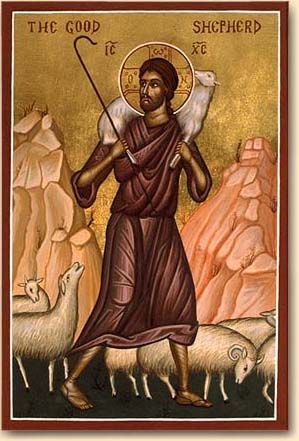
The Good Shepherd: Teaching us how to shepherd our family

Just last year, God blessed my brother and sister-n-law with a new addition to their family. Taylor came into the world weighing in at  7.1 lbs. This new addition to their family of three has been a joyous time, yet it comes with great responsibility. Not only are they to care for their children’s physical needs, but they are also to attend to their families spiritual development.

Specifically, the husband is to shepherd his family. Whether the family consists of the husband and wife, or a family of four, men are called to be the pastor’s of their household. Our local pastor is not the only one called to shepherd the flock. We are called to this task as well.

Jesus is our example and as Christians we are to walk as He walked (1 John 2:6), imitating Him (Eph. 5:1, 1 Cor. 11:1) in all things. Since He is our example, it is only right that we should look to Him for the “how to” of shepherding.

Here are a few guiding principles to get you started:

(1) We must know those we shepherd.

John 10:14 tells us Jesus is the Good Shepherd and He knows His own and His own know Him. In order to shepherd our families well, we must spend time getting to know them. This means turning off the t.v. during dinner and engaging your family in conversation.

(2) We must lead by example.

Jesus taught His disciples to pray by example (Matt 6:5-15). He showed them how to serve one another by example (John 13:3-5), and He also taught His disciples how to minister to others by example (Luke 8:1-9:6). As leaders of our household, we must do the same, which necessitates that we know how to pray, how to serve others, and how to minister to friends and family.

(3) We must protect our families from both physical and spiritual danger.

Jesus tells us that the Good Shepherd is willing to lay down His life for His sheep (John 10:11-13). He lays down His life because He cares for them. And in caring for them, He protects them from both physical and spiritual harm. In order to protect our families from spiritual danger, we must know what they are watching, reading, and who they are friends with. We must understand the culture in which we live, knowing how to combat cultural teachings with Scripture. This means we must not only have a deep understanding of our culture, but also of the Word of God.

(4) We must instruct our families.

Jesus intimately instructed His disciples during His earthly ministry, teaching them how to both read and understand the Word of God (Acts 1:3). We also must instruct our family in God’s Word, teaching them how to read it and understand it. This can be accomplished through a nightly family devotion, a weekly Bible study, or by talking about the sermon over lunch.

Conclusion

These four suggestions for better shepherding are not all that a shepherd does, but it is a good start. If we are committed to knowing our families better, leading by example, protecting them from both physical and spiritual danger, and instructing our families in the Word of God, we are on the right path to shepherding our families well.

Resource

The Exemplary Husband by Stuart Scott (117-130).