What happens when we believe God’s grace is earned and not freely given?

The book of Jonah highlights Jonah’s journey to preach to Nineveh. After running from the Lord, Jonah eventually ends up in Nineveh, but his heart is not completely right. After reaching Nineveh, Jonah preaches to them and his worst fear comes true, God saves Nineveh. God doesn’t just save one or two of them. He saves the entire city. One of the greatest revivals in history happens right there in Nineveh.

How does Jonah respond?

“O Lord, is not this what I said when I was yet in my country? That is why I made haste to flee to Tarshish; for I knew that you are a gracious God and merciful, slow to anger and abounding in steadfast love, and relenting from disaster.

(Jon 4:2)

Clearly, Jonah’s emotions are out of control. He is angry at God and feels he has been treated unfairly. All because God saved the Ninevites. If you think about it, that is quite a peculiar reaction.

But before you are too hard on Jonah and think you could never react like him. Consider for a moment the emotions you might feel if a terrorist suddenly repented and turned to the Lord. On the one hand, you might rejoice because you know their terrorist activities would stop.

But on the other hand, you might be upset, you might find it hard to rejoice and praise God because you think they didn’t get what they deserve — the full brunt of God’s wrath.

Or bringing it even closer to home. Consider how you would react if someone who brutally murdered a family member met Jesus on death row. Before they could carry out the death penalty, they came to know the Lord. How would you react? Would you find it hard to rejoice with them? To praise God for saving another soul from the fires of hell? Would you be upset because you don’t feel like true justice was served?

Resentment

If we aren’t careful, we can end up resenting the Father because we don’t get what we think we are owed. Maybe we believe we are owed recognition, wealth, prosperity, and an easy marriage. When we don’t get those things, we resent God because we think He is being unfair.

But when we act that way, we show we misunderstand the gospel. We have it wrong if we think God’s grace is earned. God’s grace is not earned it is freely given. It’s crucial we know God’s grace is freely given because if we believe God’s grace is earned, we will also believe God owes us for our faithful service. When God doesn’t pay up, we will resent Him. As well as if we believe God’s grace is earned, we won’t be able to celebrate when someone who we believe doesn’t deserve God’s grace gets it.

It’s crucial we understand God’s grace is freely given and it is given to those who don’t deserve it. If we don’t understand that, we are going to resent God for not giving us what we think we are owed for our faithful service.

Here is the odd thing.

The more we faithfully serve the greater the temptation becomes to resent God for not giving us what we think we are owed for faithfully serving Him.

Is Jesus Your King?

All those who come to Christ must step off our thrones, repent of our sins, and humble ourselves before the Lord.

We might not think of it like this, but before we come to Jesus, we each sit on a throne. The throne we sit on is that of our own heart. We may not think of it like that, but that is how it is — we live as if we are the big “K” king. If that is true, turning to the Lord requires we give up our position as king and allow the Lord to be our King. Which means we must step down from our throne and allow the Lord to sit on it.

Not only must we allow the Lord to sit on the throne of our lives, but if we claim to be Christian, we must strive to live like Christ. To be like Christ we have to turn from the sinful lifestyle we lived before we turned to Jesus. If we don’t, we prove we haven’t really heard God’s Word, that’s because hearing God’s Word changes hearts. It changes our desires and affections. When we truly hear God’s Word, we will repent and turn from our evil and violent ways. We won’t want to operate like we once did. Instead of seeking to elevate ourselves, we will work to please and make Jesus’ name famous.

We can claim to be Christians all day long, but if our lives don’t back that claim up, are we really Christians?
Have we really turned to Christ? Let me challenge you to ask yourself these questions if you claim to be a Christian:

  • Have you stepped off the throne of your heart?
  • Are you allowing God to be the King of your life?
  • Or are you still trying to operate as the big “K” king?
  • Have you seen a noticeable change in your desires and actions since professing Christ as your Lord and Savior?

Those who believe in and profess Jesus as their Lord and Savior, not only believe He died for their sins, but they also believe He is their Lord, their King — the One who has the right to direct their lives.

You might have riches but don’t trust in them

“As for the rich in this present age, charge them not to be haughty, nor to set their hopes on the uncertainty of riches, but on God, who richly provides us with everything to enjoy.” (1 Tim 6:17)

Don’t read the above and think of those in Hollywood or Silicon Valley. We, most Americans, are rich according to the worldly standards. According to Market Watch “the median net worth of the average U.S. household is $97,300.” That is the middle point. Half of US households earn more and half earn less. I understand poverty is an issue. I don’t want to make light of it. But when we compare ourselves to the world population by and large Americans are considered rich. So when you read “rich” in the above verse, don’t think someone else, think yourself.

Wealth, however, is not something in which we should put our trust. Many of us have lived through a recession. We have felt the sting of the stock market dropping. We are living through a pandemic. All of these events affect wealth / riches. What is here today can be gone tomorrow.

Instead of trusting in our riches, which are uncertain, we should trust in the Lord. He is our provider. The One who gives us all we have. You have the opportunities, position, intellect, abilities, and riches because of the Lord. We must, then, recognize God is the One who provides all. In turn, we must put our hope and trust in Him instead of the uncertainty of riches.

The Gospel is the Only Thing that Can Change Us, Not Self-Help

I don’t know about you but I love books. Over the years I have amassed quite a collection. Not near as many as some of my friends, but I’d say it is a healthy collection.

As most book lovers do, I love bookstores. I can spend hours in a bookstore just looking. My wife used to come along, but it’s gotten to the point now that she refuses to go to a bookstore with me because she knows I will be in there forever.

One of the things I like to do when I am at the bookstore is peruse the self-help and spirituality sections. Not because I am interested in buying any of those books, but because I want to know what others are buying. What they believe will make difference in their lives.

In these sections you will find all kinds of books. Books that promise to help you:

  • Win Friends and Influence People
  • To become a Highly Effective Person
  • Stop Worrying and Start Living
  • Gain Happiness
  • To lead people
  • To fulfill your dreams in life

The list can go on and on.

While all these books promise to help you in these areas, I don’t believe they can ultimately drive the change they promise. Nor can they fix the mess this nation is in. That’s because these books focus on the self. They attempt to pull the best you out of you.

What is inherently wrong with that idea is that we are all broken people. Ever since Adam and Eve rebelled against God in the garden, we have experienced corruption. Because we are corrupted to our core, we cannot rise above in and of ourselves. We can’t uncorrupt ourselves no matter how many books we read, seminars we attend, or life coaches we hire. Self-help is a falsity.

If these books and the ideas behind them can’t change people and fix our nation, what can? The gospel — the good news that God sent a Messiah, who is Jesus. Jesus not only pays the penalty for our rebellion, but He also creates a new humanity that can experience freedom from corruption. Jesus saves us and changes us. He gives us hope.

Jesus came to save sinners — that’s you and me.

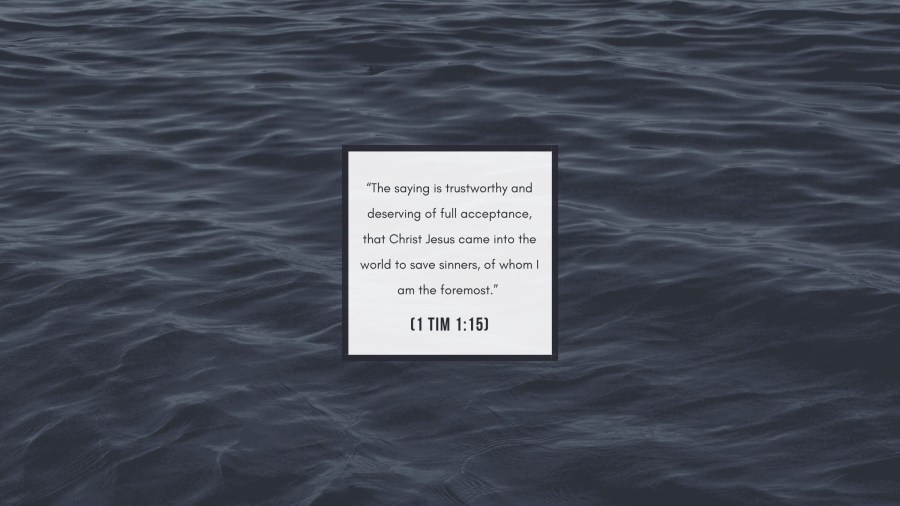
“The saying is trustworthy and deserving of full acceptance, that Christ Jesus came into the world to save sinners, of whom I am the foremost.” (1 Tim 1:15)

Jesus did not come as a good example or to blaze a trail to the afterlife that we can now follow. No, Jesus came to save. He came to save because we are sinners who need saving. We don’t need good examples. We don’t need trails to follow. We need to be freed from our rebellion, freed from the grip of sin, freed from the blinding thoughts and desires that cause us to run from God instead of to Him.

It is fruitless for Jesus to blaze a trail to the afterlife because we don’t want to follow the trail. We run from the trail seeking to blaze our own. Sin causes us to believe we are capable of pleasing and reaching God in and of ourselves. We believe we somehow have the inside track and everyone else doesn’t. Sin causes us to think much better of ourselves

Instead of believing we are worth saving, we must see ourselves through God’s eyes — we are wretched sinners who don’t deserve salvation. Notice Paul ends the verse by admitting he is the chief of sinners. We must admit the same as well. When we are willing to admit we are the chief of sinners we can rest knowing Jesus is at work in our lives. We should praise Him for His work in saving us from an eternal life outside of the presence of God. As well as freeing us from the effects of sin on our life now.

Jesus came to save sinners — that’s you and me.

By the Grace of God, you are a gift for Jesus’ glory

“To this end we always pray for you, that our God may make you worthy of his calling and may fulfill every resolve for good and every work of faith by his power,” (2 Thess 1:11)

We need the prayers of the saints for our growth. As believers, we are to look after and encourage one another. We should desire to see the best for our fellow brothers and sisters in Christ. What could be better than their growth in Christlikeness.

Becoming more like Christ means we become more like the people God originally designed us to be. When we live according to God’s designed, life generally goes well for us. Even if we experience difficulties such as persecution or set back, we can have joy. Joy because we have hope. Hope for a future when we will see Jesus in all His glory. Joy because even in the difficulties we are able to accomplish our purpose in life, which is to glorify God. In verse 12, Paul reveals the end to which he prays,

“so that the name of our Lord Jesus may be glorified in you, and you in him, according to the grace of our God and the Lord Jesus Christ.” (2 Thess 1:12)

The end is Jesus glory in us and us in Him. Jesus is ultimately glorified in us, not by our work, but by the grace of God. In this way, we are a gift to Jesus for His glory. What a privilege it is to be used by the Creator of the world, the King over all, the All Sovereign Lord as a gift to His Son for His glory and our own.