The Sanctifying Work of the Holy Spirit | Part 2

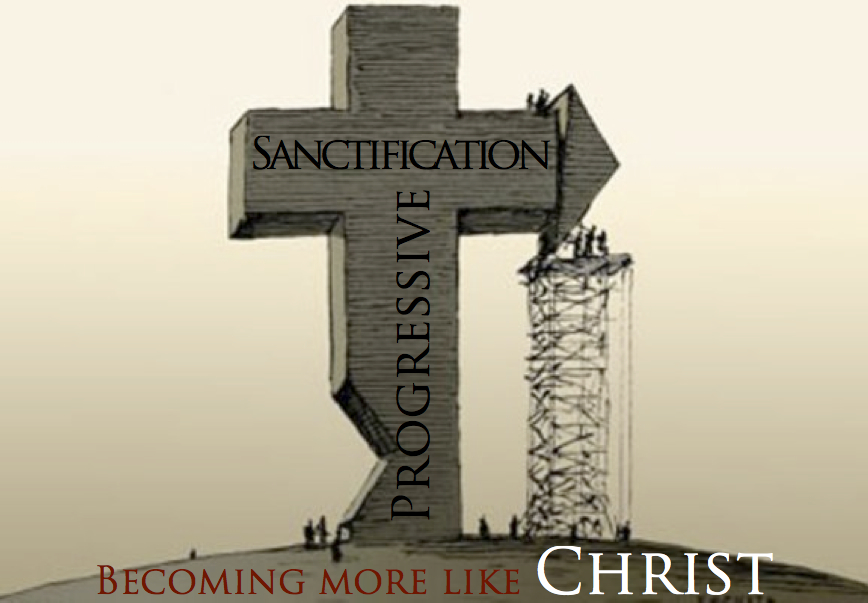
In my last post in this series, I defined sanctification and talked about the objective moment when we are set apart as God’s children. In this post, I want to introduce the concept of Progressive Sanctification.

Progressive Sanctification: A Definition

Progressive Sanctification is defined as the ongoing work of the Holy Spirit in our lives to reveal our sin, in order to remove it, so that we continue to become more and more free from sin and like Christ in our daily lives. It differs from Definitive Sanctification in that it is a continual process, whereas Definitive Sanctification is an objective point in time-space history where we are set apart as Children of God.

A Process that is Never Complete

The process of Progressive Sanctification continues until our death at which time we receive our glorified bodies and finally become like Christ (1 John 3:2). Since Progressive Sanctification is never complete, we will never be without sin before Christ’s return because we live in a sinful body, and our flesh continually wars against our spirit (1 Kings 8:46; Prov. 20:9; Eccl. 7:20; Matt 6:11-12; Rom. 6:12-14; 7:13-25; James 3:2; 1 Jn 1:8).

Instead of reaching a state of perfection, we will continue to grow in Christ’s likeness as the Holy Spirit works in our lives. This does not mean we are to give up, throw our hands up in the air and say, “What is the point of all this then, if we will never be perfectly like Jesus this side of the grave.” Our lack of perfection does not mean we should despair or continue in sin.

We Should Not Despair

In Romans 8:15-16 Paul says,

For you did not receive the spirit of slavery to fall back into fear, but you have received the Spirit of adoption as sons, by whom we cry, “Abba! Father!” The Spirit himself bears witness with our spirit that we are children of God, and if children, then heirs—heirs of God and fellow heirs with Christ, provided we suffer with him in order that we may also be glorified with him.

We should not despair if we do not attain to perfection in this life. The Holy Spirit bears witness to our salvation and adoption as sons. We are not to be racked with guilt over our sin, nor are we to listen to the accusations of Satan that a child of God need be perfect. When we see change occurring in our lives, we can be sure the Holy Spirit is the one working to bring about that change, which proves we are God’s children.

We Should Not Continue To Sin

In Romans 6:1-7 Paul says,

What shall we say then? Are we to continue in sin that grace may abound? By no means! How can we who died to sin still live in it? Do you not know that all of us who have been baptized into Christ Jesus were baptized into his death? We were buried therefore with him by baptism into death, in order that, just as Christ was raised from the dead by the glory of the Father, we too might walk in newness of life.

For if we have been united with him in a death like his, we shall certainly be united with him in a resurrection like his. We know that our old self was crucified with him in order that the body of sin might be brought to nothing, so that we would no longer be enslaved to sin. For one who has died has been set free from sin.

God in His grace saves us from eternal damnation through the death, burial, and resurrection of Jesus Christ. When we believe in Jesus as our Lord and Savior, we are united with Him in His death and resurrection, so that His death and His resurrection become our death and our resurrection.

When we are united with Jesus, we are released from the bondage of sin and are free to worship and glorify God in our bodies. We no longer have to follow our former master Satan. The enslavement we once knew has been broken, and we are not to continue as we lived formerly when we were in bondage to Satan and his rule. In other words, we are not to continue to sin because we have been set free from a life of sin through our relationship with Jesus Christ, as well as we are not to presume upon the grace of God.

Conclusion

So we see the the process of Sanctification is also Progressive, in that it continues throughout our entire lives. As the Holy Spirit works in our life to convict us of sin, we grow more and more like Jesus in our daily lives.

We also saw Progressive Sanctification is a process that is never complete. We will never be perfect in this life because of our sinful bodies. Even so, we are not to despair because the Holy Spirit’s work in our lives testifies to our salvation and adoption as sons of God. In addition, we are not to continue to sin presuming upon God’s grace, nor are we to continue to sin because we have been freed from the bondage of sin to a life that is able to live as our Savior Jesus Christ.

Looking Forward

In my next post in this series, I will talk about how the Holy Spirit works in our lives to bring about change Monergistically (by Himself).

Resources

Jerry Bridges, The Transforming Power of the Gospel, Ch. 8

Wayne Grudem, Systematic Theology, Ch. 38.

The Sanctifying Work of the Holy Spirit | Part 1

As Christian, we are set apart by God to glorify Him in our bodies (1 Cor. 6:19-20). The way we glorify God in our bodies is to become more like His Son, Jesus Christ. The way we become more like His Son is through the transforming work of the Holy Spirit in our lives, which is known as Sanctification. In my next series of posts I want to explore the sanctifying work of the Holy Spirit.

Sanctification: A Definition

When I talk about sanctification, I simply mean the process by which we are set apart unto God for His use. There are two types of sanctification. The first is Definitive Sanctification, and the second is Progressive Sanctification. We will discuss Definitive Sanctification today, and leave it to my next post to discuss Progressive Sanctification.

Definitive Sanctification

Definitive Sanctification can be defined by saying our belief in the gospel occurs at a definitive moment in space time history through the work of the Holy Spirit in our lives. He is the one who first sets us apart by opening our hearts to the gospel message, allowing us to understand it, and believe in it as our only hope of salvation (2 Thess. 2:13-14; 1 Peter 1:1-2; Jn 3:5-8; Titus 3:5).

Without an objective moment in time occurring where we are set apart through the work of the Holy Spirit in our lives, we would not be able to begin to be more like Christ because we would be in bondage to our sin, as well as we would be spiritually dead (Eph. 2:1-5; Col. 2:13-14). In Christ, we are made alive, we are a new creation (2 Cor. 5:17). As those who have been made alive by the work of the Holy Spirit, we can begin to become more like Christ, but not before we are raised from the dead in Christ through the work of the Holy Spirit.

This means that we are only able to become more like Christ after we have been set apart by the work of the Holy Spirit. The gospel does not tell us that we have to first clean ourselves up before we come to Christ. It tells us that the only way we can believe in Christ is if we are made alive by the work of the Holy Spirit in our lives.

Application

Believing the Holy Spirit is the one who awakens dead sinners hearts has radical implications in regards to our evangelism and preaching. By understanding it is the work of the Holy Spirit who awakens a sinners dead heart, we can say several things:

(1) We are freed from the pressure of feeling like we must close the deal every time talk with someone about Christ.

Rather than feeling like we cannot share the gospel with someone until we have our presentation fine tuned, we can share what we know, in the way that works best for us, trusting the Holy Spirit is the one who will close the deal by awakening their heart. No matter how good of a presentation we may give, or how persuasive of a closing argument we have, people will not believe the gospel unless the Holy Spirit has awakened them to it.

From experience you know this is true. Have you ever spent hours on end pleading and showing someone the truth of the gospel only to have them reject it? You answered all their questions, your presentation was solid, you provided them with example after example of how the gospel has changed your life and how you have more joy in Christ than you ever thought possible, but they still do not believe, they still are not ready to commit their lives to Christ. Why you ask? Because the Holy Spirit has not awakened them to the reality of the gospel.

So then, instead of trying to find the next best way to close the deal, be real with people. Share your heart and trust the Holy Spirit will use what you say, no matter how inadequate you believe it to be, to awaken their hearts to the gospel.

(2) We are freed from the belief that people’s blood is on our hands if we do not tell them about the gospel.

In saying this I do not mean to say that we should not seek to tell everyone we meet about the gospel. Rather, I mean that we have a different motivation for presenting the gospel to them. Our motivation is not out of guilt or fear, but out of gratitude for what God has done for us and love for that person. When we tell others about the gospel, we should not tell them the gospel simply to make ourselves feel better, we should present the gospel to them because we want them to experience the same joy, love, and freedom from sin that we experience in Christ as a new creation.

(3) We are freed from manufacturing a worship service that plays on people’s feelings and emotions. 

Rather than manufacturing feelings in people, we are to clearly and boldly explain the gospel message, believing the Holy Spirit will use the Word of God to awaken ones heart to believe in Jesus as their Lord and Savior.

Looking Forward

In my next post in this series, I will introduce and define the concept of Progressive Sanctification.

Resources

Jerry Bridges, The Transforming Power of the Gospel, Ch. 8

Confessing Sin the Key to Vertical & Horizontal Fellowship

This last Sunday, I preached over 1 John 1:5-10. Part of John’s message is that admitting we are sinners and confessing our sin is the only way we can experience true fellowship with God (Vertical) and with one another (Horizontal). In 1 John 1:7,9 we read:

But if we walk in the light, as He is in the light, we have fellowship with one another, and the blood of Jesus His Son cleanses us from all sin…If we confess our sin, He is faithful and just to forgive us our sins and to cleanse us from all unrighteousness.

John tells us that we have fellowship with one another if we walk in the light. The same light that God Himself walks in. A light we are able to walk in by confessing our sins. Let’s look at this one piece at a time.

Confession of Sin

In order to confess our sin, we have to first understand sin. Sin is more than just breaking the commandments of God, even though it is that. Sin is more heinous though. It is an outright attack and denial of who God is. It is to follow ourselves rather than to follow God. Now that we understand the heinousness of sin, we can answer the question:

What does it mean to confess sin?

It means that we first recognize we are a sinner, that we have rebelled against God to seek after the things of the world, thinking ourselves to be wiser than God.

Second, it means that we confess to God our rebelliousness against Him. We confess that we have tried to go at it on our own because we thought that our wisdom was greater than His. And in doing so we have sinned against Him.

The Cleansing Blood of Christ

When we confess our sins, Christ acts as our propitiation. He removes our sin and the wrath of God from us. In doing so, He is our substitute, standing in our place, taking the punishment we deserve because of our sinfulness.

Once we confess our sins, Christ’s blood cleanses us from all unrighteousness. When God looks down on us, He sees Christ’s blood and not our sin. This results in our relationship with God being reconciled.

It also shows that Christ’s blood is the only way we are cleansed from our unrighteousness, meaning our works will not do. Thus, confessing our sin, not performing works, is the only way we can be reconciled to God

Walk in the Light

Our confession of sin results in a changed heart and the indwelling of the Holy Spirit (Jer. 31 & Acts 2). Our changed heart and the Holy Spirit empowers us to live in accordance with the commandments of God, as well as we are able to walk in the light with Him.

Because of Christ’s cleansing blood, we are freed from the bondage of sin. Where we once lived for ourselves, we now have the ability to live for God. Where we once used one another for personal gain, we now have the ability to love and serve each other. This means that the cleansing blood of Christ not only results in us having fellowship God, but it also results in us having true fellowship with one another.

Conclusion

When we confess our sins, recognizing Christ is our Savior – that He is the one who took our punishment for us – then we are cleansed from all our unrighteousness and our relationship with God and one another is restored. John’s message then is that true fellowship with God and one another only happens when we confess our sins. There is no other way. May we all recognize this truth, confess our sins, and be saved from all unrighteousness, which results in true fellowship with both God and one another.


The Exclusivity of the Gospel & Biblical Fellowship

In 1 John 1:3, John tells us the reason he is writing is so that we will have fellowship with each other, with the Father, and with the Son. In marking out these different types of relationships, John is saying, our fellowship with one another, and our fellowship with God is based on our fellowship with Jesus. This differentiation is made more clear in verse 7, when John says our fellowship with one another is based on Jesus’ cleansing of our sins. What we learn in these two verses is that only through our belief in the person and work of Jesus, can we have true fellowship with the Father and with one another.

The Exclusivity of the Gospel

Before I explain what it means to have fellowship with one another, I want to make a point about the exclusivity of the gospel. The fact that we can only have fellowship with God through Jesus means those who believe they can have fellowship with God through other means are mistaken. When those in society claim there are multiple ways to God, or say we need to all co-exist, they are proclaiming another gospel, a false gospel that does not lead to God. The gospel is exclusive and there is only one way to be reconciled to God and experience true fellowship with Him and one another and that is through Jesus Christ.

What does it mean to have fellowship?

Fellowship carries the idea of a close mutual relationship involving mutual interests and sharing. It is a uniquely Christian relational experience that no one but those born of the Spirit of God can experience.

Fellowship With God

To have fellowship with God means we are reconciled to God through our union with Christ. This occurs by believing we are sinners who are in need of a Savior and that Jesus is that Savior. He is God incarnate, eternally existing with the Father, who came in the form of man, dying on the cross for our sins and resurrecting on the third day to ascend to the throne where He now reigns as King. Through our belief in this good news, or what we would call the gospel message, we have fellowship with God. Even more than a reconciled relationship with God, our fellowship with God means we accept His values, His commandments, and His message about Himself and us, and we live accordingly.

Fellowship With One Another

Now that we know what it means to have fellowship with God, we need to ask and answer the question: What does it means to have fellowship with one another? In order to answer that question, I want to talk about what Christian fellowship is not.

What Christian Fellowship is Not

Christian Fellowship is not any warm human exchange we might have with one another. Granted we may share interests with one another such as: Hunting, hiking, fishing, sports, knitting, facebooking, running, a love for the outdoors, or even discussing the latest political candidates, but talking about or participating in these interests together does not constitute Christian fellowship. Remember, Christian fellowship is a uniquely Christian relational experience. We can experience these things with anyone, Christian or not. So then, if Christian fellowship is not solely getting together with Christians to talk and hang out, then what is it?

What Christian Fellowship is

Christian Fellowship means we are participating together in the life and truth made possible by the Holy Spirit through our union with Christ. It is sharing something in common on the deepest possible level of human relationships – our experience of God Himself.

Christian fellowship then involves mutual care and love for one another which is expressed by:

  • Sharing what God has done in our life
  • Sharing what we are learning in His Word
  • Confessing sin to one another
  • Correcting one another
  • Worshipping God together
  • Praying for one another
  • Utilizing our Spiritual gifts
  • Carrying one another’s burdens
  • Serving one another

This means we cannot say we are having true Christian fellowship:

  • Until we have moved from talking about the latest game to talking about God’s Word.
  • Until we have moved from the weather to what God is doing in our lives.
  • Until we are truly self-sacrificially loving one another.

Conclusion

Christian fellowship is a uniquely Christian relationship that involves more than a warm human exchange we might have with one another. It is deeper than shared worldly interests. It is a relationship we can only have by believing the gospel message concerning Jesus. It only occurs when we connect on a level we cannot connect on with those in the world because they do not share our relationship with Jesus and God. May we regularly take advantage of this unique relationship we share with others who believe in Christ as their Savior.

In order to help promote Christian fellowship, I have written another post: Gospel Conversations and Biblical Fellowship.

The Cost of Following Jesus

I am following a read through the Bible in a year plan. My readings this morning were in the gospel of Matthew chapters 15 and 16. At the end of chapter 16, Jesus begins to tell His disciples He must go to Jerusalem to suffer many things, be killed, after which He will raise on the third day (vs 21). To this news, Peter rebukes Him, telling Him this will never happen (vs 22). Instead of agreeing with Peter, Jesus rebukes him along with Satan. He tells Peter he is being a hindrance to Him and that he is setting his mind on the things of man, not the things of God (vs 23).

The Cost of Following Jesus

After this brief dialogue with Peter, Jesus takes the opportunity to teach his disciples what it means to follow Him. The text says,

24 Then Jesus told his disciples, “If anyone would come after me, let him deny himself and take up his cross and follow me. 25 For whoever would save his life will lose it, but whoever loses his life for my sake will find it. 26 For what will it profit a man if he gains the whole world and forfeits his soul? Or what shall a man give in return for his soul? 27 For the Son of Man is going to come with his angels in the glory of his Father, and then he will repay each person according to what he has done.

The cost of following Jesus is to daily take up our cross and follow Him. In other words, we are to be willing to give up our life for the sake of following Christ.

Hard Words

These are hard words to stomach. Even harder words for me to know the true meaning of as I live here in the United States free from religious persecution. We, in the United States, often want Christ and the world, but Jesus tells us we are to set our mind on the things of God, not the things of this world (vs 23). We are to sacrifice for the sake of Christ, even if it means we are uncomfortable, poor, or killed. Again, these are hard words for us, who live in comfort and have plenty. Even so, they are true and what we must be willing to do, if we want to be a follower of Jesus, because to follow Him is to take the road less traveled.

Follow Jesus: It is the only thing that matters

Gaining the world will not profit our soul. No matter how much worldly wealth or fame we have gained. In the end, all that matters is that we have counted the cost of following Jesus, recognizing it is much greater than anything this world can ever offer us, and we followed Him.

Image: chrisroll / FreeDigitalPhotos.net

Building the Church: What is the End Goal?

In Ephesians 4:7-16, Paul tells us Jesus gives gifts to the church for the building up of the body. Jesus gives gifts to the individual members of the church. He also calls some men, to become Apostles, Prophets, Evangelists, and Pastor Teachers, and gives them as gifts to the church, in order to equip the saints for the work of ministry. The congregation, along with the Apostles, Prophets, Evangelists, and Pastor Teachers, are to build up the body of Christ. They are to work toward a certain end. It is that end that I want to focus on today.

You do not start a building project without first understanding what you are building, nor do you start building up the body of Christ without first understanding the goal in mind. What is that goal? Where are we as a congregation supposed to be headed? Paul provides the answer in verses 13-14 when he says,

Until we all attain to the unity of the faith and of the knowledge of the Son of God, to mature manhood, to the measure of the stature of the fullness of Christ, so that we may no longer be children, tossed to and fro by the waves and carried about by every wind of doctrine, by human cunning, by craftiness in deceitful schemes.

I believe we can pull three attributes out of these verses, which tell us where we are headed as a church, which is ultimately to maturity. Let’s look at the three characteristics of a mature church:

1. It is a church were everyone is unified because of a common faith and where everyone has a deep intimate knowledge of Jesus Christ

The first phrase Paul writes, “Unity of the Faith and the knowledge of the Son of God” has the idea that the entire congregation is united, they are one, because of their shared faith. As well as those in the congregation have an intimate and real knowledge of Christ, which is gained from seeing Him work in the body.

The psalmist is a good example of one who had an intimate knowledge of God. We often read of him crying out to God as his protector, comforter, and salvation. He sees God as a righteous judge and deliverer, as well as one who provides for the poor and the needy.

The psalmist does not know these things about God because he has studied them, even though he has, but he more so knows these things about God because he has experienced them first hand either in his life or in the life of those he knows.

Just like the Psalmist. As we see families in our congregation go through struggles and walk with them as Christ works in their lives, we come to know that Christ is faithful. As we see recent converts change their way of life, casting off addictions and clinging to the Savior, we come to know that Christ is better than our former way of life. As we see Christ work in the congregation, or in our own life, we develop a deep intimate knowledge of Him.

2. It is a church that resembles Christ in its thoughts, actions, and knowledge

Paul says we are to keep building up the body until we reach “mature manhood.” The idea is that we, as the body, are to become a well-built full grown man. What does a well-built full grown man look like? The next phrase tells us.

A well-build full grown man is one who, as Paul says, reaches the “measure of the stature of the fullness of Christ.” In other words, it is a church, where the entire congregation resembles Jesus in their  thoughts, actions, and knowledge.

3. It is a church that is able to discern false doctrine and combat those who desire to destroy the church through deceitful schemes

In verse 14, Paul gives us the reason for why we should grow in maturity, which also serves to tell us what it looks like to be a mature man. He says,

so that we may no longer be children, tossed to and fro by the waves and carried about by every wind of doctrine, by human cunning, by craftiness in deceitful schemes.

As we become unified and grow in our knowledge of Christ. And as we move toward being a full-grown man, one that resembles our glorified Savior, Jesus Christ, we should be able to discern false teaching and the schemes of those who seek to destroy the church.

Instead of being like children who are easily influenced, we are to be like full grown men capable of discerning what others are telling us. Instead of being like a rudderless boat that is tossed to and fro by every wave that comes by, we are to be like a stable ship, which is able to navigate rough waters with a clear path.

As we grow in our maturity, we, the entire church, are to be able to evaluate the latest doctrines and theological trends that try to pass themselves off as Christian teaching, as well as discover who it is that is trying to destroy the church. In doing so, we put ourselves in a position where we are able to protect the church.

The end product is three-fold:

(1) It is a church were everyone is unified because of a common faith and has a deep intimate knowledge of Jesus Christ.

(2) It is a church that resembles Christ in its thoughts, actions, and knowledge.

(3) It is a church that is able to discern false doctrine and combat those who desire to destroy the church through deceitful schemes.

Conclusion

To these ends, we, as a church, are to be building because they represent the final product of a mature church. In order to get there, it will take every member of the church exercising their God given gift. As well as we will need to speak the truth of God’s Word to each other in love (vs 15). May we, as a church, work together until we attain to this goal, knowing our work will not be fully complete until Jesus returns.