Human Depravity Leads to Accountability

Last week, David Brooks wrote an opinion piece in the NY Times entitled: The Age of Innocence. He opens his column by saying the following:

“The people who pioneered democracy in Europe and the United States had a low but pretty accurate view of human nature. They knew that if we get the chance, most of us will try to get something for nothing. They knew that people generally prize short-term goodies over long-term prosperity. So, in centuries past, the democratic pioneers built a series of checks to make sure their nations wouldn’t be ruined by their own frailties.”

In America, we decentralized power building checks and balances that served “to frustrate and detain the popular will.” In Europe, they did exactly the opposite. They centralized power, which “was held by small coteries of administrators and statesmen, many of whom had attended the same elite academies where they were supposed to learn the art and responsibilities of stewardship.”

Even though the checks instituted in America and Europe where different, Brooks says, they “were based on a similar carefully balanced view of human nature: People are naturally selfish and need watching.” He then goes on to quote James Madison, who essentially says the reason we are naturally selfish is because we are depraved.

After setting the scene, Brooks then addresses the problem, which is that people no longer believe they are depraved. “They think depravity is nonexistent and they take self-government for granted.” Leaders no longer “believe their job is to restrain popular will.” Rather, they believe they are to “flatter and satisfy it,” which has caused many of today’s voters “to regard their desires as entitlements.

This has caused massive problems in today’s society. Governments have made promises they cannot afford to keep, as well as it’s people believe they are entitled to benefits for which they are not willing to pay.

The reason this has occurred is because people no longer believe they are depraved. Their worldview has no room in it for human depravity. Causing themselves to believe they are capable of self-policing. But this is simple not true.

We are depraved and we will always be depraved.

In Romans 3:10 Paul says, “None is righteous, no, not one.” Even as Christians, unrighteousness lives in our flesh and wars within us, never leaving us. Speaking of the unrighteousness that lives in his flesh Paul says in Romans 7:21-25:

“So I find it to be a law that when I want to do right, evil lies close at hand. For I delight in the law of God, in my inner being, but I see in my members another law waging war against the law of my mind and making me captive to the law of sin that dwells in my members. Wretched man that I am! Who will deliver me from this body of death? Thanks be to God through Jesus Christ our Lord! So then, I myself serve the law of God with my mind, but with my flesh I serve the law of sin.”

So, yes, as believers in Jesus Christ, we are Overcomers (1 Jn 2:13; 5:4-5), but we still are at war with our flesh, and, at times, will succumb to our flesh, as Paul makes evident in Romans 7.

So What are We to Do?

I think David Brooks’ column has a lot of insight for us here, not on a political level, but on an individual level. In his piece, he tells us that we as a nation have forgotten our depravity. I think we as a church from time to time forget that as well. While we live on this earth, we still dwell within a sinful tent; our flesh is still warring with our spirit. As a result, we too need a system of checks and balances.

This system has to exist outside of ourselves, for we cannot police ourselves anymore than our governments can police themselves. So what I want to challenge you to do is to find another person, preferably of the same sex, and someone other than your spouse, and form an accountability relationship.

Who to Look For?

When looking for someone to form this relationship with, you should pick a person who you can trust and who will hold you accountable. Someone to whom you can confess your sins and pray with about those sins. Someone who will check up on you throughout the week, as you do the same with them.

What to Do?

Once you find someone, start meeting with them once a week, or once every two weeks, whatever your schedule allows. These meetings do not have to be elaborate, they can be simple. To give you an idea of what a meeting would look like, you could read a passage of Scripture together, discuss it, talk about any sins that may be present in your life that the biblical writer brings out, and pray with one another. It is that simple! And a simple act like that can, and will, reap huge dividends in your spiritual growth.

My Challenge

So, I challenge you to begin praying this week for God to provide you with an accountability partner. If you already have someone in mind, I challenge you to get started.
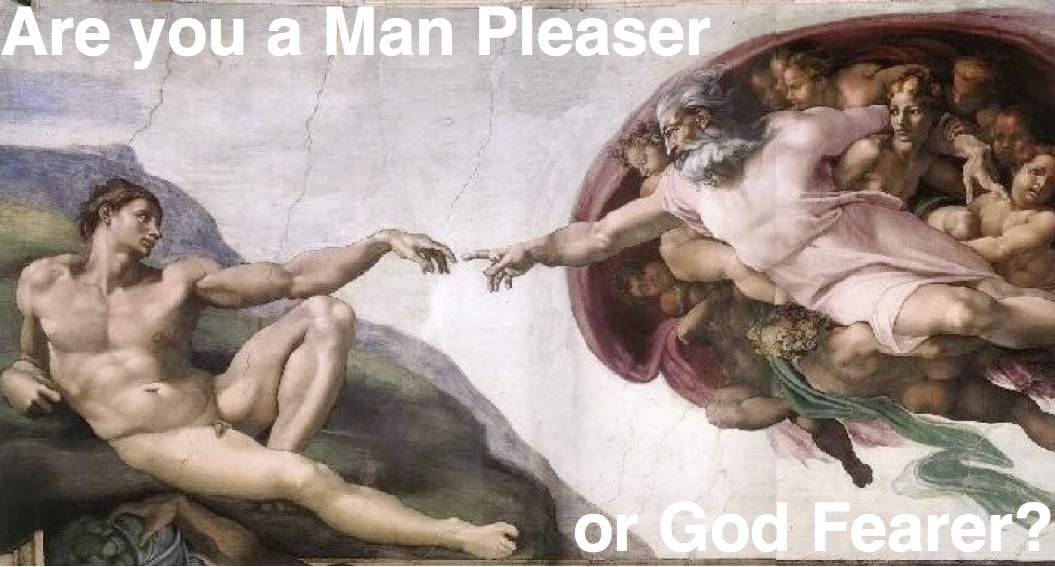
X-Ray Questions: Whose opinion of you counts?

This week we continue our X-Ray Questions series, as we look at the question: Whose opinion of you counts? You can read the other posts in this series by clicking here.

X-Ray Question:

(13) Whose opinion of you counts?

From whom do you desire approval and fear rejection? Whose value system do you measure yourself against? In whose eyes are you living? Whose love and approval do you need?

Understand

When you lose God, you enter a jungle of distortion. You tend to live before your own eyes or before the eyes of others – or both. When you lose or take God out of the equation, what is left is to seek the approval of man, which will ultimately leave you wanting.

Even for us who have not removed God completely from the picture, the approval of man has a strong pull on our lives, often causing us to seek it, rather than God’s approval. Since man’s approval has such a strong pull on our lives, we must fight the desire within to seek man’s approval, finding our approval in the Lord alone.

If we do not fight, we will compromise our convictions, not speaking up when we know Scripture speaks against a certain issue. When we remain silent on issues because we fear we will lose the respect of men, we are like the authorities who did not stand up to the Pharisees. John says,

Nevertheless, many even of the authorities believed in him, but for fear of the Pharisees they did not confess it, so that they would not be put out of the synagogue; for they loved the glory that comes from man more than the glory that comes from God. (John 12:42-43 ESV)

May we make it a point to seek the glory that comes from God more than the glory that comes from man.

Social Idols

The “social idols” which encompass approval and fear can take numerous forms:

  • Acceptance or Rejection
  • Being Included or Excluded
  • Praise or Criticism
  • Affection or Hostility
  • Adoration or Belittlement
  • Intimacy or Alienation
  • Being Understood or Caricatured

Awareness of these “social idols” is the first step, but we must also ask God to reveal to us where we may be seeking to please others rather than Him. In other words, we must plead with God in our prayers to reveal to us if the opinion of man is an idol that is present in our lives.

Repent

If after we pray, God reveals to us that approval is an idol in our lives, we must repent and turn from that idol. We do so by realizing true approval comes from God alone. The approval man gives us is temporary and situational. We may have man’s approval one day, but the next day they may reject us because we have not lived up to their expectations.

In contrast to the world, those who have repented of their sins and professed Jesus Christ as their Lord and Savior will never be rejected by God. As a result, they should never fear the loss of God’s approval.

Why want believers be rejected by God?

Because God accepts us based on Christ’s cross work, not our own work. When we believe in Jesus as our Lord and Savior, His righteousness is imputed to us, so that we too become righteous (2 Cor. 5:21). As those who are righteous, we are just as Jesus is even now in the world (1 John 4:17), meaning we are sons of God, just as Jesus is the Son of God. Those who are God’s children have nothing to fear. Instead they are to be confident on the Day of Judgment, knowing that God abides in them and they in God (1 John 4:15-18).

Scripture

Here are a few passages from God’s word to meditate on this week, as you consider the question: Whose opinion of you counts?: Prov. 1:7; 9:10; 29:25; John 12:43; 1 Cor. 4:3-5; 2 Cor. 10:18.

Resource

All X-Ray questions taken from David Powlison’s book Seeing with New Eyes.

Why I am Going to Together for the Gospel

Bright and early tomorrow morning I am flying to Louisville, KY with three other friends to attend the Together for the Gospel (T4G) Conference. I am excited, and I can’t wait to go! But why? Why have I made it a priority in my busy schedule as a pastor to attend this conference?

Why I am Going to Together for the Gospel

(1) Teaching

The men who will be speaking at this conference are godly men that have been blessed by God with the ability to shepherd other pastors. They are firmly grounded in the Word and all their counsel will be as well. I am looking forward to hearing what they have to say about the gospel, as well as learning more about how the gospel applies to my life, my ministry, and my church.

(2) Books

I love books, they are essential tools for any minister, and there will be tons of vendors at the conference. The best thing is that these vendors will have hand selected a number of solid books and they will be selling them at a discounted price. As well as there will be a lot of books given away for free, which is probably the best part. I plan on coming back with a suitcase full, so much so that I am packing as light as possible, in order to make room for more books. If it is not a necessity, I am not bringing it. I am hoping these books will not only serve to educate me, but that they will also serve my congregation.

(3) Fellowship

I have found that conferences are a great time to meet other godly men from around the country, as well as it is a great time to spend with friends. I am looking forward to connecting with those I have not seen since my last conference, meeting new people, and hanging with my friends I am traveling with. Above all, I am looking forward to learning how God is working in these men’s lives and churches, as well as hearing how the gospel is being spread in their town, and how they are ministering to their community.

(4) Band of Bloggers

I am looking forward to gathering together with other fellow bloggers at the Band of Bloggers meeting to discuss and learn how we may band together as a united front to spread the gospel to the nations through the internet. As well as I am looking forward to meeting new people and discovering new blogs to add to my RSS reader.

(5) Traveling

I love to travel and learn about new places. I am looking forward to exploring Louisville, KY, seeing the campus of SBTS, and eating at a few local places.

Confessing Sin the Key to Vertical & Horizontal Fellowship

This last Sunday, I preached over 1 John 1:5-10. Part of John’s message is that admitting we are sinners and confessing our sin is the only way we can experience true fellowship with God (Vertical) and with one another (Horizontal). In 1 John 1:7,9 we read:

But if we walk in the light, as He is in the light, we have fellowship with one another, and the blood of Jesus His Son cleanses us from all sin…If we confess our sin, He is faithful and just to forgive us our sins and to cleanse us from all unrighteousness.

John tells us that we have fellowship with one another if we walk in the light. The same light that God Himself walks in. A light we are able to walk in by confessing our sins. Let’s look at this one piece at a time.

Confession of Sin

In order to confess our sin, we have to first understand sin. Sin is more than just breaking the commandments of God, even though it is that. Sin is more heinous though. It is an outright attack and denial of who God is. It is to follow ourselves rather than to follow God. Now that we understand the heinousness of sin, we can answer the question:

What does it mean to confess sin?

It means that we first recognize we are a sinner, that we have rebelled against God to seek after the things of the world, thinking ourselves to be wiser than God.

Second, it means that we confess to God our rebelliousness against Him. We confess that we have tried to go at it on our own because we thought that our wisdom was greater than His. And in doing so we have sinned against Him.

The Cleansing Blood of Christ

When we confess our sins, Christ acts as our propitiation. He removes our sin and the wrath of God from us. In doing so, He is our substitute, standing in our place, taking the punishment we deserve because of our sinfulness.

Once we confess our sins, Christ’s blood cleanses us from all unrighteousness. When God looks down on us, He sees Christ’s blood and not our sin. This results in our relationship with God being reconciled.

It also shows that Christ’s blood is the only way we are cleansed from our unrighteousness, meaning our works will not do. Thus, confessing our sin, not performing works, is the only way we can be reconciled to God

Walk in the Light

Our confession of sin results in a changed heart and the indwelling of the Holy Spirit (Jer. 31 & Acts 2). Our changed heart and the Holy Spirit empowers us to live in accordance with the commandments of God, as well as we are able to walk in the light with Him.

Because of Christ’s cleansing blood, we are freed from the bondage of sin. Where we once lived for ourselves, we now have the ability to live for God. Where we once used one another for personal gain, we now have the ability to love and serve each other. This means that the cleansing blood of Christ not only results in us having fellowship God, but it also results in us having true fellowship with one another.

Conclusion

When we confess our sins, recognizing Christ is our Savior – that He is the one who took our punishment for us – then we are cleansed from all our unrighteousness and our relationship with God and one another is restored. John’s message then is that true fellowship with God and one another only happens when we confess our sins. There is no other way. May we all recognize this truth, confess our sins, and be saved from all unrighteousness, which results in true fellowship with both God and one another.


The Exclusivity of the Gospel & Biblical Fellowship

In 1 John 1:3, John tells us the reason he is writing is so that we will have fellowship with each other, with the Father, and with the Son. In marking out these different types of relationships, John is saying, our fellowship with one another, and our fellowship with God is based on our fellowship with Jesus. This differentiation is made more clear in verse 7, when John says our fellowship with one another is based on Jesus’ cleansing of our sins. What we learn in these two verses is that only through our belief in the person and work of Jesus, can we have true fellowship with the Father and with one another.

The Exclusivity of the Gospel

Before I explain what it means to have fellowship with one another, I want to make a point about the exclusivity of the gospel. The fact that we can only have fellowship with God through Jesus means those who believe they can have fellowship with God through other means are mistaken. When those in society claim there are multiple ways to God, or say we need to all co-exist, they are proclaiming another gospel, a false gospel that does not lead to God. The gospel is exclusive and there is only one way to be reconciled to God and experience true fellowship with Him and one another and that is through Jesus Christ.

What does it mean to have fellowship?

Fellowship carries the idea of a close mutual relationship involving mutual interests and sharing. It is a uniquely Christian relational experience that no one but those born of the Spirit of God can experience.

Fellowship With God

To have fellowship with God means we are reconciled to God through our union with Christ. This occurs by believing we are sinners who are in need of a Savior and that Jesus is that Savior. He is God incarnate, eternally existing with the Father, who came in the form of man, dying on the cross for our sins and resurrecting on the third day to ascend to the throne where He now reigns as King. Through our belief in this good news, or what we would call the gospel message, we have fellowship with God. Even more than a reconciled relationship with God, our fellowship with God means we accept His values, His commandments, and His message about Himself and us, and we live accordingly.

Fellowship With One Another

Now that we know what it means to have fellowship with God, we need to ask and answer the question: What does it means to have fellowship with one another? In order to answer that question, I want to talk about what Christian fellowship is not.

What Christian Fellowship is Not

Christian Fellowship is not any warm human exchange we might have with one another. Granted we may share interests with one another such as: Hunting, hiking, fishing, sports, knitting, facebooking, running, a love for the outdoors, or even discussing the latest political candidates, but talking about or participating in these interests together does not constitute Christian fellowship. Remember, Christian fellowship is a uniquely Christian relational experience. We can experience these things with anyone, Christian or not. So then, if Christian fellowship is not solely getting together with Christians to talk and hang out, then what is it?

What Christian Fellowship is

Christian Fellowship means we are participating together in the life and truth made possible by the Holy Spirit through our union with Christ. It is sharing something in common on the deepest possible level of human relationships – our experience of God Himself.

Christian fellowship then involves mutual care and love for one another which is expressed by:

  • Sharing what God has done in our life
  • Sharing what we are learning in His Word
  • Confessing sin to one another
  • Correcting one another
  • Worshipping God together
  • Praying for one another
  • Utilizing our Spiritual gifts
  • Carrying one another’s burdens
  • Serving one another

This means we cannot say we are having true Christian fellowship:

  • Until we have moved from talking about the latest game to talking about God’s Word.
  • Until we have moved from the weather to what God is doing in our lives.
  • Until we are truly self-sacrificially loving one another.

Conclusion

Christian fellowship is a uniquely Christian relationship that involves more than a warm human exchange we might have with one another. It is deeper than shared worldly interests. It is a relationship we can only have by believing the gospel message concerning Jesus. It only occurs when we connect on a level we cannot connect on with those in the world because they do not share our relationship with Jesus and God. May we regularly take advantage of this unique relationship we share with others who believe in Christ as their Savior.

In order to help promote Christian fellowship, I have written another post: Gospel Conversations and Biblical Fellowship.

Battling the War Within

How do we win the war? What war you ask? The war within. Paul tells us there is a war going on inside of us. He says,

For I joyfully concur with the law of God in the inner man, but I see a different law in the members of my body, waging war against the law of my mind and making me a prisoner of the law of sin which is in my members (Rom. 7:22-23)

The redeemed and natural man are waging war inside us. Even though there is a war inside of us, it is a war we are capable of winning. In Christ we have the power to kill the flesh (Rom. 8), destroying its dominion over us. The killing of the flesh is what John Owen calls the mortification of sin, which is the title of one of his books. In The Mortification of Sin, Owen provides believers with ways they can do battle with the natural man.

Instead of providing you with all the ways we can kill, or mortify sin (you will have to read the book for those), I would like to provide you with the place we must begin. My thesis, or rather Owen’s thesis, is as follows:

Only Believers Who Rely On the Work of the Holy Spirit Can Mortify the Flesh

Mortifying the flesh in the power of the flesh by means of bodily exercises, self-performances, and legal duties such as wearing rough clothing, making vows and penances, and disciplining yourself is vanity. In regards to such disciplines, Owen says,

Even if some are not neglecting the things appointed by God to lead to mortification, they may not be using them in their proper place and order. Praying, fasting, watching, meditation, and the like, certainly have their use for the business at hand, but many consider them as the fountain and not the stream coming from the fountain. These actions are the means only, and are subordinate to the Spirit and faith (15-16).

The actions Owen mentions, without the gospel as its fountain, are only performed by men while they feel a conviction of sin. After their guilt passes, they quit seeking to kill their sins, which results in their sin returning to its former dominion over time (17). To completely keep the flesh at bay, men must be believers. Owen says, “There is no self-endeavour that can accomplish mortification. Almighty energy is necessary for its accomplishment” (17). To try to kill the flesh by the work of the flesh without the work of the Spirit is vanity.

The Work of the Holy Spirit

As believers, we are given the Holy Spirit, who resides inside of us. He works in our hearts to root out our fleshly desires, “by causing our hearts to abound in grace and the fruits that are contrary to the works of the flesh” (17). The Holy Spirit causes us to see the grace of God for what it is, a free gift to sinners who deserve nothing but death. He also works in our lives to manifest the fruit of the Spirit, which serves to restrict the works of the flesh (Gal 5:19-21) (18).

While restricting the works of the flesh through the manifestation of the fruit of the Spirit, the Holy Spirit takes away our stony heart and “brings the cross of Christ into the heart of a sinner by faith, giving us communion with Christ in His death, and fellowship in His sufferings” (18). By taking away our heart of stone and bringing us into fellowship with Christ in His death and sufferings, we are empowered to root sin out of our lives because Christ has defeated the grip of sin once and for all in His death, burial, and resurrection.

We Work Along With the Holy Spirit

Even though the Holy Spirit works in our lives, we are responsible for mortifying the flesh as well. Owen believes the Spirit “works in us and upon us, as we are able to be wrought in and upon, and yet He preserves our own liberty and free obedience” (See especially Phil. 2:13) (19). The Holy Spirit works on our understandings, wills, consciences, and affections, as long as we allow Him (19).

Conclusion

We can win the war within us, but it is a war that can only be won if we are a believer. For if we are not a believer in Christ, there is no war to be fought, only slavery exists. Those who are not saved by the blood of Christ are enslaved by the Prince of this world. No amount of work will ever break the bondage of that slavery. Only the power of Christ can free us from the enslavement of Satan.

Once Christ has broken the bonds of the flesh, we are free to war against our worldly lusts. A war that we can and will win as Christ’s children. A war the Holy Spirit empowers us to fight.

To those who try to fight the flesh without first believing in Christ, Owen says,

They try many perplexing ways and duties, to keep down sin, but, being strangers to the Spirit of God, they find it is all in vain. They combat without victory, have war without peace, and are in slavery all their days (20).

May we all understand that the war within is not won alone. Rather, it is only won through the death, burial, and resurrection of Jesus Christ and our subsequent belief in His person and work. Our belief in Christ brings the Holy Spirit into our lives, allowing us to take up combat against the natural man.

Resources

All references refer to John Owen’s The Mortification of Sin: abridged and made easy to read by Richard Rushing, The Banner of Truth Trust, 2004.

Image: africa / FreeDigitalPhotos.net