Political Christian: Is this a Contradiction?

Should Christians be involved in Public Policy? Many pastors and Christians in evangelical circles will answer this question with a resounding, NO! Some even go so far as to say that government is evil, and government affiliation should be avoided at all cost.

What these Christians forget is that government is not a worldly invention. Paul writes in Romans 13:1, “Every person is to be in subjection to the governing authorities. For there is no authority except from God, and those which exist are established by God. Therefore whoever resists authority has opposed the ordinance of God; and they who have opposed will receive condemnation upon themselves.” Here we learn that government is not a human invention; it is not the realm of the Devil, it is a Divine institution, established by God.

I will admit, government can be a source of evil, if evil people run it. But it can also be a source of much good in our society, if good people get involved. As Christians, we must be that good voice in government. Good public policy acts to restrain evil, while bad policy encourages immoral behavior. It is no mystery that laws influence the decisions people make. For example, New York did not pass a no fault divorce law, when other states did. As a result, the divorce rate in New York is lower than the rest of the country. (Article & iMAPP Study)

I believe Christians have the ability to influence legislation for good, if they will get involved, thus, influencing the moral climate of our Nation.

Two More Reasons To Be Involved

Other than the fact that Christians are called to be salt and light in the world (Matt. 5:13), I will leave you with two more reasons we need to be engaged in political service:

(1) To protect the churches freedom to proclaim the Gospel. There are many in our culture who want to tear down the institution of the church, and if we as Christians do not get involved, they may succeed.

(2) For the good of everyone. There are a lot of people who fall prey to bad public policy. A good example is the unborn. Many lives are lost everyday because abortion was legalized in our country.

Conclusion

If Christians continue to see government as evil and remain apathetic to Political service, then public policies will continue to cater to those who want nothing to do with Judeo-Christian values. So to answer my original question, should Christians be involved in Public Policy, I give a resounding YES!

Resources and How To Get Involved

Some ideas from this post were taken from a talk Dr. Barrett Duke gave at Southwestern Baptist Theological Seminary.  Dr. Duke is the Vice President of the Southern Baptists Ethics and Religious Liberties Commission.  More about the ERLC and how Christians can get involved in public policy can be found on their website: ERLC.com
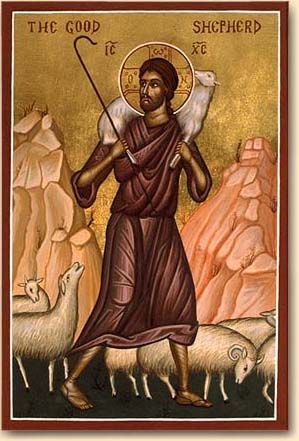
The Good Shepherd: Teaching us how to shepherd our family

Just last year, God blessed my brother and sister-n-law with a new addition to their family. Taylor came into the world weighing in at  7.1 lbs. This new addition to their family of three has been a joyous time, yet it comes with great responsibility. Not only are they to care for their children’s physical needs, but they are also to attend to their families spiritual development.

Specifically, the husband is to shepherd his family. Whether the family consists of the husband and wife, or a family of four, men are called to be the pastor’s of their household. Our local pastor is not the only one called to shepherd the flock. We are called to this task as well.

Jesus is our example and as Christians we are to walk as He walked (1 John 2:6), imitating Him (Eph. 5:1, 1 Cor. 11:1) in all things. Since He is our example, it is only right that we should look to Him for the “how to” of shepherding.

Here are a few guiding principles to get you started:

(1) We must know those we shepherd.

John 10:14 tells us Jesus is the Good Shepherd and He knows His own and His own know Him. In order to shepherd our families well, we must spend time getting to know them. This means turning off the t.v. during dinner and engaging your family in conversation.

(2) We must lead by example.

Jesus taught His disciples to pray by example (Matt 6:5-15). He showed them how to serve one another by example (John 13:3-5), and He also taught His disciples how to minister to others by example (Luke 8:1-9:6). As leaders of our household, we must do the same, which necessitates that we know how to pray, how to serve others, and how to minister to friends and family.

(3) We must protect our families from both physical and spiritual danger.

Jesus tells us that the Good Shepherd is willing to lay down His life for His sheep (John 10:11-13). He lays down His life because He cares for them. And in caring for them, He protects them from both physical and spiritual harm. In order to protect our families from spiritual danger, we must know what they are watching, reading, and who they are friends with. We must understand the culture in which we live, knowing how to combat cultural teachings with Scripture. This means we must not only have a deep understanding of our culture, but also of the Word of God.

(4) We must instruct our families.

Jesus intimately instructed His disciples during His earthly ministry, teaching them how to both read and understand the Word of God (Acts 1:3). We also must instruct our family in God’s Word, teaching them how to read it and understand it. This can be accomplished through a nightly family devotion, a weekly Bible study, or by talking about the sermon over lunch.

Conclusion

These four suggestions for better shepherding are not all that a shepherd does, but it is a good start. If we are committed to knowing our families better, leading by example, protecting them from both physical and spiritual danger, and instructing our families in the Word of God, we are on the right path to shepherding our families well.

Resource

The Exemplary Husband by Stuart Scott (117-130).

X-Ray Questions: Abolishing slavery

In an effort to help us root out the idols of our hearts, I am doing a series entitled X-Ray Questions. Last time I introduced the series and gave one question to ask ourselves. You can read that post here.

This week we will continue to explore our hearts. This time our question focuses on exposing the desires that rule us.

X-Ray Question

(2) What do you want, desire, crave, lust, and wish for? What desires do you serve and obey?

This summarizes the internal operations of the desire-driven flesh in the New Testament epistles. “My will be done” and “I want ___” are often quite accessible. Various desires rule people, and sometimes another person’s will has control over you in peer pressure, people-pleasing, slave-like, or chameleon behavior. In such cases, your heart’s craving is to get whatever good they promise and avoid whatever bad they threaten: “I crave to be included, appreciated, accepted, and admired by you.”

Understand

Understand that if we seek satisfaction in man, we will be controlled by a desire to please man and will become a slave to their approval. This means that our desire to please man will be elevated over our desire to please God. We will choose those things that please man every time because we are enslaved by the desire for their approval. As a slave, we are not truly free and will find ourselves in a more miserable state.

Repent

Repent by finding your satisfaction in God and desiring nothing but Him and His salvation (Pss 17:14-15; 73:23-28). Only through God’s salvation are we freed from the desires of the flesh. We no longer need to find our approval in man, and no longer remain a slave to sin (Rom. 6). So then, when we find ourselves desiring man’s approval and acceptance, preach the Gospel to yourself. It is through the Gospel that we are freed from our enslavement to sin and reconciled to God.

Scripture

Reflect on these Scriptures as you seek to root out this idol in your life: Pss. 17:14-15; 73:23-28; Prov. 10:3; 10:28; 11:6-7; Gal. 5:16-25; Eph. 2:3; 4:22; 2 Tim. 2:22; Titus 3:3; 1 Peter 1:14; 2:11; 4:2; 2 Peter 1:4; 2:10; James 1:14; 4:1-4.

All X- Ray questions taken from David Powlison’s book Seeing with New Eyes.

Everybody’s Somebody

This last week, while I was on spring break, my wife and I went to Fredericksburg, TX. While we were there, we took a trip over to Luckenbauch. My wife had visited in college and she always wears a shirt from there, so I wanted to go. The town slogan, which appears on her t-shirt  is “Everybody’s Somebody in Luckenbach.” And in Luckenbach that is true. The population is around 3. There are a few houses that dot a small country road, a dance hall, which is what they are famous for, post office, which is actually a store with a bar in the back, and a food stand. Here, truly, everybody is somebody.

But jump to where we live, Dallas-Fort Worth, population over 5 million. Movies stars, models, Fortune 500 CEO’s, millionaires, and even billionaires live in the DFW Metroplex. In the world’s eyes, everybody in Dallas Fort Worth is not somebody.

However, in God’s eyes, everybody in DFW and the world is somebody because we all are created in God’s image (Gen. 1:27). We all are valuable, even if the world says otherwise.

What does this mean for us?

It means that we must see everyone as important. Everyone deserves our attention and our time, even the person everyone can’t stand.

How do we accomplish this?

Lets face it. We don’t naturally see everyone as important. We don’t naturally think everyone deserves our attention and time, especially those who are hard to get along with. So what do we do? How do we get past this?

We must preach the Gospel to ourselves. God thought we were important. So important that He sent His Son to die on the cross for our sins. We were not clean when Jesus came to die for us. We were smelly, rotten, sinners, who wanted nothing more than to exalt ourselves over God.

When we think about the magnitude of what Jesus Christ did for us, it should give us reason to treat others as equals because we all equally need Christ to cleanse us of our sins.

But we also must remember that only as Christians, are we able to actually treat others as equals because our heart has been changed by the power of the Gospel. No amount of personal will power or external forces will change our attitudes toward others, only a changed heart will do. A changed heart that only comes through faith in the Gospel.

Conviction: The incredible true story

Today in class my teacher presented us with a list of four reasons we as pastors (and everyone else) should be sharing the gospel. His list was as follows:

  1. Obedience to Scripture – “Evangelism for the pastor is not a gift, nor is it an option. It is a command; one he should be careful to obey!” (MacArthur Pastoral Ministry, 253)
  2. Love for Christ – We talk about the things that we love the most. If Jesus is not much on my lips, he is not much on my heart.
  3. Love for mankind – If we don’t share the gospel, we are saying that we don’t care about the eternal salvation of the lost. In word we say we love mankind, but functionally our actions do not show it.
  4. Personal Example – As ministers (this includes family leaders), we are called to set the example for the rest of the body. If we are not evangelizing, we cannot expect our congregates (or family) to evangelize either.

After pondering these points, I found myself convicted. I claim to love Christ, but is He the first topic of discussion when it comes to talking to non-believers? I claim to love mankind, but do I prove it through my actions? I want to be an example, but am I?

My Prayer

Lord, please help me to be obedient to Your Word, actively show my love for Christ by speaking of Him often, love mankind just as you do, and be an example for others. Amen!

X-Ray Questions: Discovering the root cause of sin

In order to help get at the root cause of sin in our lives, I will be providing “X-Ray Questions” from David Powlison’s book Seeing with New Eyes. These questions are designed to expose the sinful desires and idols of our heart. Idols are not just tangible statues people setup in their homes. Idols are anything in our lives that replace God. Timothy Keller, in Counterfeit Gods, says,

An idol is whatever you look at and say, in your heart of hearts, “If I have that, then I’ll feel my life has meaning, then I’ll know I have value, then I’ll feel significant and secure…If anything becomes more fundamental than God to your happiness, meaning in life, and identity, then it is an idol (xviii-xix).

Over the next several weeks, I will be posting a question or two for you and I to reflect on. These questions are designed to help us discover and root out the idols in our lives. My hope is that instead of placing external limitations on ourselves to rid sin from our lives, we will look within and discover the idols that are ultimately causing us to fall in particular areas.

X-Ray Question

(1) What do you love? Hate? This first “great commandment” question searches out, heart, soul, mind, and strength. There is no deeper question to ask of any person at any time. There is no deeper explanation for why you do what you do. Disordered loves hijack our hearts from our rightful Lord and Father. (See Matt. 22:37-39; 2 Tim. 3:2-4; Luke 16:13-14)