Who Do You Trust and Fear?

As Christianity is marginalized more and more, there will be stands we have to make. Whether we stand for the Lord or man will determine who we trust and fear.

A Contemporary Issue

The sanctity of marriage is a hot button issue in our country right now. Those not on the bandwagon of gay marriage are quickly labeled as bigots and haters; their participation in the public arena is limited; and they are pressured by their friends, family, employers, and the media to embrace and celebrate the sexual revolution.

As the pressure mounts, those desiring to please others and continue to have public influence will eventually evolve on the issue. Those who evolve on the issue show who they fear, man not God. They fear what man thinks of them, what man can take from them, and what man can do to them.

However, those who can’t or won’t acquiesce their beliefs show who they fear, that is the Lord. Those who rightly fear God will find themselves being marginalized. While the marginalization of Christians may limit the jobs we can hold, the businesses we can run, and the public influence we have, we need not fear because the Lord will care for us.

The Truth

Knowing the marginalization of Christianity is coming, and is indeed already here, we need to decide right now who we are going to fear and who we are going to trust.

If we cave to societal pressures, by fearing and placing our trust in man, we may find ourselves exalted and praised. We may experience all the benefits this world can offer. However, at some point you can bet things will not work out like we thought. Man always lets us down. They never stick to their word.

However, if we continue to fear and trust the Lord, we can be confident we will never be let down, and we will experience eternal life because the Lord always sticks to His Word. He doesn’t sway and shift with the cultural breeze. He doesn’t bend his knee to Caesar. He is unmovable, unshakeable, unbendable. He is who He is today and tomorrow. The Lord doesn’t change, which means the Lord can be trusted.

Who will you trust and fear? God or man?

Questions for Reflection

  1. Have you felt pressure lately to go along with society instead of God? If so, how did you deal with it?
  2. Do you believe Christians are being marginalized in our country?

Resource

Image

How Do You Know If You Rely On God?

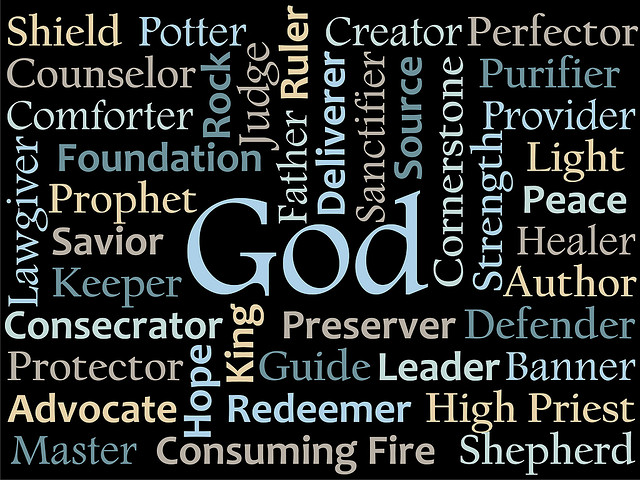
God Word Art

Self reliance is and has always been the beat of our heart. We don’t believe we need others, or God for that matter. Take these quotes for instance:

“It is folly for a man to pray to the gods for that which he has the power to obtain by himself.”

― Epicurus

“I care for myself. The more solitary, the more friendless, the more unsustained I am, the more I will respect myself.”

― Charlotte Brontë, Jane Eyre

“Trust your instincts, and make judgements on what your heart tells you. The heart will not betray you.”

― David Gemmell, Fall of Kings

“Remember, this is important: Never trust that you will be saved by anyone.”

― Amanda Boyden, Pretty Little Dirty

But is this true? Should we rely on ourselves alone? Can we save ourselves, care for ourselves, and do all by ourselves without anyone else’s help?

I don’t think so. We were created to be dependent creatures. That doesn’t mean we are to depend on others for handouts, or to do all for us. Rather it means we were primarily created to be cared for and sustained by our Creator. By design, we are to rely on God.

How do you know you rely on God? There are several questions you can ask yourself. Let me offer three.

(1) Do you pray and read God’s Word?

Our God is not silent. His will is found in His word and through prayer. He doesn’t leave us to wonder. We know exactly what is good for us. What is right for us. What God expects of us. How we should live and act.

So do you search God’s Word for answers? Do you bow before the Lord in prayer? If you do these things on a regular basis, you know you rely on God.

(2) Do you hope in God?

There are several things we could hope in, one of which is ourselves. Those who do push everyone away, thinking they can do it all on their own; that they are their own savior.

A classic example of this are those who are too proud to ask for help when they are in financial trouble. It doesn’t matter what happens or how bad it gets, they aren’t willing to go to their family, friends, or church for help. They would rather loose everything and go without.

People can also hope in others. It’s not wrong to ask others, or the church for help. We should in times of need. The problem arises when we think others are our hope, our salvation. Israel had that problem. Instead of hoping in the Lord, they hoped in other nations. Time and time again you read of prophets calling them back to the Lord, but they didn’t listen.

Israel’s problem is still our problem. We hope in others to save us, but men can’t save us. The only person who can save us is God. We should put our hope in Him. He will never leave us, nor forsake us. He will always deliver on His promises.

So who do you hope in? Yourself? Others? God? Your answer will determine who you rely on.

(3) Do you live according to God’s Will?

If you rely on the Lord, you won’t live according to your will, or societies will, but according to God’s Will. You will do this because you recognize God’s will isn’t a hindrance, but a grace. It’s a trustworthy gift given that causes us to flourish.

Questions for Reflection

  1. Who do you rely on?
  2. Do you see God, others, or yourself as your functional Savior?
  3. Do you live according to God’s will?
  4. Do you pray and read God’s Word often?

Resources

Post adapted from my sermon Rely on God

Image

Trust the Lord Daily

Sunrise

Trusting God is something we have to exercise daily, not just once in our life at our conversion.

The Story

In Genesis 12:10-20, a famine forces Abraham and his family down to Egypt. As they approached Egypt, Abraham comes up with a plan. He tells Sarai to tell the Egyptians he is her brother, not her husband. Abraham formulates this plan so he will not be killed by the Egyptians for his beautiful wife Sarai.

After Abraham and Sarai enter Egypt, the princes of Pharaoh praised Sarai to Pharaoh. She was taken into Pharaoh’s house to be one of his wives. Instead of killing Abraham, he was given riches. Sheep, oxen, donkeys, male and female servants, and camels were all given to Abraham for Sarai because it was thought he was her brother.

Shortly after Sarai moves in with Pharaoh, plagues begin. The Lord afflicted Pharaoh and his house for Abraham and Sarai. Sarai was eventually allowed to return to Abraham and they were ordered to leave the city.

The Analysis

Abraham failed to trust God. Just a few verses before, God made a promise to Abraham. A promise Abraham trusted. His trust was strong enough in God that he left his family and inheritance behind to go to a place the Lord would show him.

Certainly, time had passed between Abraham’s departure and the famine that drove them into Egypt. In that time, Abraham forgot the Lord’s promises. Faced with the uncertainty of death he forgot the Lord’s promise to make him into a great nation. He forgot the Lord’s promise to bless him. He forgot the Lord’s promise to take care of and provide for him.

Instead of leaning on God in this difficult time, he leaned on his own understanding and allowed his emotions to direct him instead of the Lord. After all, it was only logical Pharaoh would kill him for his beautiful wife.

Application

How often has your emotions or logic directed you to do something in your own strength instead of trusting God to provide? How often have you leaned on your own understanding instead of trusting God to provide?

As Christians, we are called to trust God everyday of our lives, not just at our conversion.

Questions for Reflection

  1. Do you trust God daily?
  2. Do you allow your emotions or logic to direct you instead of God?
  3. How does Abraham help you to see the futility of trusting your own plan instead of in God’s promises?

Who do you trust? Riches or God?

Do you trust God? I mean do you really trust God, or have you placed your hope in something other than Him? In Luke 12 we encounter a man who put his trust in his possessions rather than in God. The reason was that he thought they would bring him happiness, comfort, relaxation, and protection. Does not this hold true? It is what the world tells us is the key to happiness. We see this message portrayed through countless magazine ads, movies, television shows, and bill boards plastered on our cities walls. However, Jesus has something different in mind. Lets pick up the narrative in verse 13.

The Narrative

A man in the crowd, who has obviously not been listening to Jesus’ teaching, says to Jesus, “Teacher, tell my brother to divide the inheritance with me.” Jesus replies by asking him, “who has made me a judge or arbitrator over you?” Then Jesus turns to the crowd and gives them this command: “Take care, and be on your guard against all covetousness, for one’s life does not consist in the abundance of his possessions.” With that one sentence Jesus shakes up the world’s idea of possessions. He tells us that our life does not consist in our possessions, or you could say it this way, our possessions are not an essential element for our life. We do not need them to live. This immediately prompts the question, well, what do we need to live? This is exactly what Jesus is going to tell us, but in order to do so, he gives us an illustration in the form of a parable.

The Parable

Jesus tells us that the land of a rich man produced plentifully and as a result he had no where to store the excess. His barns were not big enough to hold the crop, so he decided to tear down his barns and build bigger ones. After building the new barns and storing his excess crop in them, he believes that his life is now complete. His soul can now enjoy rest and relaxation, and he can eat, drink, and be merry. This man believed possessions were essential for his life. Without them, he could not enjoy life, nor could he live. This is because this man trusted in himself, rather than in God.

Notice throughout the parable the heavy use of the first person pronoun “I” and “my”. This shows the man had no regard for anyone other than himself, nor did he recognize that his riches and excess crop came from God. Notice in verse 16, the text tells us that “the land” produced the crop. God, as the sovereign ruler of this world, provided for this man, but he still did not trust in the Lord. Rather he placed his trust in himself.

God comes to him after he has finished storing all his crops and says, “Fool! This very night your soul is required of you and the things you have prepared whose will they be?” To put your trust in your riches is foolish. They are temporary, finite things, that have no bearing on your life after you die. But what does have bearing on your life is your relationship with God.

Jesus comments in verse 21 saying that those who lay up treasures for themselves and are not rich toward God will end up in the same predicament as the man here in the parable. They will face eternal damnation, rather than eternal rest, relaxation, joy, and comfort for all of eternity with God. Oh, don’t get me wrong, things may satisfy us momentarily, but that satisfaction will wane quickly. Notice that the man in the parable was a rich man. He already lived a life of luxury, but the satisfaction, comfort, and relaxation his things once brought to his soul, did not last, and his soul was once again troubled until he was able to amass more riches. Surely, the cycle will continue to repeat in this man’s life because he has a giant hole in his heart that only God can fill. No earthly riches will do. That is why only those who are rich towards God will truly be satisfied.

Conclusion

So then, we must understand that it is God who provides for us, it is He who knows what we need. Once we understand that our possessions are not essential for our life, they are not necessary for us to live, but that our relationship with God is necessary, then we can be freed from the sin of covetousness – desiring what we do not have. We are freed from coveting others things: talents, abilities, jobs, homes, cars, clothes, families, etc because we understand that those things are not essential for our lives. They do not bring us everlasting rest, relaxation, comfort, and joy like our relationship with the Lord. Once we understand that, we are able to stop trusting in our possessions and start trusting in the Lord.

Image: Salvatore Vuono / FreeDigitalPhotos.net

X-Ray Questions: What or Whom do you trust?

This week we continue our X-Ray Questions series, as we look at the question: What or whom do you trust? You can read the other posts in this series by clicking here.

X-Ray Question:

(11) What or whom do you trust?

Trust is one of the major verbs relating you to God – or to false gods and lies. Crucial psalms breathe trust in our Father and Shepherd. Where instead do you place life-directing, life anchoring trust? In other people? In your abilities or achievements? In your church or theological tradition? In possessions? In diet, exercise, and medical care?

Understand

The person or object that we trust is the one we believe will provide us with happiness, joy, protection, deliverance, comfort, etc. Our trust should be in God and God alone because finite persons, inanimate objects, your abilities and achievements, or thoughts (I have in mind here theological traditions, or health ideas) will always fail you.

Repent

We must repent by realizing that God should be the one we must place our trust in, not in our own abilities or achievements, our traditions, other people, or objects. For when we decide to place our trust in anything other than God, we are trusting in something that will ultimately fail us and we are leaning on our own understanding. Solomon writes in Proverbs 3:5:

Trust in the Lord with all your heart
And do not lean on your own understanding

Solomon also tells us that the one who leans on his own understanding is a fool (Prov. 12:15)

In Psalm 103, David tells his readers of the benefits of the Lord: He pardons all your iniquities, heals all your diseases, redeems your life from the pit, crowns you with both lovingkindness and compassion, and He takes care of the oppressed by performing righteous deeds and judgments for them. Not only does God do all those things, David also says He “satisfies your years with good things, so that your youth is renewed like the eagle.”

The Lord’s benefits are greater than we could ever imagine and ever hope. Since He is the Holy, Unchangeable, and Sovereign Lord, what David wrote will never change. God is the same yesterday, today, and tomorrow. As a result, we can place our trust in Him knowing He will bring us joy, comfort, peace, deliverance, protection, etc. In short, He alone will fill the longings of our heart.

Scripture

Here are a few passages from God’s word to meditate on this week, as you consider the question: What or whom do you trust?: Prov. 3:5, 11, 18; 12:15; Pss 23, 103, 131.

All X-Ray questions taken from David Powlison’s book Seeing with New Eyes.