Ungodliness: It is all in how you live?

Note: This is a repost of a series I started last year but did not finish. I am currently teaching this series at my church Sycamore Baptist Church, so I will be reposting the few articles I already wrote along with the new ones that will finish the series.

Last week we began our series on Respectable Sins, you can read the introductory post here. This week, we will deal with the first of many sins we as Christians ignore, that being ungodliness.

Clarification and Definition

When thinking of ungodliness, do not confuse it with unrighteousness. Unrighteousness refers to sinful actions, while ungodliness describes our attitude toward God.

Specifically, ungodliness is defined as “living one’s everyday life with little or no thought of God, or of God’s will, or of God’s glory, or of one’s dependence on God” [1].

With this definition in mind, we can see how someone can be morally good, yet still ungodly. In fact, there are a lot of people who are morally good, yet ungodly. They help others, are courteous, and friendly, but they have no thought of God in their everyday lives. While our society would say that they are good people, God’s Word would say they are ungodly people.

Ungodliness is not just a sin the world commits. There are many in the church who are ungodly as well. They go about their daily lives thinking nothing of the Lord. While we expect those in the world to live as if God does not exist, it is not God’s will for His people to live with no thought of Him. Since this is the case, we must do all we can to rid the sin of ungodliness from our lives. In order to do that, we have to first understand how ungodliness manifests itself.

How Does Ungodliness Manifest Itself?

There are several ways ungodliness can manifest itself in the life of a Christian. The first way ungodliness manifests itself is through our planning. We prove we are ungodly when we do not include God’s will in our plans. Read what James writes,

Come now, you who say, “Today or tomorrow we will go into such and such a town and spend a year there and trade and make a profit”— yet you do not know what tomorrow will bring. What is your life? For you are a mist that appears for a little time and then vanishes. Instead you ought to say, “If the Lord wills, we will live and do this or that.”” (Jas 4:13–15)

The second way ungodliness manifests itself is through our prayer. In his letter to the Colossians, Paul transcribes the way he has been praying for the Colossians. He writes,

And so, from the day we heard, we have not ceased to pray for you, asking that you may be filled with the knowledge of his will in all spiritual wisdom and understanding, so as to walk in a manner worthy of the Lord, fully pleasing to him, bearing fruit in every good work and increasing in the knowledge of God. May you be strengthened with all power, according to his glorious might, for all endurance and patience with joy, giving thanks to the Father, who has qualified you to share in the inheritance of the saints in light.” (Col 1:9–12)

Here we see Paul is concerned for God’s will, glory, and desire for the Colossians lives. He prays they would grow in the knowledge of God’s will and in all spiritual wisdom and understanding. He also gives thanks to the Father for the Colossians’ salvation. When we observe the manner in which Paul prayed and compare it against our own prayers, do we see a similarity? I would argue our prayers are markedly different than Paul’s. Paul’s prayer is God-centered. He is concerned for God’s will and God’s glory. Our prayers are often more of a to-do list that we present to God. They consist of various health and financial needs, which are not necessarily wrong to pray about. Bringing these requests to God actually shows that we depend on Him for our daily sustenance. However, if that is all we pray about, then our prayers are essentially human-centered and we are treating God like a divine genie.

The third way we manifest ungodliness in our lives is through our work. Paul again writing to the Colossians says,

Slaves, obey in everything those who are your earthly masters, not by way of eye-service, as people-pleasers, but with sincerity of heart, fearing the Lord. Whatever you do, work heartily, as for the Lord and not for men, knowing that from the Lord you will receive the inheritance as your reward. You are serving the Lord Christ. For the wrongdoer will be paid back for the wrong he has done, and there is no partiality.” (Col 3:22–25)

Paul tells the Colossians to work heartily for the Lord. This implies they have God in mind when they are working. They think about Him and what He desires in their work. How often do we think about God and representing Him well when we are at work?

The fourth way we manifest ungodliness is through neglecting God in all our actions. In 1 Corinthians Paul says,

So, whether you eat or drink, or whatever you do, do all to the glory of God.” (1 Cor 10:31)

Do we seek to bring glory to God in all our actions, in all our daily tasks, in all our meetings, in every meal? Do we even think about God as we walk through our day? When we do not have God in mind as we move through our daily tasks, we are living ungodly lives.

The final way we manifest ungodliness is through our lack of prayer. Read how the Psalmist viewed his relationship with the Lord:

As a deer pants for flowing streams, so pants my soul for you, O God. My soul thirsts for God, for the living God. When shall I come and appear before God?” (Ps 42:1–2)

The Psalmist’s soul thirsts after God, as a dear pants for a stream when he is thirsty. His desire to appear before the Lord in prayer is great. There are many of us, who do not know what it means to desire to come before the Lord as much as we desire a drink of water or our next meal. There are many men who are in full-time Vocational Ministry, many who teach a Sunday School class, or lead a Small Group Ministry, or work in the Children’s Ministry, who do not desire to commune with the Lord in prayer. Lest I leave anyone out, there are many who sit in the pews each week and never commune with the Lord outside bowing their head when the pastor prays on Sunday. If this is the case, then you are living an ungodly life.

Remedy

We can begin to remove this sin from our lives, by being more aware our lives are lived in the presence of God, and that He is the Sovereign Lord not only over this world, but us as well.

Scripture to Memorize

1 Timothy 4:7-8; 1 Corinthians 10:31; Colossians 1:9-10 and 3:23; Psalms 42:1-2; 63:1; 27:4

Questions for Reflection

  1. Why should we include God in our plans and seek His desire for what He would have us to accomplish?
  2. Are your prayers like Paul’s? Do you pray for God’s will and glory? Do you pray for the spiritual health of others?
  3. How often do you think about God while you are at work? Do you see your time there as an opportunity to glorify Him?
  4. How could you better think about God in all that you do?
  5. Do you desire to meet with the Lord like the Psalmist does? Is your desire to spend time with Him in prayer and Bible reading as strong as your desire for your next meal?

Resources

[1] Jerry Bridges, Respectable Sins, 54.
Structure of post taken from Jerry Bridges, Respectable Sins, 53-61.

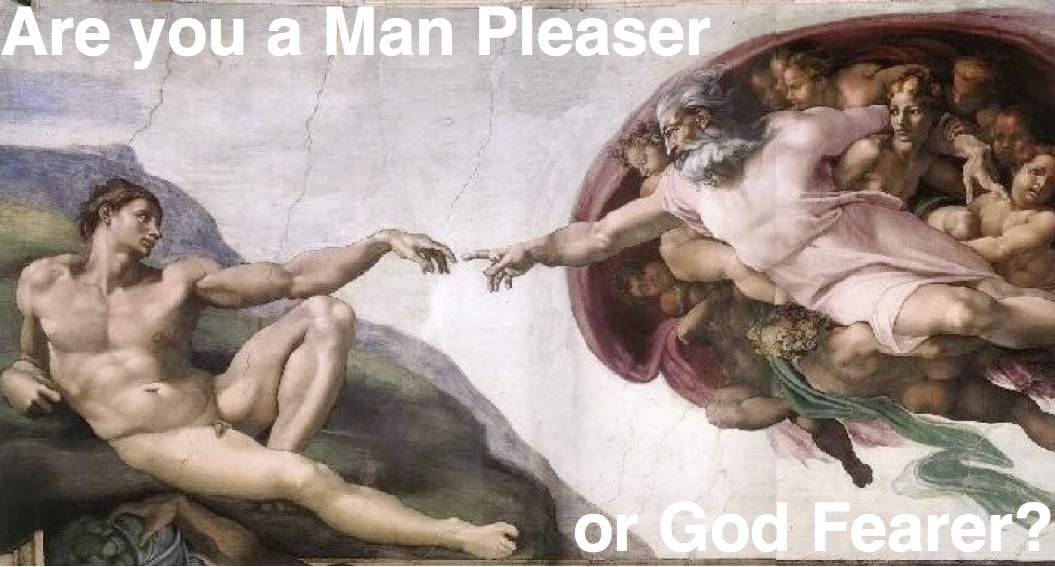
Image: Damian Brandon / FreeDigitalPhotos.net

Respectable Sins: Confronting the Sins We Tolerate

Note: This is a repost of a series I started last year but did not finish. I am currently teaching this series at my church Sycamore Baptist Church, so I will be reposting the few articles I already wrote along with the new ones that will finish the series.

There are some sins that are subtle, lurking just beneath the surface, so common in our culture and churches that we are blinded to them and deceived into thinking they are not sins at all. The sins in question are what Jerry Bridges calls Respectable Sins [1]. Respectable sins are sins we overlook and tolerate because they are common subtle sins of believers. Sins like gossip, anger, worry, and frustration, just to name a few, are all respectable sins.

Why Do We Overlook These Sins?

We overlook “Respectable Sins” not only because they are pervasive, but also because they don’t seem as bad as say: Abortion, homosexuality, sex trafficking, and exploiting the poor. Our gossip, worry, and frustrations are insignificant, minor infractions in comparison, so we turn a blind eye and continue to allow them fester.

Another reason Respectable Sins exist is because we don’t realize God has called us all to be holy, to live as saints (1 Corinthians 1:2) and shine as lights in a corrupt world (Matthew 5:16). Since we think sainthood is reserved for the super Christian, we see no reason to try and act like one [2].

What is the Affect of Overlooking these Sins?

When we don’t deal with sin, even respectable sins, they start to metastasis like cancer in our Christian community, harming us and taking root in those around us.

Take for instance gossip, a common respectable sin. As a gossiper, I am not only tearing another down, and sinning against God, but I am teaching others gossip is ok. Before you know it, my sin has metastasized in their heart. They start gossiping, then those they gossip to start gossiping. Before you know it, the whole community is gossiping, and no one is willing to deal with the sin, so we all just keep sinning [3].

How do we Deal with Respectable Sins?

Like any other sin, with the gospel. The gospel teaches us Jesus not only saves us from the wrath of God, but also frees us from sin’s reign over our lives, which allows us for the first time to resist sins dominion over us.

Whereas, before salvation we could not help but sin, after salvation we have the ability to not sin.

In order to keep marching forward against sin, even respectable sins, we must daily preach the gospel to ourselves. Daily reminding ourselves God has already dealt with our sin in Christ should stir in our heart gratitude toward God and a desire to please Him by living as He has called us to live – as saints set apart for His kingdom work [4].

An Invitation

If you are interested in learning more about what sins we deem respectable and how to deal with each in particular, let me invite you to follow along each week as we journey through Jerry Bridges book Respectable Sins. It has been a real source of encouragement in my life, as well as it has opened my eyes to the sins I personally overlook and the sins my church overlooks.

Looking Forward

Over the next couple of weeks, I will be using Jerry Bridges book Respectable Sins to help us see what sins we overlook in the church and our own lives. You will probably be just as surprised as I was of the amount of sins we commit but overlook or do not realize are even sins in our lives.

Resources

[1] Jerry Bridges, Respectable Sins, 9.
[2] Ibid., 11-22.
[3] Ibid., 23-30.
[4] Ibid., 31-38

You can purchase a copy of Respectable Sins on Amazon by clicking here.

Image: Phiseksit / FreeDigitalPhotos.net

X-Ray Questions: Whose opinion of you counts?

This week we continue our X-Ray Questions series, as we look at the question: Whose opinion of you counts? You can read the other posts in this series by clicking here.

X-Ray Question:

(13) Whose opinion of you counts?

From whom do you desire approval and fear rejection? Whose value system do you measure yourself against? In whose eyes are you living? Whose love and approval do you need?

Understand

When you lose God, you enter a jungle of distortion. You tend to live before your own eyes or before the eyes of others – or both. When you lose or take God out of the equation, what is left is to seek the approval of man, which will ultimately leave you wanting.

Even for us who have not removed God completely from the picture, the approval of man has a strong pull on our lives, often causing us to seek it, rather than God’s approval. Since man’s approval has such a strong pull on our lives, we must fight the desire within to seek man’s approval, finding our approval in the Lord alone.

If we do not fight, we will compromise our convictions, not speaking up when we know Scripture speaks against a certain issue. When we remain silent on issues because we fear we will lose the respect of men, we are like the authorities who did not stand up to the Pharisees. John says,

Nevertheless, many even of the authorities believed in him, but for fear of the Pharisees they did not confess it, so that they would not be put out of the synagogue; for they loved the glory that comes from man more than the glory that comes from God. (John 12:42-43 ESV)

May we make it a point to seek the glory that comes from God more than the glory that comes from man.

Social Idols

The “social idols” which encompass approval and fear can take numerous forms:

  • Acceptance or Rejection
  • Being Included or Excluded
  • Praise or Criticism
  • Affection or Hostility
  • Adoration or Belittlement
  • Intimacy or Alienation
  • Being Understood or Caricatured

Awareness of these “social idols” is the first step, but we must also ask God to reveal to us where we may be seeking to please others rather than Him. In other words, we must plead with God in our prayers to reveal to us if the opinion of man is an idol that is present in our lives.

Repent

If after we pray, God reveals to us that approval is an idol in our lives, we must repent and turn from that idol. We do so by realizing true approval comes from God alone. The approval man gives us is temporary and situational. We may have man’s approval one day, but the next day they may reject us because we have not lived up to their expectations.

In contrast to the world, those who have repented of their sins and professed Jesus Christ as their Lord and Savior will never be rejected by God. As a result, they should never fear the loss of God’s approval.

Why want believers be rejected by God?

Because God accepts us based on Christ’s cross work, not our own work. When we believe in Jesus as our Lord and Savior, His righteousness is imputed to us, so that we too become righteous (2 Cor. 5:21). As those who are righteous, we are just as Jesus is even now in the world (1 John 4:17), meaning we are sons of God, just as Jesus is the Son of God. Those who are God’s children have nothing to fear. Instead they are to be confident on the Day of Judgment, knowing that God abides in them and they in God (1 John 4:15-18).

Scripture

Here are a few passages from God’s word to meditate on this week, as you consider the question: Whose opinion of you counts?: Prov. 1:7; 9:10; 29:25; John 12:43; 1 Cor. 4:3-5; 2 Cor. 10:18.

Resource

All X-Ray questions taken from David Powlison’s book Seeing with New Eyes.

Don’t Hide Your Sin, Expose It

What if you did not have to hide your sins? What if you could expose your sins, admitting them to God and one another? These questions and their answers do not have to be hypothetical.

Christians Can Expose Their Sins

As Christians, we really can expose our sins. We do not have to hide them from God or one another, which allows us to honestly evaluate ourselves. When we are freed to honestly examine ourselves, we can evaluate where we are doing poorly and where we are doing well. In other words, we can determine what sins we need to work on, so we can knock down those strongholds in our lives.

Christians are Saved by Grace

The reason we can honestly evaluate ourselves is due to the nature of our salvation. As Christians, our works do not save us, merit us favor with God, nor keep us in a saving relationship with God. As Christians, we are saved by God’s grace. God’s grace is given to us as a free gift. We do not have earn it, repay it, or work to keep it.

Christians have Jesus as their Advocate

Along with God’s grace, we, as Christians, also have Jesus as our Advocate. 1 John 2:1-2 tells us that those who are truly saved have an Advocate with the Father, Jesus Christ the Righteous One.

Advocate carries the idea of someone coming alongside of you and pleading your case for you. When Jesus acts as our Advocate, He comes alongside of us, and He reminds the Father of His person (He is the Christ and the Righteous One) and His work (His death on the cross for our sins, taking God’s wrath on Himself, removing our defiling sin, and imputing His righteousness to us) and our profession of Him as our Lord and Savior, when we sin. When we realize this, we are free to evaluate ourselves.

Think about it like this:

Say you are called into your bosses, principal’s, or teacher’s office and asked to evaluate your work. To tell them where you believe you are doing well, and where you believe you are doing poorly.

Before they ask you to evaluate yourself, they say, “No matter what you tell me, your shortcomings will not be held against you. You will not be fired, demoted, or given a bad grade.”

When you hear those words, that you are going to be accepted no matter what you tell them, no matter how poorly you have done in your work, you are at that moment freed to honestly evaluate yourself. You don’t have to feel like you need to hide anything from them. You can lay it all out on the table, honestly evaluating what you have done, so that you will know what areas still need work.

Because we are accepted by God based on Jesus’ work, we don’t have to hide our short comings from God either. Rather we can honestly evaluate ourselves to see where we are doing well and where we are doing poorly, to see what sins and idols we are still allowing to affect our lives, so we can work to remove them.

A Cover Up

However, when we do not realize God’s grace is free and that Jesus stands as our Advocate when we sin, then we will never truly be free to examine ourselves. When we are not free to honestly examine ourselves, we will cover our sins up, thinking maybe God will not notice.

The reasons we cover our sins up are many, but most fall into a misunderstanding of God’s grace, which leads to people thinking we have to earn, repay, or keep our salvation through our works. If our works are subpar, then earning, repaying, or keeping our salvation is not going so well. Which means, instead of honestly looking at ourselves, we make things out to be better than they really are.

Conclusion

You see, based on Jesus’ work, we are always accepted by God no matter what we have done in the past, what we do right now, and what we are going to do in the future. That does not give us a license to sin. Rather it gives us a license to honestly evaluate ourselves, and to confess our sins to one another.

If we do not see ourselves as accepted by God through Jesus’ work alone, then we will never be freed to evaluate ourselves. And we will never truly grow in holiness. But when we have a right view of our salvation, we can honestly evaluate our sin and deal with it in a healthy manner. As we deal with our sin, we become more holy.

Image

Confessing Sin the Key to Vertical & Horizontal Fellowship

This last Sunday, I preached over 1 John 1:5-10. Part of John’s message is that admitting we are sinners and confessing our sin is the only way we can experience true fellowship with God (Vertical) and with one another (Horizontal). In 1 John 1:7,9 we read:

But if we walk in the light, as He is in the light, we have fellowship with one another, and the blood of Jesus His Son cleanses us from all sin…If we confess our sin, He is faithful and just to forgive us our sins and to cleanse us from all unrighteousness.

John tells us that we have fellowship with one another if we walk in the light. The same light that God Himself walks in. A light we are able to walk in by confessing our sins. Let’s look at this one piece at a time.

Confession of Sin

In order to confess our sin, we have to first understand sin. Sin is more than just breaking the commandments of God, even though it is that. Sin is more heinous though. It is an outright attack and denial of who God is. It is to follow ourselves rather than to follow God. Now that we understand the heinousness of sin, we can answer the question:

What does it mean to confess sin?

It means that we first recognize we are a sinner, that we have rebelled against God to seek after the things of the world, thinking ourselves to be wiser than God.

Second, it means that we confess to God our rebelliousness against Him. We confess that we have tried to go at it on our own because we thought that our wisdom was greater than His. And in doing so we have sinned against Him.

The Cleansing Blood of Christ

When we confess our sins, Christ acts as our propitiation. He removes our sin and the wrath of God from us. In doing so, He is our substitute, standing in our place, taking the punishment we deserve because of our sinfulness.

Once we confess our sins, Christ’s blood cleanses us from all unrighteousness. When God looks down on us, He sees Christ’s blood and not our sin. This results in our relationship with God being reconciled.

It also shows that Christ’s blood is the only way we are cleansed from our unrighteousness, meaning our works will not do. Thus, confessing our sin, not performing works, is the only way we can be reconciled to God

Walk in the Light

Our confession of sin results in a changed heart and the indwelling of the Holy Spirit (Jer. 31 & Acts 2). Our changed heart and the Holy Spirit empowers us to live in accordance with the commandments of God, as well as we are able to walk in the light with Him.

Because of Christ’s cleansing blood, we are freed from the bondage of sin. Where we once lived for ourselves, we now have the ability to live for God. Where we once used one another for personal gain, we now have the ability to love and serve each other. This means that the cleansing blood of Christ not only results in us having fellowship God, but it also results in us having true fellowship with one another.

Conclusion

When we confess our sins, recognizing Christ is our Savior – that He is the one who took our punishment for us – then we are cleansed from all our unrighteousness and our relationship with God and one another is restored. John’s message then is that true fellowship with God and one another only happens when we confess our sins. There is no other way. May we all recognize this truth, confess our sins, and be saved from all unrighteousness, which results in true fellowship with both God and one another.


The Relevance of Scripture | Part 2

In part 1 of this series, which you can read by clicking here, I gave my argument for why Scripture is relevant for us today. I concluded:

Scripture is relevant to us today because we deal with the same things those in biblical times dealt with.

Adam’s sin in the garden affected all mankind leaving us with a sinful nature (Gen. 3). Since we have a sinful nature, we not only sin, but are deficient, not understanding the way God would have us to live. The biblical writer understands man’s condition, and in his writings deals with man’s sins and deficiencies, the same sins and deficiencies we deal with today. Thus, understanding the sins, or deficiencies, a biblical writer is dealing with, and the commands, or counsel he offers, will provide us with the author’s purpose for writing the text, as well as it makes the text relevant for us today.

Where We are Headed Today

In what follows, I want to provide you with a few practical questions to ask in order to determine the author’s purpose. If we can find the author’s purpose, then we can determine what sins, or deficiencies, he was writing towards. This will help us to determine the FCF (Fallen Condition Focus), which is

The mutual human condition that contemporary believers share with those to or about whom the text was written that requires the grace of the passage for God’s people to glorify and enjoy him [1].

Once we determine the FCF, we are on our way to understanding how the passage relates to both biblical and modern times.

How do I Determine the Author’s Purpose?

In order to determine the author’s purpose you should ask these questions:

  • Why are these concerns addressed?
  • What causes this account, these facts, or the recording of these ideas?
  • What was the intent of the author?
  • For what purpose did the Holy Spirit include these words in Scripture? [2]

Example: Justification by Faith

For example, if the biblical writer brings up a particular doctrine, such as justification by faith, then you need to immediately ask why? Why did he brings this into the letter? It is not to provide his readers with a systematic theology lesson alone, he has a purpose.

The purpose could be that those whom he is writing were trying to earn their salvation through their works, were doubting the sufficiency of God’s grace, or they could have been afraid of God’s rejection because of a particular sin [3].

As you can see, there could be a number of reasons for writing about justification by faith, but you need to determine the particular reason for your text. Once you do so, you are on your way to determining the author’s purpose and the FCF he was writing toward.

An FCF Does Not Always = Sin

It is important you understand the FCF does not have to be a sin. We have deficiencies because of our sinful nature (fallen condition), which hinders us from living the way God would have us live. Bryan Chapell is helpful here when he says,

An FCF need not be something for which we are guilty or culpable. It simply needs to be an aspect or problem of the human condition that requires the instruction, admonition, and/or comfort of Scripture. Thus, an FCF is always phrased in negative terms. It is something wrong (though not necessarily a moral evil) that needs correction or encouragement from Scripture [4].

What are things other than sin that need to be addressed? Some examples could be:

  • Parenting from a biblical standpoint (Eph. 6:4)
  • Marriage (Eph. 5)
  • Sex (1 Cor. 7)
  • Grief (1 Pet. 1:6; 1 Thess. 4:13)
  • Spiritual Gifts (1 Cor. 12)
  • Prayer (1 Jn. 5:14)

These are not sins, but they are things we, as fallen man, need biblical instruction, admonition, and/or comfort concerning.

Application

After you have determined the author’s purpose for writing the text by determining the FCF of those to whom he is writing, you need to explore what he says about the FCF. How does he instruct his readers to handle their particular sin or deficiency? In other words, how does he apply the doctrine, instruction, command, or admonition to the FCF? Once we understand how the biblical writer applies the text to the lives of his readers, we can do the same to ours.

Specificity

When applying the text to your own life, or another you are close with, be specific. For example:

Instead of saying, “Prayer is so powerful it can save an individual from hell,” be specific by personalizing the truth. Say, “My prayer for my rebellious son is so powerful it can save my son from experiencing a life of sin, heartache, and eternal damnation” [5].

Specificity is a powerful tool because it drives the truth into the heart and causes one to act.

Conclusion

Understanding the author has a purpose for writing his text, and that purpose is to deal with man’s sins or deficiencies (FCF), the same sins and deficiencies we deal with today, helps us to see how a 4,000+ plus old text is still relevant for us today. Once you understand the FCF the author is writing toward, you can then take and apply his words to your own life. Your specific situation may look a little different than the situation in the biblical text, or it may not, but you can still take and apply that truth to your life.

This week, as you read through the text, I challenge you to start looking for the author’s purpose, the FCF he is writing towards, and how he is applying God’s truth to his readers lives. After which, you should apply that same truth to your own life. Doing so will help you to see how relevant the Bible really is, and will cause your passion and desire for Scripture to increase exponentially.

Resources

[1] Chapell, Bryan, Christ-Centered Preaching: Redeeming the Expository Sermon, 50.
[2]Ibid, 48-49.
[3] Ibid.
[4] Ibid, 51-52 .
[5] Ibid, 51.

Image: Adrian van Leen for openphoto.net CC:PublicDomain