Thoughts on the Bondage of Sin from the Aquarium

Recently, I went to the Fort Worth Zoo. While I was there, I visited the Great Barrier Reef exhibit, where I watched two small sharks swimming in a tank. Supposedly, these sharks are from the Great Barrier Reef of Australia. They were transplanted from their home to an aquarium in Fort Worth Zoo where they spend their days swimming around and around. They are unable to leave their small aquarium, making it almost like a jail cell to them. They are held in bondage, limited by the glass walls the zoo erected in order to showcase them to the public. Most likely, these sharks do not know that they are encapsulated in a watery prison in Forth Worth, which exists thousands of miles away from their true home in Australia

Much like these sharks, those who have not accepted Christ as their Savior are in bondage, but believe they are free. However, no man apart from God is truly free. Instead, they are mastered and enslaved by sin (Rom. 6:14-15). Only by the saving work of Jesus Christ are we made free (Rom. 6:18).

What are we made free from?

We are free from the mastery of Satan and sin over our lives (1 John 5:19; Rom. 6:18). When we accept Christ as our Lord and Savior, the bondage of sin is broken (Rom. 6:7). We are no longer mastered by sin (Rom. 6:14). Instead, we are free to make our own choices, choices that we could not make apart from Christ’s redeeming work in our heart, leaving us free to work for God’s glory and not our own glory.

Implications

If we do not profess Christ as our Savior, then we are in bondage. We may believe ourselves to be free, but we are not. We are actually driven and forced by an unredeemed heart. This means everything we do is tainted by sin.

It is a popular thing right now to send relief efforts to those in need, which is a good and needed charity, but is done for the wrong reason. Meaning we help the tsunami victims in Japan because we ultimately want to promote ourselves.

Another popular bandwagon that people jump on is social justice. Fighting for equality is an important task. However, without a redeemed heart, true equality will never be realized. In actuality, those working for equality will never see those they helped gain freedom as equals. Instead, they will continue to oppress the oppressed in order to glorify themselves.

Why?

Because the natural inclination of the human heart is to promote ourselves. And we cannot change that apart from the saving work of the Gospel. Only in the Gospel are we set free from the bondage of a sinful heart.

So then, only those who are truly redeemed by the Gospel of Jesus Christ are able to work and realize true equality without oppressing the people they helped because they are not seeking to glorify themselves; rather, they are working to glorify God.

Conclusion

As you can see, those who do not have a redeemed heart remain in bondage to sin and are not free, even though they believe themselves to be. Instead of freedom, they are enslaved by the Devil.

Response

There is hope. True freedom comes through faith in Jesus Christ. Look to Him as your Savior, trust that He is the only one who can set you free from the grasp of Satan, and you will be free indeed.

Interestingness

Today, I thought I would share some of my favorite posts I read yesterday. If you want to know what the future of our libraries will look like, wondering about regeneration, trying to determine if you should pick up the latest best seller, still tracking the conflict in Libya, or have not seen the girl signing at Lecrae’s concert, then read on.

If you have not seen the girl signing at Lecrae’s concert, then you have to watch it. It is pretty cool. Click here to watch.

NPR News had an interesting article about the future of libraries yesterday. We all know that the digital e-book is taking over. There are iPads, Nooks, Kindles, iPhones, and tablet PC’s being manufactured and bought by the 1000’s. So what are libraries to do in the digital revolution? To find out read The Future of Libraries in the E-Book Age.

The Resurgence put out an article yesterday entitled “New Birth And Worship.” In the article they are dealing with the subject of regeneration. They are seeking to provide clarity on what it means to be born again. You can read it by clicking here.

Tim Challies put out a great article yesterday entitled Why Christians Should Read in the Mainstream.” He gives 4 reason why it is important Christians should read something other than the latest theological treatise or Christian living pick me up. Check out his article by clicking here.

If you are still keeping track of the developments in Libya, here is an article by the New York Times that you may find interesting. You can read it by clicking here.


Shouldn’t we be training leaders?

Friday night I had the opportunity to help out at Southwestern Seminaries annual Youth Ministry Lab (YML 2011). I was highly encouraged by the turn out of youth who have answered God’s call of leadership on their lives. Over 400 youth showed up on Friday night to kick the weekend off. They started with a time of praise and worship with the Ross King Band, and preaching from Tony Merida. They then participated in a lion’s den session, where they could ask Southwestern Faculty any question they wanted, followed up by leadership training. Watching these students desire to learn and serve Christ was encouraging. Not only was it encouraging to see these youth’s love for the Lord, but it further cemented for me the importance of training the next generation of leaders.

Leaders must be training leaders. We should be discipling others who are answering God’s call on their life for ministry. However, all to often churches fail in this area. They do not spend the time equipping men for leadership.

“The result is devastating to both our personal ministry and the future of the church.”

Personal Ministry

It is devastating to our personal ministry because we are not enlisting other leaders to help us in the task of shepherding the flock. Not having enough leaders to spread ministry responsibilities results in burn out. One man cannot be expected to shepherd a large group of people over a prolonged period of time without help.

The Example of Moses

Moses is a prime example. His father-in-law, Jethro, realized that Moses was going to kill himself if he tried to shepherd all of Israel without any help, which is the reason he counseled Moses to appoint capable men over smaller groups of Israelites (Exod. 18).

Likewise, our ministries will not flourish, and we will not survive, if we are not equipping others to minister alongside us.

The Future of the Church

Not only did Moses appoint other elders to look after Israel, but he also trained Joshua to take his place upon his death (Joshua 1:7). Pastors today need to follow Moses’ example by training others to take their place when their time of ministry ends. If they do not, then the result will be devastating for the future of the church.

The Example of Joshua

Take for instance, the story of Joshua. He was trained throughout Moses’ ministry and was prepared to take over when Moses died. However, Joshua failed to follow Moses’ example and teach the people the necessity of training their youth. After his death and the death of the elders, a generation arose that did not know the Lord, nor the work the Lord had done in Israel (Joshua 2:10). The result was devastating for the nation of Israel. They fell into idolatry, and everyone did what was right in their own eyes (Joshua 2:11-15).

Likewise, the result will be devastating for the future of our church if we are not preparing leaders to take our place when our ministry comes to an end. Without capable leadership to take over, disunity and power struggles will ensue.

The Solution

The solution is simple. We must be committed to training our future leaders. It was obvious tonight that the youth pastor’s who took the time and money to bring their youth to YML are committed to training future leaders. Their dedication to this task was highly encouraging to me, and it should be encouraging to you.

The Charge

My charge to you is to invest in your people. Find a future leader in your church, spend time with them, teach them Scripture, and train them to lead the people. Both your personal ministry and the future of your church will be all the better for it.

Sin: Do you have a thick or thin view?

Do you have a thick or thin view of sin? Your answer will decide how you work to root sin out of your life.

Thin View of Sin

Those who have a thin view of sin see “sin as a series of discrete acts of non-compliance to God’s regulations” (12). In other words, those who have a thin view of sin believe sin to be nothing more than breaking God’s rules.

Thick View of Sin

In contrast, those who have a thick view of sin see all sin “as idolatry that pervades all we do” (12). External actions represent internal idolatries. Here the desires of our heart becomes important, not just our external actions.

The Differences in Dealing With Sin

The difference becomes even clearer when we look at how sin is dealt with in each person’s life.

Those with a thin view of sin believe they sin when they break God’s rules. As a result, they seek to place external restraints, or change their environment, to rid sin from their lives. They believe they are successful when they have removed all environmental temptations.

For instance, if someone is struggling with profanity, someone with a thin view of sin would counsel them to place some sort of external restraint on themselves, such as putting a dollar in a container every time they curse.  Or if someone were struggling with an addiction, such as drug abuse, they would be told to stay away from people or places that would tempt them to use.

However, those with a thick view of sin deal with sin much differently. They seek to drill down into the heart to discover the root cause of their sin. They will focus on the desires of their heart, not just their external actions. This is because they view their external actions as the fruit, which is the result of a much deeper heart condition.

So, instead of counseling someone addicted to drugs to stay away from places or people who will tempt them to use, even though that may be helpful, they are going to attempt to expose the idols of that person’s heart, in order to deal with their desires and remove that idol from their life.

Implications

It is true, withdrawal from certain environments will make you feel less sinful, but you have not eliminated the sin from your heart. Tim Keller says, “The complex organic nature of sin will still be at work making idols out of things that are not overt forms of law-breaking,” such as moral goodness, financial security, family, and doctrinal purity (12).

As you can see, changing your external environment does not really deal with, or eliminate, the sin in your life. All you have done is trade apparent sins for respectable sins. In order to truly root sin out of your heart, you must have a thick view of sin because it truly deals with the idols of the heart.

The goal is not to produce moralists, or people who look good on the outside, which is what happens when you have a thin view of sin. Our true goal should be to produce real heart change through the power of the Gospel, which will only happen if we have a thick view of sin.

Resources

In an effort to help my readers use the Gospel to root the idols out of their heart, I have started a series entitled X-Ray Questions. You can view my introductory post here and my latest post here.

Also, you can check out the following resources:

Contextual and Missional by Tim Keller (all quotes are taken from this article)

How People Change by Timothy S. Lane

Seeing With New Eyes by David Powlison

Instruments in the Redeemer’s Hands by Paul David Tripp

Political Christian: Is this a Contradiction?

Should Christians be involved in Public Policy? Many pastors and Christians in evangelical circles will answer this question with a resounding, NO! Some even go so far as to say that government is evil, and government affiliation should be avoided at all cost.

What these Christians forget is that government is not a worldly invention. Paul writes in Romans 13:1, “Every person is to be in subjection to the governing authorities. For there is no authority except from God, and those which exist are established by God. Therefore whoever resists authority has opposed the ordinance of God; and they who have opposed will receive condemnation upon themselves.” Here we learn that government is not a human invention; it is not the realm of the Devil, it is a Divine institution, established by God.

I will admit, government can be a source of evil, if evil people run it. But it can also be a source of much good in our society, if good people get involved. As Christians, we must be that good voice in government. Good public policy acts to restrain evil, while bad policy encourages immoral behavior. It is no mystery that laws influence the decisions people make. For example, New York did not pass a no fault divorce law, when other states did. As a result, the divorce rate in New York is lower than the rest of the country. (Article & iMAPP Study)

I believe Christians have the ability to influence legislation for good, if they will get involved, thus, influencing the moral climate of our Nation.

Two More Reasons To Be Involved

Other than the fact that Christians are called to be salt and light in the world (Matt. 5:13), I will leave you with two more reasons we need to be engaged in political service:

(1) To protect the churches freedom to proclaim the Gospel. There are many in our culture who want to tear down the institution of the church, and if we as Christians do not get involved, they may succeed.

(2) For the good of everyone. There are a lot of people who fall prey to bad public policy. A good example is the unborn. Many lives are lost everyday because abortion was legalized in our country.

Conclusion

If Christians continue to see government as evil and remain apathetic to Political service, then public policies will continue to cater to those who want nothing to do with Judeo-Christian values. So to answer my original question, should Christians be involved in Public Policy, I give a resounding YES!

Resources and How To Get Involved

Some ideas from this post were taken from a talk Dr. Barrett Duke gave at Southwestern Baptist Theological Seminary.  Dr. Duke is the Vice President of the Southern Baptists Ethics and Religious Liberties Commission.  More about the ERLC and how Christians can get involved in public policy can be found on their website: ERLC.com

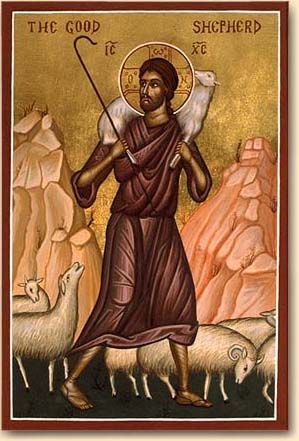
The Good Shepherd: Teaching us how to shepherd our family

Just last year, God blessed my brother and sister-n-law with a new addition to their family. Taylor came into the world weighing in at  7.1 lbs. This new addition to their family of three has been a joyous time, yet it comes with great responsibility. Not only are they to care for their children’s physical needs, but they are also to attend to their families spiritual development.

Specifically, the husband is to shepherd his family. Whether the family consists of the husband and wife, or a family of four, men are called to be the pastor’s of their household. Our local pastor is not the only one called to shepherd the flock. We are called to this task as well.

Jesus is our example and as Christians we are to walk as He walked (1 John 2:6), imitating Him (Eph. 5:1, 1 Cor. 11:1) in all things. Since He is our example, it is only right that we should look to Him for the “how to” of shepherding.

Here are a few guiding principles to get you started:

(1) We must know those we shepherd.

John 10:14 tells us Jesus is the Good Shepherd and He knows His own and His own know Him. In order to shepherd our families well, we must spend time getting to know them. This means turning off the t.v. during dinner and engaging your family in conversation.

(2) We must lead by example.

Jesus taught His disciples to pray by example (Matt 6:5-15). He showed them how to serve one another by example (John 13:3-5), and He also taught His disciples how to minister to others by example (Luke 8:1-9:6). As leaders of our household, we must do the same, which necessitates that we know how to pray, how to serve others, and how to minister to friends and family.

(3) We must protect our families from both physical and spiritual danger.

Jesus tells us that the Good Shepherd is willing to lay down His life for His sheep (John 10:11-13). He lays down His life because He cares for them. And in caring for them, He protects them from both physical and spiritual harm. In order to protect our families from spiritual danger, we must know what they are watching, reading, and who they are friends with. We must understand the culture in which we live, knowing how to combat cultural teachings with Scripture. This means we must not only have a deep understanding of our culture, but also of the Word of God.

(4) We must instruct our families.

Jesus intimately instructed His disciples during His earthly ministry, teaching them how to both read and understand the Word of God (Acts 1:3). We also must instruct our family in God’s Word, teaching them how to read it and understand it. This can be accomplished through a nightly family devotion, a weekly Bible study, or by talking about the sermon over lunch.

Conclusion

These four suggestions for better shepherding are not all that a shepherd does, but it is a good start. If we are committed to knowing our families better, leading by example, protecting them from both physical and spiritual danger, and instructing our families in the Word of God, we are on the right path to shepherding our families well.

Resource

The Exemplary Husband by Stuart Scott (117-130).