Do you think of God like St. Nick? You may have a different answer to that question after watching this video.
Resource
Anti-Santy Ranty from 10ofthose.com on Vimeo.

Do you think of God like St. Nick? You may have a different answer to that question after watching this video.
Anti-Santy Ranty from 10ofthose.com on Vimeo.
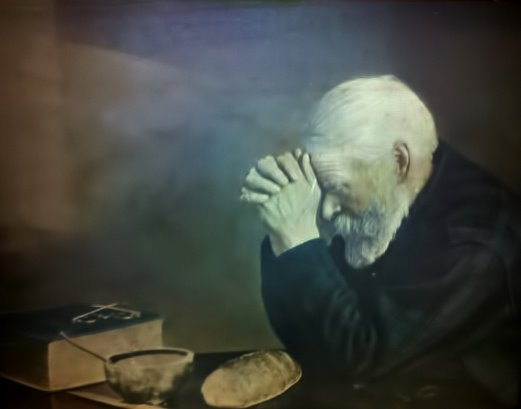
If someone where to ask you, what is true repentance, how would you answer?
You might say, “True Repentance is being grieved over our sin so much that we turn away from sin and turn toward God.”
You might continue by saying what one commentator has said, “True repentance is to return to God, to His covenant, and to loyalty and obedience.”
That is a pretty heavy definition, so let’s break it down into manageable parts.
We see in the first place that repentance is more than just being sorry for what we have done. It is to be grieved over our sin.
One day, when I was young I was doing something I should not do with the neighborhood kids. I don’t remember what it was, but I knew my mom did not want me to do it, but I did it anyway. Some how my mom knew I did what she did not want me to do. I don’t know how she knew, or how she found out. Mom’s seem to have that keen ability to just know when their kids disobey.
Later that day, she asked me about it. Instead of telling the truth, I decided I would lie to see if I could get away with it, but my mom knew I was lying. And because I disobeyed her and lied to her, I was punished for it.
I remember as I sat in my room, I was grieved, not just because I had gotten caught, and now I could not go out and play with my friends, but because I offended my mom.
Repentance is similar. It is an understanding that we as sinners offend a Holy God, and in realizing that, we are truly grieved over our sin. Not just because we will be punished one day, but because we offend God.
We also learn that repentance involves more than just grief. It involves radical transformation of the entire person – our mind, our heart, and our will.
Many of you have seen the movie the Matrix. At the beginning of the movie, the main character, Nero, is offered a choice between two pills, a red pill and a blue pill. The blue pill allows him to carry on life as if he had never even met Morpheus and learned the truth. The red pill allows him to be plunged into the Matrix fully learning all of what Morpheus and his crew know.
As he stares at those two pills he has a choice. Keep living like nothing happened. Or change everything. We all know that Nero chooses the red pill and is plunged into the Matrix with Morpheus‘ and his crew. When he chose that red pill, he turned away from the life he once knew and embarked on a new journey.
That is also apart of what it means to repent of our sins. It is a complete turning away from our old way of life to a new way of life in Christ. We can’t just do this intellectually. When Nero decided to take that red pill, his whole being was involved.
Similarly, when we repent of our sins, we don’t just do so intellectually. Our whole being is involved. Our mind, our will, our heart all turn from sin toward God. When we do that, we submit ourselves to God, to His rule, and to what He wants for our lives, just like Nero submitted himself to the Matrix, it’s rule, and what it wanted for his life.
So when we repent of our sins, we are saying that we will be loyal to God and obedient to Him, and our loyalty involves more than just our mind, it involves our whole being.
We have to ask ourselves, given this definition of repentance, have we really repented?
If we are truly repentant, these things will be evident in our life. I pray they are evident in your life.

This last April I attended the Together for the Gospel Conference (T4G). While I was there I picked up several free books and resources. One of which was Ligonier Ministries’ Table Talk. It has been several months since the conference, and I am just now getting around to reviewing all the material I brought back.
This morning I was reading through the April edition of Table Talk. As I did I came across an article on Prayer by Derek W. H. Thomas. What he has to say is challenging, as well as insightful and helpful in teaching us how to pray.
He starts by challenging our current idea of prayer,
We’ve all had those annoying conversations that have been entirely one-sided, showing little or no interest in us. It’s all about them – their interests, desires, needs, and complaints. Prayer can get like that: we pour out our woes, become totally self-absorbed, and show no interest in dialogue that involves “listening” to what God has to say. God is patient and, in His grace, He responds. But it shouldn’t be like that. When Jesus taught us to pray, He showed us that prayer begins (and continues) with God.
I believe he is right. For many, prayer is nothing more than us asking God to do something, and that something usually doesn’t involve building us spiritually either. It typically involves Him healing us of some physical ailment. Now, it is not wrong to pray for our own or others medical needs, but that should not dominate our requests.
Thomas continues by saying,
“At least half of our praying should be addressed to the praise and worship of God.”
Have you ever thought about prayer in that way? Have you ever thought half of your praying should be to praise and worship God? Taking it even further, do you praise and worship God in your prayers at all? I think if we are honest with ourselves, we would find that most of us don’t.
How do we remedy the problem?
Thomas helps by offering some things for us to think about before giving us 5 practical steps.
If we are going to praise and worship God in prayer, we need to know who God is and what He is like. How do we come to find that out? Studying His Word, of course.
When we do, we find that God is self-existent, self-sustaining, self-determining, everywhere present, and always in control. We also learn that He is our Father. What does that tell us? It tells us that we have unhindered access to Him personally. In addition, we learn God is holy, gracious, and merciful in His Word.
How do we connect our knowledge about who God is and what He is like to our prayer life? We praise Him.
Now that we know more about who God is and what He is like, when we pray, we should praise God for who He is. That is exactly what the Psalmist does, and that is what we should do as well.
Before we leave this section, let me make a distinction. Praising God and thanking God are two different things.
What is the difference?
When we pray, we should not pray like the hypocrite, just seeking outward recognition. Rather, we must recognize prayer for what it is – our entering into the presence of God. This means our prayers should be reverent and not self-seeking.
If we truly want to praise God in our prayer life, we must refrain from praying, just to make ourselves look good, or to check it off of our daily list. We must realize that when we pray we enter into the very throne room of our Almighty Father in Heaven.
Thomas finishes his article by giving us a five step strategy that will help us keep our prayers God-centered.
(1) Remind Yourself that there is only one God in the universe, and that you are not Him.
(2) Adoration Comes First, before confession, thanksgiving, or supplication. Worship the Lord in your praying.
(3) Read a Psalm before you pray, and attempt to emulate what you find: a preoccupation with God in all His multifacted nature. Find psalms of joy or grief, praise or lament, and note how the psalmist spends time with God, making Him the center of his thoughts and desires.
(4). Learn to Love God’s Names so that saying and repeating them fills you with an inexpressible joy, a reminder of who He is and His covenant faithfulness to you in the gospel of His grace.
(5) Learn to “Wait” upon the Lord. Watch how the psalmist, “fainting” as he thinks of his own troubles, finds relief by deliberately focusing on great things God has done.
I challenge you to become more familiar with who God is and what He is like by making notes as you read through His Word. Ask yourself when you finish your daily devotional: What did I learn about God today? Then praise God for who He is the next time you pray to Him. By doing so, hopefully our prayers will remain God-centered and not man-centered.
Post adapted from Prayer by Derek W.H. Thomas, Table Talk, April 2012, 14-17.

Just yesterday Timothy Keller’s new book Every Good Endeavor: Connecting Your Work to God’s Work was released. You can pick up a copy here.
Before the release, the guys over at Desiring God had Keller on their podcast Authors on the Line. Here is what they had to say about the interview:
We put Dr. Keller on the line to ask him about the 9 to 5 labors into which we invest so much of our lives. So what is the purpose of our work? What if we get stuck in a job we don’t enjoy? And why does it seem the church has such a hard time getting its arms around vocation in the first place?
Their interview was helpful and informative. I recommend you take the time to listen to their discussion and pick up a copy of Keller’s new book.
God’s Work and Ours: An Interview with Timothy Keller (17 minutes)

In my last post in this series, I presented a Modified Romans Road method. It centered around the idea of bad news and good news. Today, I will briefly discuss the Way of the Master.
The Way of the Master is used and taught by Kurt Cameron and Ray Comfort. It is a method that works best in cultures where its members desire to be considered a good person. The Bible Belt, for instance, is one such culture. That is not to say The Way of the Master would not be useful outside the Bible Belt. It is just that those in the Bible Belt often gravitate toward a desire to be considered a good person, whereas those outside of it have typically rejected this idea and don’t care about being considered good. Those are sweeping judgments and are not backed up by hard facts, so give this method a try wherever you live.
The Purpose
The point of The Way of the Master is to show those who desire to be good that they are not as good as they thought, but that they are actually sinners. By using this method, we can hopefully cause people to see where they stand with God.
The Method
The Way of the Master takes the Ten Commandments and Jesus’ teaching from the Sermon on the Mount and combines them.
For instance, you may ask someone a question like one of the following:
(1) Have ever committed adultery?
Now, most people have not actually committed the act, but Jesus heightens the expectation in His Sermon by telling us that those who have looked at a women with lust have committed adultery in their heart.
(2) Have ever murdered someone?
Now most people have never physically murdered anyone, but Jesus again heightens the expectation in His Sermon by telling us that those who hate are guilty of murder.
How does a thought relate to the physical act?
The idea is that if there were no outward restraints – social, legal, etc – we would commit the physical act. Since there are outward restraints, we typically refrain from committing the actual act. Instead, we think about doing it. Jesus tells us that those thoughts are equal to the actual act.
Why does that make us sinners?
Jesus is measuring our heart, not whether or not we have the ability to exercise physical restraint. In doing so, Jesus is showing us that our heart is corrupt, and we are inherently sinful.
What does our sin do?
Our sin is what separates us from God. God cannot have a relationship with a sinner because He is holy. In order for God to have a relationship with us, we must be perfect, but we are not perfect. Our sinful actions prove that we are not perfect. So then, no matter how many good things we do, we can never be good enough to mend our own relationship with God because those who are not perfect can never make themselves perfect.
Think about it like this: I attended the University of Georgia for my undergrad. They calculated GPA on a 4.0 system. Those who had a 4.0 never made below an A in any of their classes, they were perfect students.
If you happened to slip up and make a B in just one class, you would never be able to bring your GPA back up to a 4.0 no matter how many A’s you made. The best you could hope for was a 3.99. Even though you were close to that perfect 4.0, you could never attain it. No matter how hard you worked, it was always just out of reach.
Our relationship is like that with God. No matter how good we try to be, our relationship with Him will always be out of reach because we are not perfect and we can never be perfect. Not just because we have committed a sin once in our life, but because we, as humans, are inherently sinful. In other words, we are born imperfect. Sinners from our mother’s womb we come.
Without going to much further, I hope you get the picture that this technique is meant to help you show others that they are not as good as they thought. They are not good because they are sinners. The reason they sin is because they are inherently sinful. It is their sin that separates them from God. Sin they cannot get rid of on their own no matter how hard they try because it is part of our nature. Only Jesus Christ can cover our sin with His blood. Thus, restoring our relationship with the Father.
In my last post in this series, I started a discussion on different gospel presentation methods. The purpose in learning these methods is to increase our confidence and comfort level with sharing the gospel, so we will talk with more people about Christ.
Today, I will discuss what amounts to a modified Romans Road presentation.
Romans 3:23 – All have sinned. (Bad news)
Sin is defined as an outright rejection of God’s rule over our lives. As our Creator, God has the right to rule over us, but we often reject God’s rule. In place of His rule, we setup our own rule.
Imagine a rebel force coming together and attacking a king’s castle. They over through the king’s rule and setup their own rule, while at the same time subjecting the king to their service.
This is similar to what it means to sin against God. You see, sinners are not just breaking rules in the king’s kingdom, they are the rebel force overthrowing the castle and setting up their own rule. Lest you believe you are not about of that rebel force, Romans 3:23 makes it clear we all are apart of the rebel force because we all are sinners.
Romans 6:23 – The penalty for sin is death. (Bad news)
Let me provide you with an illustration to help you understand this and explain it to others. If I paid you fifty dollars to work for me today, the fifty dollars would be your wage. It would be what you earned for working. Romans 6:23 tells us our wage as sinners is not fifty dollars, but death.
Romans 5:8 – Christ died for our sin. (Good News)
Let’s say you are in the hospital dying of cancer and I come to you and say, “I want to do something for you. I’ll take the cancer cells from your body and put them into my body.” What would happen to me? The usual reply is, “You would die.” You would be right. I would die. What would happen to you? You would live. The reason you would live is because I took your cancer and died in your place. The thing that was causing you death was taken by me in the hospital, placed upon myself, and I died as your substitute.
The Bible tells us Christ came into the world to do just that. He took the sin that was causing our death, placed it upon Himself, and died in our place. He was our substitute. And on the third day, when He rose from the dead, He proved right then and there that He had conquered death [1].
Ephesians 2:8-9 – You can be saved through faith. (Good News)
Grace is defined as unmerited or undeserved favor. Salvation holds the idea of being rescued or delivered from the penalty of sin. Faith means to trust, with the idea of trusting something you cannot see. Repent of our sin means to turn from, so as to never do again. Now that we have those definitions out of the way, let’s see how that works itself out.
Think about it like this: When you sit down in a chair, you trust it will hold you. You don’t come into a room and examine the chair to see how it is built before you sit down. You just sit down. You are simply exercising faith (trust) that the chair will hold you.
When we put our faith in Jesus, we are doing something similar. We are trusting that He will save us. We are not trusting in our church membership, our good life, or our baptism, but we trust in Jesus alone.
So then, to receive God’s unmerited grace and salvation, we need to exercise faith in Jesus, believing He is our Lord and Savior. As well as we need to repent of our sins.
After leading someone through these Scriptures, the next thing we should do is ask: Is there anything keeping you from trusting in Jesus as your Savior?
(1) If they say yes, then you ask them what it is and field their questions.
(2) If they say no, then you should ask them a few diagnostic questions to see if they were tracking with you.
The answers to these questions will tell you if the person was tracking with you. More importantly, it will tell you if the person you are talking to has understood the gospel and is now a Christian.
Modified Romans Road is taken from: R. Larry Moyer, Show Me How To Share the Gospel, 27-31.
[1] R. Larry Moyer, Show Me How To Share the Gospel, 29.
 Christianity Matters