On Whose Approval Matters

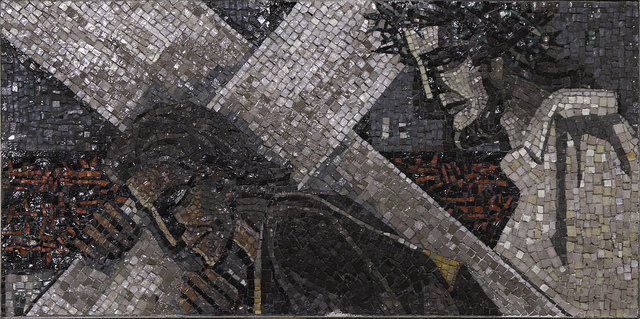
Those who are servants of Christ, those who are entrusted with the secret things of God, do not see themselves winning popularity contest – not even within the church’s borders. That is what Paul means when he says,

I care very little if I am judged by you or by any human court” (1 Corinthians 4:3)

There is only one Person whose “Well done!” on the last day means anything. In comparison, the approval or disapproval of the church means nothing.

Question for Reflection

  1. Who do you try to please – Christ or Man?

Resources

D.A. Carson, The Cross and Christian Ministry97.

Image

On the Primary Responsibility of Christian Leaders

All valid Christian leadership, however varied its style, however wise its use of sociological findings, however diverse its functions, must begin with this fundamental recognition:

Christian leaders have been entrusted with the gospel, the secret things of God that have been hidden in ages past but that are now proclaimed, by their ministry, to men and women everywhere…and all their service turns on making that gospel known and encouraging the people of God, by word, example, and discipline, to live it out.

Question for Reflection

  1. Pastor, do you recognize the immense calling God has placed on your life?

Resources

D.A. Carson, The Cross and Christian Ministry96-97.

Image

Engage People Where They Are With The Gospel

The City

Acts 17 provides one picture of how Paul evangelized the lost. In the city of Athens, we learn he went to the synagogue to engage the Jews on the Sabbath, and the rest of the week he went to the marketplace to engage the more secular minded.

The Market Place was this huge open air area in the middle of town where everyone gathered for business, arts, buying and selling, or just to hang out with their friends. We don’t really have anything like it today. Technology has allowed us to spread out and do all these things from the comfort of our office or home.

However, in Paul’s day, the Market Place was were everything happened. It was where everyone gathered. I would imagine Paul walking around the Market Place, getting to know folks there, and then engaging small groups here and there with the gospel.

Today we should do the same.We should reach out, build relationships with folks, and engage them with the gospel where they are on a daily basis. Our Market Place might look different than Paul’s. Instead of everything huddled into one area, it’s spread out. We work in one part of town, shop in another, eat and drink our coffee someone else.

Even though our Market Place looks different than Paul’s, I believe the principle still applies. We should do what Paul did — reach out, build relationships with folks, and then engage them with the gospel where they are on a daily basis.

Question for Reflection

  1. How do you build relationships in your market place?

Resources

Post adapted from the sermon: Spread the Gospel – Growth Through Discipleship – Week 5

Image

What Might a Church’s Discipleship Process Look Like?

Discipleship

Recently, I finished a year long discipleship process with the Baptist Association in my area. The purpose of the process was for each pastor involved to develop a discipleship process they would implement in their church. Here is the process I developed.

What Might a Church’s Discipleship Process Look Like?

If you visit my church’s website, on the top right you will see the tagline: Taking you from Come and Worship, to Go and Serve in Christ. That tagline reveals the church’s discipleship process.

(1) Come and Worship

What that simple means is come to the main worship service. We’ve designed our main worship service to be all about Jesus. We see it as a time where you can grow in your love for God as you learn more about who He is and what He has done for you.

(2) Stay and Connect

Not only do we want our members and regular attenders to consistently come to the main worship service, but we also want them to stay and connect with others in our church. We primarily see them doing that through our Sunday School classes, but also through Community Groups and Bible Studies.

In these classes they will not only learn more about Jesus, but they also have an opportunity to build relationships with others. The opportunity to build relationships is important because if they are going to grow in their love for others, they need to have relationships. Relationships that allows them to know how best to love and serve each other.

(3) Go

What I mean by this is for the church to go and spread the gospel message to others in the community.

Part of being a disciple is sharing the gospel, so our church needs to help it’s members do that. Not through a church evangelization program, but rather by training and encouraging them to live as missionaries in their own community.

I am convinced that by training and encouraging them to do what missionaries do — build relationships with others with the intention of sharing the gospel — they will be an effective evangelical force in the community.

(4) Serve

Disciples are those who follow Jesus in serving the church and community, so as part of a discipleship process we need to not only encourage the church to serve but to provide opportunity for them to serve.

We have a lot of opportunities within the church to serve — Nursery, Children’s church, Work days, Women’s Missions Ministry, Media booth — as well as there are a lot of service opportunities outside of the church. To highlight these opportunities, I created a page on our website so folks can see what areas we and the community need help in.

I believe that if we take the opportunities given to us to serve the church and community, we are going to continue to grow as a disciple.

(5) Bring others along

Disciples are those who make disciples. The best way for you to do that is by bringing someone along on the journey with you. To that end, I am encouraging those in my congregation to bring people to the worship service, Sunday School, Communities Groups, to bring others along when they serve or share their faith, and to sit down with another person and discuss God’s Word with them and pray.

Disciples are those who make disciples and one of the best ways to do that is just by bringing others along on the journey with you.

Visual

Here is a visual that goes along with my process:

Discipleship Process

Question for Reflection

  1. What process do you have for making disciples at your church?

Resources

Post adapted from my sermon: Introduction – A Discipleship Process for the Church – Week 1

Image

What Might We Believe Discipleship is, But Isn’t? – Part 2

Discipleship

If you have been in church for any length of time or if you are a new believer, you have probably heard the word discipleship. Most likely you have been encouraged to participate in some sort of  Discipleship process. That is because discipleship is important. It is what helps us to grow as believers. But do we get discipleship wrong? I believe we often do. I believe this because we limit the scope of what we believe discipleship is.

What might we believe discipleship is, but isn’t?

(3) We might believe discipleship is an easy thing that doesn’t take any effort.

But if we believe that, we are wrong. While salvation is free, discipleship takes work. Jesus puts it bluntly in Luke 9:23:

If anyone would come after me, let him deny himself and take up his cross daily and follow me.” (Lk 9:23)

And Paul in Philippians 2:12 tells us to:

Work out your own salvation with fear and trembling” (Philippians 2:12b)

So we can’t grow to be more like Christ without putting forth effort.

When I was in seminary, I had to take two language classes — Greek and Hebrew. The first language class I took was turbo Greek. They call it turbo Greek because they squish two semesters worth of Greek into two months. I took these two classes over the summer and they were the only classes I took.

One thing I realized quickly was that if I was going to learn this language, I had to put in the effort and that required me to do more than just show up for class. So that summer I spent hours flipping through vocabulary cards, doing practice exercises, and memorizing charts. Any chance I got I worked on Greek. I even downloaded an app to my phone so I could work on it while Jen and I were out shopping or I had a spare moment. While it was a lot of work, it paid off. I ended up doing pretty well in the class.

Just as learning a foreign language doesn’t happen just by showing up to class, becoming a fully mature disciple of Jesus doesn’t happen just by showing up to church once a week. It takes effort and time, it’s not an easy thing, so our discipleship process has to involve more than just showing up to church once a week.

(4) We might believe discipleship can be programmed.

Before I surrendered to full-time ministry, I worked in sales. My first sales job was at CBeyond. It’s a telecommunications company that sells Voice Over IP systems. I worked for them in Atlanta.

One of the things that initially drew me to this company was their training program. It was one of the better programs in the industry for new sales associates. And since this was my first sales job, I thought it would be good to go to a company that had a good training program.

When I started for the first 2 to 3 weeks all I did was classroom training. Everyday I came in we would learn something new about the company. We would practice some sales tactics, we would do mock cold calls. All kinds of stuff that was supposed to get us ready to go out into the field.

While the training was good and necessary, when I finished that training I wasn’t a mature sales associate because I hadn’t had real world experience. I knew about the company, I knew some sales tactics, I went through their training program, but I hadn’t put any of this stuff into practice yet.

Similarly, we can’t become fully mature disciple of Jesus just by going through a 6 week class, reading a book, or attending a Bible study once a week. It doesn’t work that way because discipleship can’t be programmed. It requires us to get some real world experience.

Real world experience is required because discipleship involves your whole life and it takes a lifetime.

I was reading a magazine recently put out by The Navigators — They are a missions organization. In that magazine, I came across a story about the community of Bukhalu, which is in Uganda.

The community in Bukhalu had been formed by former criminals who were run out of town, which meant Bukhalu was not your ideal place to live. It was primarily made up of witches, murderers, and other criminal types. But the mission’s team highlighted in the magazine felt God calling them to go work with this community.

After working with them for two years — explaining the gospel to them and urging them to repent and believe in Jesus — these folks started seeing some remarkable transformations in the community.

One guy in particular who came to faith was Stephen. Stephen is a local government leader, who when asked about the Bible and the transformation it brought to the community said,

“The Bible has told us about our sin and how we can receive Christ… We’ve learned that drunkenness wastes time and money and if we stop we find better lives. We’re also learning how to love our wives.”

That last piece was very important to this community. Stephen told them that domestic disputes were common. As a government official he would have to step in and help settle these disputes often. Something he used to have to do several times a week before this team brought the gospel to their city. Now, he said, he only had to help settle disputes maybe once or twice a month.

On top of these moral changes the community also saw numerous day-to-day lifestyle changes. Instead of leaving their compound dirty and getting water from the river, they started cleaning up and getting fresh water from a bore hole which helped to improve the health of their children.

All these things happened because of the gospel.

Conclusion

So you can see that being a disciple is more than just gaining information. It is more than just a six week study or a program we go through. It’s more than just you and Jesus getting alone somewhere. Discipleship involves others, it involves our whole life. It changes our whole way of thinking and how we do things. And these changes don’t just occur in a couple of weeks. They occur over a lifetime of effort.

Question for Reflection

  1. What would you add to this list?

Resource

Post adapted from the sermon: A Discipleship Process for the Church

Image

What Might We Believe Discipleship is, But Isn’t? – Part 1

Discipleship

If you have been in church for any length of time or if you are a new believer, you have probably heard the word discipleship. Most likely you have been encouraged to participate in some sort of  Discipleship process. That is because discipleship is important. It is what helps us to grow as believers. But do we get discipleship wrong? I believe we often do. I believe this because we limit the scope of what we believe discipleship is.

What might we believe discipleship is, but isn’t?

(1) We might believe discipleship is just gaining religious knowledge.

Because we believe this, discipleship becomes “Read this. Study this. Memorize this.” Don’t get me wrong, we need to read — I am a big advocate of reading. We need to study. We need to memorize Scripture. We need to grow in our knowledge of God’s Word. But discipleship involves more than these things.

Discipleship involves Christ-like transformation. Our goal, as Paul says in Romans 8:29 is:

to be conformed to the image of His Son,” (Rom. 8:29).

That is not going to happen just by gaining religious knowledge, so we need a process that involves more than just classroom activities. We need something that focuses on our whole life so that our whole man is transformed.

(2) We might believe discipleship is a solitary endeavor.

It is just Jesus and me getting together. While discipleship is all about Jesus, it’s not a solitary endeavor. Discipleship is relational. It requires us spending time with other believers, so we can’t just get alone with Jesus somewhere and expect to become a fully mature disciple.

We need others to help us grow, which is exactly what Paul is getting at in Ephesians 4:11-13 when he tells us that Jesus:

…gave the apostles, the prophets, the evangelists, the shepherds and teachers,…

And why did he give them?

…to equip the saints for the work of ministry,

So the saints can do what?

…for building up the body of Christ,…

What is the result of this building up?

…[it is the] unity of the faith and of the knowledge of the Son of God, to mature manhood, to the measure of the stature of the fullness of Christ,” (Eph 4:11–13)

So we need each other to become fully mature disciples of Jesus.

When I was in high school and college, I used to work out all the time. I went to the gym four times a week and I would work out for a couple of hours each time I went. And to help with my workouts, I read books and magazines. I took supplements. I charted my workouts — writing down how much weight I was lifting and how many reps I was able to do.

While all those things helped, I don’t think I would have seen any of the gains I saw had it not been for my workout partners. Had it not been for Mike and Randall, encouraging me to go to the gym and pushing me while I was there, I don’t believe I would have seen any of the gains I realized during that time.

Just like we need workout partners to help us grow physically, we need workout partners in the church to help us grow spiritually.

So if we want to grow as disciples and become mature believers, we have to have a community of believers around us challenging, encouraging, teaching, and building us up. We can’t just get alone with Jesus somewhere, we have to have others in our lives.

Question for Reflection

  1. What would you add to this list?

Resource

Post adapted from the sermon: A Discipleship Process for the Church

Image