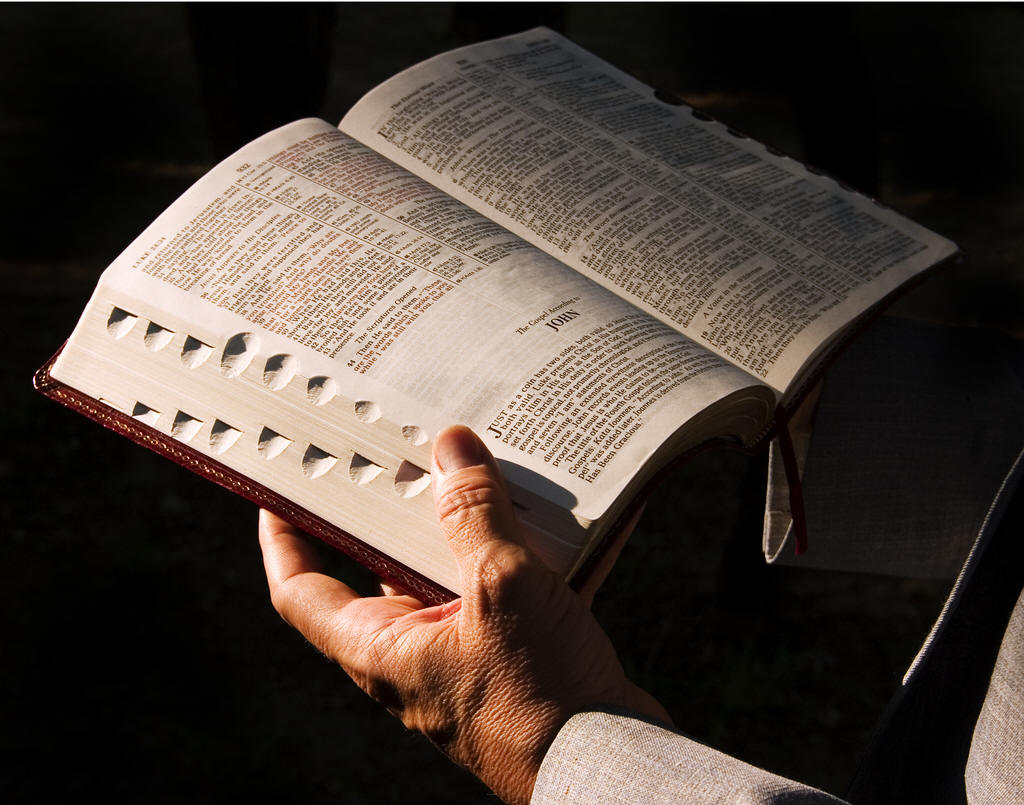
Why I am Going to Together for the Gospel

Bright and early tomorrow morning I am flying to Louisville, KY with three other friends to attend the Together for the Gospel (T4G) Conference. I am excited, and I can’t wait to go! But why? Why have I made it a priority in my busy schedule as a pastor to attend this conference?

Why I am Going to Together for the Gospel

(1) Teaching

The men who will be speaking at this conference are godly men that have been blessed by God with the ability to shepherd other pastors. They are firmly grounded in the Word and all their counsel will be as well. I am looking forward to hearing what they have to say about the gospel, as well as learning more about how the gospel applies to my life, my ministry, and my church.

(2) Books

I love books, they are essential tools for any minister, and there will be tons of vendors at the conference. The best thing is that these vendors will have hand selected a number of solid books and they will be selling them at a discounted price. As well as there will be a lot of books given away for free, which is probably the best part. I plan on coming back with a suitcase full, so much so that I am packing as light as possible, in order to make room for more books. If it is not a necessity, I am not bringing it. I am hoping these books will not only serve to educate me, but that they will also serve my congregation.

(3) Fellowship

I have found that conferences are a great time to meet other godly men from around the country, as well as it is a great time to spend with friends. I am looking forward to connecting with those I have not seen since my last conference, meeting new people, and hanging with my friends I am traveling with. Above all, I am looking forward to learning how God is working in these men’s lives and churches, as well as hearing how the gospel is being spread in their town, and how they are ministering to their community.

(4) Band of Bloggers

I am looking forward to gathering together with other fellow bloggers at the Band of Bloggers meeting to discuss and learn how we may band together as a united front to spread the gospel to the nations through the internet. As well as I am looking forward to meeting new people and discovering new blogs to add to my RSS reader.

(5) Traveling

I love to travel and learn about new places. I am looking forward to exploring Louisville, KY, seeing the campus of SBTS, and eating at a few local places.

Is it Important to Publicly Read Scripture and Pray in Our Congregations?

Today, we have a guest blogger: Pastor Bob Dimmitt. He has written on the necessity of the Public Reading of Scripture and Prayer, as well as he has offered us a few tips. Here is what he has for us:

I believe it is important in the development of our churches that more men become involved in our Sunday Morning and Sunday Evening Worship through the public reading of Scripture and prayer.

The Public Reading of God’s Word

The public reading of God’s Word is an important part of our churches corporate worship. Even so, many churches have neglected this discipline, even though Scripture itself commands it. 1 Timothy 4:13 says, “Until I come, give attention to reading, to exhortation, to doctrine.

In commenting on this verse a noted Pastor once said,

“Of course we of this generation cannot know by firsthand experience how the Word of God was read in other times. But it would be hard to conceive of our fathers having done a poorer job than we do when it comes to the public reading of the Scriptures. Many have read the Scriptures so badly that a good performance draws attention by its rarity.

It could be argued that since everyone these days owns his own copy of the Scriptures, the need for the public reading of the Word is not as great as before. If that is true, then let us not bother to read the Scriptures at all in our churches. But if we are going to read the Word publicly, then it is incumbent upon us to read it well. A mumbled, badly articulated and unintelligent reading of the Sacred Scriptures will do more than we think to give the listeners the idea that the Word is not important….”

In this pastor’s opinion, not only do churches fail to obey Paul’s command to Timothy to read Scripture, when they do attempt it, they do a poor job, giving the congregation the idea that the Word is just not that important. If this is the case, how can we show the congregation Scripture is important?

Tips for the Public Reading of Scripture

1. Assign or acquire your text ahead of time.

If you are a pastor, assign ahead of time a specific date and Scripture to be read. If you have been asked to read Scripture in a service and you have not been assigned a specific text, then ask the pastor, or worship leader to provide you with the text you will read at least one week before it is your turn.

2. Read from a designated version.

If your congregation has invested in pew Bibles, then read from the version offered. It is also a good idea to read from the version the pastor uses, since most people will bring that version to church with them.

3. Practice in advance.

Several days, if not a full week before your turn to read the passage in the service, practice reading the passage to yourself aloud. If the passage is short enough, then work on committing it to memory. Memorizing the passage and reading it aloud several times will help in learning the flow of the passage, allowing you to read it smoothly in the service.

4. Read with emotion and meaning.

When reading the passage, read with emotion and meaning without being dramatic. Know the emotion and emphasis you bring to the reading will be felt and seen by the congregation. If you are fumbling through the passage, or reading it in a monotone voice, you are sending the signal that the passage is not important to you.

Public Prayer

Following the public reading of Scripture should be a public prayer. The one reading the Scripture should be the one to lead the congregation in this prayer. As you do, don’t think that your prayer has to be long. John Newton once said,

“The chief fault of some good prayers is, that they are too long; not that I think we should pray by the clock, and limit ourselves precisely to a certain number of minutes; but it is better of the two, that the hearers should wish the prayer had been longer, than spend half the time in wishing it was over.”

With Newton’s advice in mind, let’s look at some tips for praying in public.

Tips for Public Praying

1. In private we offer our own prayers and confessions to God, but in public our prayers are different.

In private we will use language such as: I, my, me, mine, but in public the language is different, we should use language such as: us, we, our, ours. Private prayer can also be silent, and groaning. Public prayer cannot be silent nor can it be groaning. It must be audible, in a language understood by all, at a speed accessible to everyone, with phrases that do not jar, and at a length everyone can sustain.

2. Public prayer is didactic.

We are teaching our people something when we pray. If we fill them with sickly repetitions, they will think that that is OK. If we do not pray in the Holy Spirit then they will not learn. If we pray in public for certain themes, then they will pray the same.

In addition, when they see and hear you emotionally engaged in prayer, that will teach them much about Christian experience. When we pray in this way, our prayers are deep and whole. The result is that the congregates theology will be challenged by your whole praying, so that praying is a kind of discipleship.

3. Public prayer is pastoral.

It is one of the means we lead the people into holiness and comfort. We must think of the various needs of the members of the congregation, as well as the congregates themselves.

In addition, we should know that prayer does things: It brings down blessings on people. It makes people more loving and understanding. It restores the backslider. It takes up all the needs of the congregation.

  1. Public prayer must be fresh, but prepared.

We can prepare our prayers without preparing them. We can consciously include every main element of biblical prayers – adoration, confession and thanksgiving – as well as we can incorporate the passage that we read into our prayer.

Example if the passage dealt with the resurrection then that can be a theme; you thank God for the resurrection, the reality of the resurrection, and what the resurrection means to us. If the passage deals with spiritual growth, make that the main theme of your prayer asking God to do for us what Paul asked God to do for those he loved.

Conclusion

The reading of Scripture and Prayer in our congregations publicly is an important act. One that not only fulfills the Scriptures command, but serves as a means to teach and care for those in the congregation. It is my prayer that we all take this duty more seriously.

Bob Dimmitt is the Senior Pastor of Ferguson Avenue Baptist Church (FABC) in Savannah, GA. He has served there for the last 12 years. Prior to serving as the pastor of FABC he was a jail chaplain in Hawaii, Virginia, and Savannah. You can learn more about Bob and FABC through their website: www.fabchurch.com 

The Next Chapter

This last Sunday I preached in view of a call at Sycamore Baptist Church. The Lord graciously revealed His will, which was that He was calling me to Sycamore Baptist as their Lead Pastor. I accepted the call, and I will be installed as their new pastor on February 5th. I am extremely humbled that the Lord has chosen to use me to lead His church. I consider it a privilege and honor to serve and lead the members of Sycamore Baptist Church in Decatur, TX.

Jen and I are both excited about this opportunity, and we are looking forward to seeing what the Lord has in store for us and the church in the future. Please be in prayer for us as we make this transition to a new city and a new church.

You can specifically pray for us in the following ways:

  • Pray the Lord would give me the wisdom to lead His church.
  • Pray the Lord will reveal to me what I need to teach through both on Sunday Mornings and Wednesday Bible Study.
  • Pray the Lord will bless us with young couples to befriend and invite to the church.
  • Pray the Lord will allow me to find a few men to meet with for accountability and discipleship.
  • Pray the Lord will allow the church to be a light to the community, reaching it for Christ.
  • Pray the Lord will allow our transition to a new city and church an easy one.

Building the Church: What is the End Goal?

In Ephesians 4:7-16, Paul tells us Jesus gives gifts to the church for the building up of the body. Jesus gives gifts to the individual members of the church. He also calls some men, to become Apostles, Prophets, Evangelists, and Pastor Teachers, and gives them as gifts to the church, in order to equip the saints for the work of ministry. The congregation, along with the Apostles, Prophets, Evangelists, and Pastor Teachers, are to build up the body of Christ. They are to work toward a certain end. It is that end that I want to focus on today.

You do not start a building project without first understanding what you are building, nor do you start building up the body of Christ without first understanding the goal in mind. What is that goal? Where are we as a congregation supposed to be headed? Paul provides the answer in verses 13-14 when he says,

Until we all attain to the unity of the faith and of the knowledge of the Son of God, to mature manhood, to the measure of the stature of the fullness of Christ, so that we may no longer be children, tossed to and fro by the waves and carried about by every wind of doctrine, by human cunning, by craftiness in deceitful schemes.

I believe we can pull three attributes out of these verses, which tell us where we are headed as a church, which is ultimately to maturity. Let’s look at the three characteristics of a mature church:

1. It is a church were everyone is unified because of a common faith and where everyone has a deep intimate knowledge of Jesus Christ

The first phrase Paul writes, “Unity of the Faith and the knowledge of the Son of God” has the idea that the entire congregation is united, they are one, because of their shared faith. As well as those in the congregation have an intimate and real knowledge of Christ, which is gained from seeing Him work in the body.

The psalmist is a good example of one who had an intimate knowledge of God. We often read of him crying out to God as his protector, comforter, and salvation. He sees God as a righteous judge and deliverer, as well as one who provides for the poor and the needy.

The psalmist does not know these things about God because he has studied them, even though he has, but he more so knows these things about God because he has experienced them first hand either in his life or in the life of those he knows.

Just like the Psalmist. As we see families in our congregation go through struggles and walk with them as Christ works in their lives, we come to know that Christ is faithful. As we see recent converts change their way of life, casting off addictions and clinging to the Savior, we come to know that Christ is better than our former way of life. As we see Christ work in the congregation, or in our own life, we develop a deep intimate knowledge of Him.

2. It is a church that resembles Christ in its thoughts, actions, and knowledge

Paul says we are to keep building up the body until we reach “mature manhood.” The idea is that we, as the body, are to become a well-built full grown man. What does a well-built full grown man look like? The next phrase tells us.

A well-build full grown man is one who, as Paul says, reaches the “measure of the stature of the fullness of Christ.” In other words, it is a church, where the entire congregation resembles Jesus in their  thoughts, actions, and knowledge.

3. It is a church that is able to discern false doctrine and combat those who desire to destroy the church through deceitful schemes

In verse 14, Paul gives us the reason for why we should grow in maturity, which also serves to tell us what it looks like to be a mature man. He says,

so that we may no longer be children, tossed to and fro by the waves and carried about by every wind of doctrine, by human cunning, by craftiness in deceitful schemes.

As we become unified and grow in our knowledge of Christ. And as we move toward being a full-grown man, one that resembles our glorified Savior, Jesus Christ, we should be able to discern false teaching and the schemes of those who seek to destroy the church.

Instead of being like children who are easily influenced, we are to be like full grown men capable of discerning what others are telling us. Instead of being like a rudderless boat that is tossed to and fro by every wave that comes by, we are to be like a stable ship, which is able to navigate rough waters with a clear path.

As we grow in our maturity, we, the entire church, are to be able to evaluate the latest doctrines and theological trends that try to pass themselves off as Christian teaching, as well as discover who it is that is trying to destroy the church. In doing so, we put ourselves in a position where we are able to protect the church.

The end product is three-fold:

(1) It is a church were everyone is unified because of a common faith and has a deep intimate knowledge of Jesus Christ.

(2) It is a church that resembles Christ in its thoughts, actions, and knowledge.

(3) It is a church that is able to discern false doctrine and combat those who desire to destroy the church through deceitful schemes.

Conclusion

To these ends, we, as a church, are to be building because they represent the final product of a mature church. In order to get there, it will take every member of the church exercising their God given gift. As well as we will need to speak the truth of God’s Word to each other in love (vs 15). May we, as a church, work together until we attain to this goal, knowing our work will not be fully complete until Jesus returns.

The Relevance of Scripture | Part 2

In part 1 of this series, which you can read by clicking here, I gave my argument for why Scripture is relevant for us today. I concluded:

Scripture is relevant to us today because we deal with the same things those in biblical times dealt with.

Adam’s sin in the garden affected all mankind leaving us with a sinful nature (Gen. 3). Since we have a sinful nature, we not only sin, but are deficient, not understanding the way God would have us to live. The biblical writer understands man’s condition, and in his writings deals with man’s sins and deficiencies, the same sins and deficiencies we deal with today. Thus, understanding the sins, or deficiencies, a biblical writer is dealing with, and the commands, or counsel he offers, will provide us with the author’s purpose for writing the text, as well as it makes the text relevant for us today.

Where We are Headed Today

In what follows, I want to provide you with a few practical questions to ask in order to determine the author’s purpose. If we can find the author’s purpose, then we can determine what sins, or deficiencies, he was writing towards. This will help us to determine the FCF (Fallen Condition Focus), which is

The mutual human condition that contemporary believers share with those to or about whom the text was written that requires the grace of the passage for God’s people to glorify and enjoy him [1].

Once we determine the FCF, we are on our way to understanding how the passage relates to both biblical and modern times.

How do I Determine the Author’s Purpose?

In order to determine the author’s purpose you should ask these questions:

  • Why are these concerns addressed?
  • What causes this account, these facts, or the recording of these ideas?
  • What was the intent of the author?
  • For what purpose did the Holy Spirit include these words in Scripture? [2]

Example: Justification by Faith

For example, if the biblical writer brings up a particular doctrine, such as justification by faith, then you need to immediately ask why? Why did he brings this into the letter? It is not to provide his readers with a systematic theology lesson alone, he has a purpose.

The purpose could be that those whom he is writing were trying to earn their salvation through their works, were doubting the sufficiency of God’s grace, or they could have been afraid of God’s rejection because of a particular sin [3].

As you can see, there could be a number of reasons for writing about justification by faith, but you need to determine the particular reason for your text. Once you do so, you are on your way to determining the author’s purpose and the FCF he was writing toward.

An FCF Does Not Always = Sin

It is important you understand the FCF does not have to be a sin. We have deficiencies because of our sinful nature (fallen condition), which hinders us from living the way God would have us live. Bryan Chapell is helpful here when he says,

An FCF need not be something for which we are guilty or culpable. It simply needs to be an aspect or problem of the human condition that requires the instruction, admonition, and/or comfort of Scripture. Thus, an FCF is always phrased in negative terms. It is something wrong (though not necessarily a moral evil) that needs correction or encouragement from Scripture [4].

What are things other than sin that need to be addressed? Some examples could be:

  • Parenting from a biblical standpoint (Eph. 6:4)
  • Marriage (Eph. 5)
  • Sex (1 Cor. 7)
  • Grief (1 Pet. 1:6; 1 Thess. 4:13)
  • Spiritual Gifts (1 Cor. 12)
  • Prayer (1 Jn. 5:14)

These are not sins, but they are things we, as fallen man, need biblical instruction, admonition, and/or comfort concerning.

Application

After you have determined the author’s purpose for writing the text by determining the FCF of those to whom he is writing, you need to explore what he says about the FCF. How does he instruct his readers to handle their particular sin or deficiency? In other words, how does he apply the doctrine, instruction, command, or admonition to the FCF? Once we understand how the biblical writer applies the text to the lives of his readers, we can do the same to ours.

Specificity

When applying the text to your own life, or another you are close with, be specific. For example:

Instead of saying, “Prayer is so powerful it can save an individual from hell,” be specific by personalizing the truth. Say, “My prayer for my rebellious son is so powerful it can save my son from experiencing a life of sin, heartache, and eternal damnation” [5].

Specificity is a powerful tool because it drives the truth into the heart and causes one to act.

Conclusion

Understanding the author has a purpose for writing his text, and that purpose is to deal with man’s sins or deficiencies (FCF), the same sins and deficiencies we deal with today, helps us to see how a 4,000+ plus old text is still relevant for us today. Once you understand the FCF the author is writing toward, you can then take and apply his words to your own life. Your specific situation may look a little different than the situation in the biblical text, or it may not, but you can still take and apply that truth to your life.

This week, as you read through the text, I challenge you to start looking for the author’s purpose, the FCF he is writing towards, and how he is applying God’s truth to his readers lives. After which, you should apply that same truth to your own life. Doing so will help you to see how relevant the Bible really is, and will cause your passion and desire for Scripture to increase exponentially.

Resources

[1] Chapell, Bryan, Christ-Centered Preaching: Redeeming the Expository Sermon, 50.
[2]Ibid, 48-49.
[3] Ibid.
[4] Ibid, 51-52 .
[5] Ibid, 51.

Image: Adrian van Leen for openphoto.net CC:PublicDomain

The Relevance of Scripture | Part 1

How is a 4,000 yrs old + book relevant for today? That is the question most people ask when they approach the Bible. They read about the Law, tent dwellers, and shepherds. They think back to a time where television and the internet were not even a glimmer in someone’s eye. Skyscrapers did not rule the air, nor were we immediately accesible through email, text message, or a mobile phone. With this in mind, how does such a foreign time remain relevant to us today?

Scripture is for Equipping

The apostle Paul tells us,

All Scripture is God-breathed and is useful for teaching, rebuking, correcting, and training in righteousness, so that the man of God may be thoroughly equipped for every good work (2 Tim. 3:16-17).

Paul informs us that every word of Scripture is God-breathed and useful in order to equip the man of God. Knowing that all Scripture is useful is part of Scripture being relevant for today, but there is another piece of the puzzle we must fill in before we have our answer [1].

Scripture is Written with a Purpose

Each writer had a specific purpose for the text he wrote, which is the missing piece to our puzzle. Modern writers write with purpose. They do not write a short story, poem, or book without a reason or purpose for doing so. In biblical times, it was no different. Every story, poem, and book in the Bible has a purpose for being there.

From Paul’s words in 2 Timothy 3, we know the purpose of the biblical writer was to thoroughly equip the man of God for every good work. The way the biblical writer equips is no different than how our modern writers would equip. They looked at the situations the readers were facing and wrote toward those ends.

Our Issues are More Similar Than You Think

Some of you may be thinking, those in biblical times did not face the same situations I do today. How could they? There time was much different than mine. Even though all the modern conveniences were not available, and their culture was not exactly like ours, the situations the writers and readers of the biblical text dealt with are strikingly similar.

From the beginning of the Bible we see writers writing about men who desire power, wanting to be their own gods (Gen. 3), adultery and enticing women (Gen. 39; Prov.1-8), as well as barrenness (Gen. 16 -17). Demon possession (Luke 4), Homosexuality (Rom. 1), Disunity in the church (1 Cor. 3; Eph. 4; Phil. 2), Lawsuits (1 Cor. 6), Marriage (1 Cor. 7; Eph. 5), Partiality (James 2), Speech (James 3), Enemies (Matt. 5), Judging others (Matt. 7), and Anxiousness (Matt. 6) are a few more purposes for which the biblical writers wrote. Even though our world’s may look a little different on the outside, we are all still dealing with the same things on the inside.

Fallen Condition Focus (FCF)

Bryan Chapell calls

The mutual human condition that contemporary believers share with those to or about whom the text was written that requires the grace of the passage for God’s people to glorify and enjoy him is the Fallen Condition Focus [2].

Our world, and the biblical writers world, is corrupt and fallen. Since our world and man is corrupt, we need the grace of God to instruct us in how to live. The Word of God is designed to do just that, to instruct us in how we are to live, and it was the writers of God’s Word, inspired by the Holy Spirit, who took up that task in their writings.

Conclusion

As you read through the text, you can be assured that God’s Word is relevant for you. The times may be different, but we are still fallen and corrupt, needing God’s grace to instruct us in how to live. The biblical writers, just like the writers of today, write with a purpose. Their purpose is to thoroughly equip us for every good work. They do so through the many stories, poems, letters, and books they wrote.

So then, when we approach a text of Scripture, we need to first determine what FCF the writer is seeking to address, then we need to identify how we are to respond biblically to the FCF the writer is addressing.

Next time

In my next post, I will look more specifically at how we are to determine the purpose of the biblical writer and the FCF he is addressing.

Resources

[1] Chapell, Bryan, Christ-Centered Preaching: Redeeming the Expository Sermon, 49.  See also pages 48-51.
[2] Ibid., 50.
Image: Adrian van Leen for openphoto.net CC:PublicDomain