What Gospel-Centered Churches Do and Why

Have you ever wondered what your church should be doing, and why you should be doing it? In his latest book, Center Church, Timothy Keller answers those questions. In Keller fashion, his answer stems from an understanding of the gospel. Before we get to what our churches should be doing, let’s start with an outline of the gospel.

The Gospel Outline

  1. The Son of God emptied himself and came into the world in Jesus Christ, becoming a servant.
  2. He died on the cross as a substitutionary sacrifice.
  3. He rose from the grave as the first-fruits of a whole renewed world[1].

From this outline Keller develops the following categories, which coincide with the outline above and provide us with the answer to our questions: What should our churches be doing? And why should they be doing it?

Gospel Categories and Church Ministries

The Incarnation and the Upside-Down Aspect of the Gospel

Jesus gave up all to serve all. His humble and servant actions serve to turn the world’s idea of life on it’s head. In doing so, “He creates a new kind of servant community, with people who live out an entirely alternate way of being human. Racial and class superiority, accrual of money and power at the expense of others, yearning for popularity and recognition – all are marks of living in the world. They represent the opposite of the gospel mind-set”[2]

The Upside-Down aspect of the gospel teaches us that our church should have or be doing the following:

  • Deep Community
  • Cell Groups or House Churches
  • Radical Giving and Sharing of Resources
  • Spiritual Disciplines
  • Racial Reconciliation
  • Living with the Poor[3]

The Atonement and the Inside-Out Aspect of the Gospel

“Jesus took our place on the cross and accomplished salvation for all, which we freely receive as a gift”[2]. This is the opposite of Traditional religion, which teaches that “if we do good deeds and follow the moral rules in our external behavior, God will come into our hearts, bless us, and give us salvation”[4]. The gospel is the opposite. Instead of obeying to get God, the gospel tells us that we obey because we have God.

The Inside-Out aspect of the gospel teaches us that our church should uphold the following doctrinal convictions and should be doing the following:

  • Personal Conversion
  • Experiential Grace Renewal
  • Evangelism
  • Outreach
  • Church Planting[5]

The Resurrection and the Forward-Back Aspect of the Gospel

“Jesus is resurrected but we are not. He has inaugurated the kingdom of God, but it is not fully present”[6]. This means that we live in the “already/not yet”. We now experience the results of Christ’s reign, but we will not fully experience them until He returns. While we enjoy His reign now, we look forward to His return.

The Forward-Backward aspect of the gospel pushes us as a church to:

  • Seek the Welfare of our City and Neighborhood
  • Civic Involvement
  • Cultural Engagement
  • Training Congregants to Work Out of a Christian Worldview in a Secular Vocation[7]

Conclusion

If we want to be a Gospel-Centered and Gospel-Driven church, we must first understand the gospel, then allow the gospel to inform us as to what actions we are to take, what ministries we are to have, and what we are to belief. A church with the gospel at its center never wonders what they are to do, nor why they are doing it. As well as they never lack the power to accomplish their ministry and work in their community and city.

Questions for Reflection

  1. Why does your church have the ministries it has?
  2. What is your church missing from this list?
  3. What does your church do well on this list?
  4. In what areas will your church need to change in order to become a gospel-centered church?

Resources

[1] Timothy Keller, Center Church, 46.
[2] Ibid., 46-47.
[3] Ibid. 47.
[4] Ibid.
[5] Ibid.
[6] Ibid.
[7] Ibid., 47-48.
Image

What I Learned at Royal Ambassador’s Camp

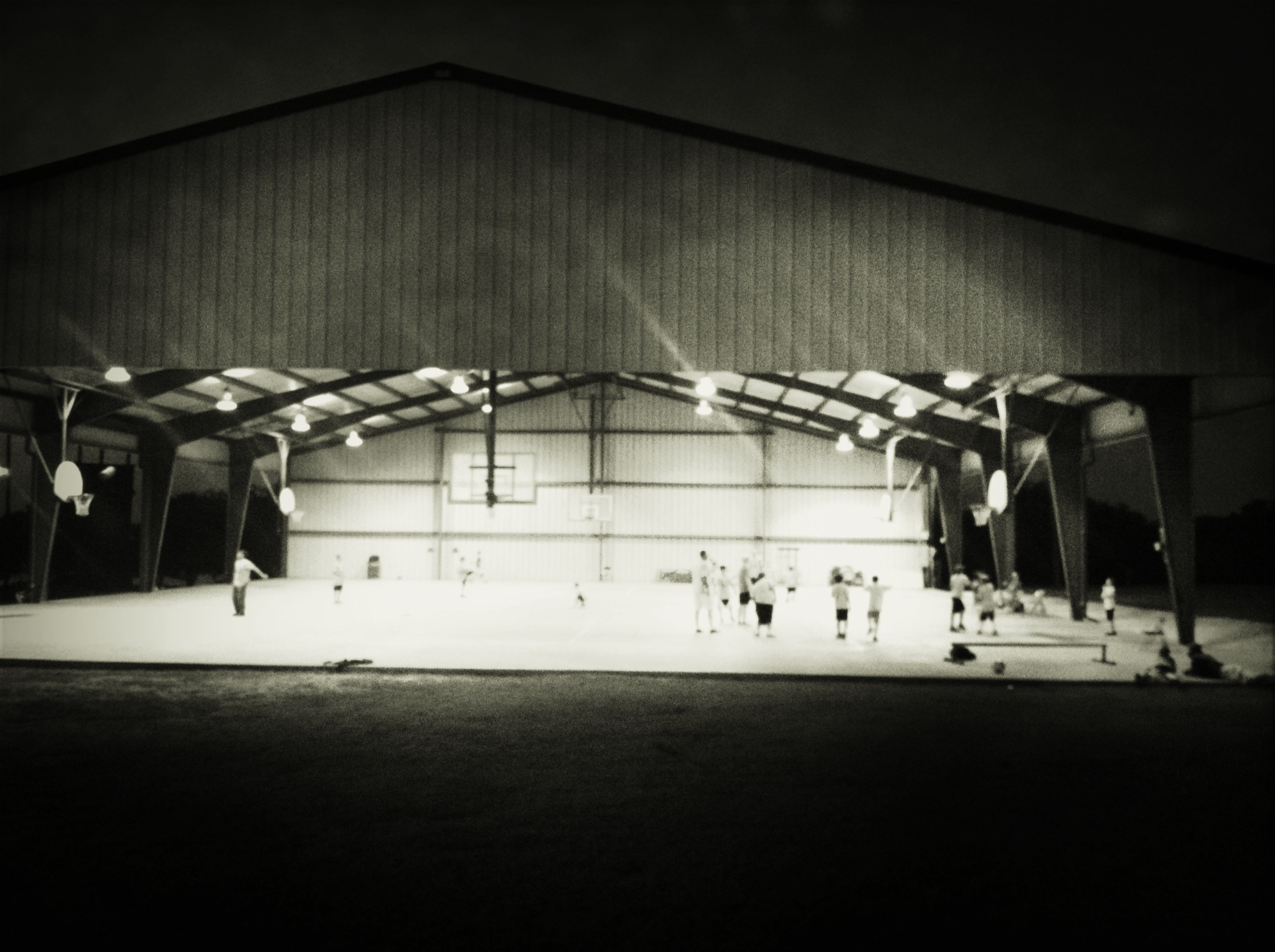
I spent this last week at Camp Copus with four of our boys from church who are in the Royal Ambassadors Program. I had never been before, so I did not know what to expect, but what I learned was significant. Here are just a few things.

What I Learned at Camp

(1) We need godly men to train boys to be godly men

After attending camp all week. I noticed the heart of the RA program is for godly men to train boys to be godly men. There were many godly men at camp this last week, but more are needed. More are also needed in our churches.

While there are many godly women who participate in church activities, we need godly men who are willing to step up and train the future generation.

In short, we need godly men who are not only following the biblical mandate to train up their own children and grandchildren in the way of the Lord, but we need them to participate in our churches as well (Ephesians 5; Deut. 4:9-14).

(2) Scripture memory should be a regular diet in our churches and families

At camp they made a big push for the campers and counselors (that would be me) to obtain a power band. The way you get your power band is by memorizing and reciting the Romans Road (Rom. 3:23; 6:23; 5:8; 10:9-10; 10:13).

As I committed these verses to memory and helped my boys do the same, I saw first hand the value and importance of memorizing God’s Word. Not only because it is God’s Word, but because, when you do so, Scripture is always there with you. No matter what situation you are facing, you can quickly recall a verse that could help you. In the case of the Romans Road, you are always able to tell others how they might be saved, since it is the plan of salvation. So may we all be spurred on to regularly memorize Scripture.

(3) You cannot talk about the gospel enough

At every service and every activity that we attended the gospel was presented. Not only was the plan of salvation presented, but how the gospel affects the way we live our everyday lives. You see the gospel is not the ABC’s of the Christian life. It is the A to Z. Everything stems from the gospel. Since this is true, we cannot talk about the gospel enough.

(4) Children can understand deep theological concepts

After a day of hearing different aspects of the gospel, the boys and I gathered each night for a devotional. As I led them in a devotional every night, I soon realized they were really wrestling with deep theological concepts. Even though they did not use these terms, they asked questions about God’s Fairness/Justice, God’s Love, Mercy and Grace, God’s Righteousness, Substitutionary Atonement, Heaven and Hell.

As I fielded their questions, I was both encouraged and shocked that they were thinking on such a deep level. Which leads me to believe we often forget that children can and do understand biblical concepts. As a result, we can go deep with them as long as we find a way to relate the concepts to their world.

(5) Churches need to invest in their children’s theological education

While most churches have a children’s program, these programs offer nothing more than man-centered principles for living a good life. We need to do better. We need to go deeper. We need to understand that our children can and do understand the gospel. They can and do understand theological concepts. They can and do wrestle with the same questions adults have.

As a result, we need to present these concepts to them in ways they can understand and let them wrestle with it. As well as we need to make time to allow our children to ask us tough questions. When they do, we need to have a good response for them. So then, we need not only invest in their education, but ours as well, so we can answer the tough questions. But more importantly, we need not sell our children short.

Resources

Here are a few books and a Scripture memory tool that can help you to begin training your own children:

Is it Important to Publicly Read Scripture and Pray in Our Congregations?

Today, we have a guest blogger: Pastor Bob Dimmitt. He has written on the necessity of the Public Reading of Scripture and Prayer, as well as he has offered us a few tips. Here is what he has for us:

I believe it is important in the development of our churches that more men become involved in our Sunday Morning and Sunday Evening Worship through the public reading of Scripture and prayer.

The Public Reading of God’s Word

The public reading of God’s Word is an important part of our churches corporate worship. Even so, many churches have neglected this discipline, even though Scripture itself commands it. 1 Timothy 4:13 says, “Until I come, give attention to reading, to exhortation, to doctrine.

In commenting on this verse a noted Pastor once said,

“Of course we of this generation cannot know by firsthand experience how the Word of God was read in other times. But it would be hard to conceive of our fathers having done a poorer job than we do when it comes to the public reading of the Scriptures. Many have read the Scriptures so badly that a good performance draws attention by its rarity.

It could be argued that since everyone these days owns his own copy of the Scriptures, the need for the public reading of the Word is not as great as before. If that is true, then let us not bother to read the Scriptures at all in our churches. But if we are going to read the Word publicly, then it is incumbent upon us to read it well. A mumbled, badly articulated and unintelligent reading of the Sacred Scriptures will do more than we think to give the listeners the idea that the Word is not important….”

In this pastor’s opinion, not only do churches fail to obey Paul’s command to Timothy to read Scripture, when they do attempt it, they do a poor job, giving the congregation the idea that the Word is just not that important. If this is the case, how can we show the congregation Scripture is important?

Tips for the Public Reading of Scripture

1. Assign or acquire your text ahead of time.

If you are a pastor, assign ahead of time a specific date and Scripture to be read. If you have been asked to read Scripture in a service and you have not been assigned a specific text, then ask the pastor, or worship leader to provide you with the text you will read at least one week before it is your turn.

2. Read from a designated version.

If your congregation has invested in pew Bibles, then read from the version offered. It is also a good idea to read from the version the pastor uses, since most people will bring that version to church with them.

3. Practice in advance.

Several days, if not a full week before your turn to read the passage in the service, practice reading the passage to yourself aloud. If the passage is short enough, then work on committing it to memory. Memorizing the passage and reading it aloud several times will help in learning the flow of the passage, allowing you to read it smoothly in the service.

4. Read with emotion and meaning.

When reading the passage, read with emotion and meaning without being dramatic. Know the emotion and emphasis you bring to the reading will be felt and seen by the congregation. If you are fumbling through the passage, or reading it in a monotone voice, you are sending the signal that the passage is not important to you.

Public Prayer

Following the public reading of Scripture should be a public prayer. The one reading the Scripture should be the one to lead the congregation in this prayer. As you do, don’t think that your prayer has to be long. John Newton once said,

“The chief fault of some good prayers is, that they are too long; not that I think we should pray by the clock, and limit ourselves precisely to a certain number of minutes; but it is better of the two, that the hearers should wish the prayer had been longer, than spend half the time in wishing it was over.”

With Newton’s advice in mind, let’s look at some tips for praying in public.

Tips for Public Praying

1. In private we offer our own prayers and confessions to God, but in public our prayers are different.

In private we will use language such as: I, my, me, mine, but in public the language is different, we should use language such as: us, we, our, ours. Private prayer can also be silent, and groaning. Public prayer cannot be silent nor can it be groaning. It must be audible, in a language understood by all, at a speed accessible to everyone, with phrases that do not jar, and at a length everyone can sustain.

2. Public prayer is didactic.

We are teaching our people something when we pray. If we fill them with sickly repetitions, they will think that that is OK. If we do not pray in the Holy Spirit then they will not learn. If we pray in public for certain themes, then they will pray the same.

In addition, when they see and hear you emotionally engaged in prayer, that will teach them much about Christian experience. When we pray in this way, our prayers are deep and whole. The result is that the congregates theology will be challenged by your whole praying, so that praying is a kind of discipleship.

3. Public prayer is pastoral.

It is one of the means we lead the people into holiness and comfort. We must think of the various needs of the members of the congregation, as well as the congregates themselves.

In addition, we should know that prayer does things: It brings down blessings on people. It makes people more loving and understanding. It restores the backslider. It takes up all the needs of the congregation.

  1. Public prayer must be fresh, but prepared.

We can prepare our prayers without preparing them. We can consciously include every main element of biblical prayers – adoration, confession and thanksgiving – as well as we can incorporate the passage that we read into our prayer.

Example if the passage dealt with the resurrection then that can be a theme; you thank God for the resurrection, the reality of the resurrection, and what the resurrection means to us. If the passage deals with spiritual growth, make that the main theme of your prayer asking God to do for us what Paul asked God to do for those he loved.

Conclusion

The reading of Scripture and Prayer in our congregations publicly is an important act. One that not only fulfills the Scriptures command, but serves as a means to teach and care for those in the congregation. It is my prayer that we all take this duty more seriously.

Bob Dimmitt is the Senior Pastor of Ferguson Avenue Baptist Church (FABC) in Savannah, GA. He has served there for the last 12 years. Prior to serving as the pastor of FABC he was a jail chaplain in Hawaii, Virginia, and Savannah. You can learn more about Bob and FABC through their website: www.fabchurch.com 

The Next Chapter

This last Sunday I preached in view of a call at Sycamore Baptist Church. The Lord graciously revealed His will, which was that He was calling me to Sycamore Baptist as their Lead Pastor. I accepted the call, and I will be installed as their new pastor on February 5th. I am extremely humbled that the Lord has chosen to use me to lead His church. I consider it a privilege and honor to serve and lead the members of Sycamore Baptist Church in Decatur, TX.

Jen and I are both excited about this opportunity, and we are looking forward to seeing what the Lord has in store for us and the church in the future. Please be in prayer for us as we make this transition to a new city and a new church.

You can specifically pray for us in the following ways:

  • Pray the Lord would give me the wisdom to lead His church.
  • Pray the Lord will reveal to me what I need to teach through both on Sunday Mornings and Wednesday Bible Study.
  • Pray the Lord will bless us with young couples to befriend and invite to the church.
  • Pray the Lord will allow me to find a few men to meet with for accountability and discipleship.
  • Pray the Lord will allow the church to be a light to the community, reaching it for Christ.
  • Pray the Lord will allow our transition to a new city and church an easy one.

Building the Church: What is the End Goal?

In Ephesians 4:7-16, Paul tells us Jesus gives gifts to the church for the building up of the body. Jesus gives gifts to the individual members of the church. He also calls some men, to become Apostles, Prophets, Evangelists, and Pastor Teachers, and gives them as gifts to the church, in order to equip the saints for the work of ministry. The congregation, along with the Apostles, Prophets, Evangelists, and Pastor Teachers, are to build up the body of Christ. They are to work toward a certain end. It is that end that I want to focus on today.

You do not start a building project without first understanding what you are building, nor do you start building up the body of Christ without first understanding the goal in mind. What is that goal? Where are we as a congregation supposed to be headed? Paul provides the answer in verses 13-14 when he says,

Until we all attain to the unity of the faith and of the knowledge of the Son of God, to mature manhood, to the measure of the stature of the fullness of Christ, so that we may no longer be children, tossed to and fro by the waves and carried about by every wind of doctrine, by human cunning, by craftiness in deceitful schemes.

I believe we can pull three attributes out of these verses, which tell us where we are headed as a church, which is ultimately to maturity. Let’s look at the three characteristics of a mature church:

1. It is a church were everyone is unified because of a common faith and where everyone has a deep intimate knowledge of Jesus Christ

The first phrase Paul writes, “Unity of the Faith and the knowledge of the Son of God” has the idea that the entire congregation is united, they are one, because of their shared faith. As well as those in the congregation have an intimate and real knowledge of Christ, which is gained from seeing Him work in the body.

The psalmist is a good example of one who had an intimate knowledge of God. We often read of him crying out to God as his protector, comforter, and salvation. He sees God as a righteous judge and deliverer, as well as one who provides for the poor and the needy.

The psalmist does not know these things about God because he has studied them, even though he has, but he more so knows these things about God because he has experienced them first hand either in his life or in the life of those he knows.

Just like the Psalmist. As we see families in our congregation go through struggles and walk with them as Christ works in their lives, we come to know that Christ is faithful. As we see recent converts change their way of life, casting off addictions and clinging to the Savior, we come to know that Christ is better than our former way of life. As we see Christ work in the congregation, or in our own life, we develop a deep intimate knowledge of Him.

2. It is a church that resembles Christ in its thoughts, actions, and knowledge

Paul says we are to keep building up the body until we reach “mature manhood.” The idea is that we, as the body, are to become a well-built full grown man. What does a well-built full grown man look like? The next phrase tells us.

A well-build full grown man is one who, as Paul says, reaches the “measure of the stature of the fullness of Christ.” In other words, it is a church, where the entire congregation resembles Jesus in their  thoughts, actions, and knowledge.

3. It is a church that is able to discern false doctrine and combat those who desire to destroy the church through deceitful schemes

In verse 14, Paul gives us the reason for why we should grow in maturity, which also serves to tell us what it looks like to be a mature man. He says,

so that we may no longer be children, tossed to and fro by the waves and carried about by every wind of doctrine, by human cunning, by craftiness in deceitful schemes.

As we become unified and grow in our knowledge of Christ. And as we move toward being a full-grown man, one that resembles our glorified Savior, Jesus Christ, we should be able to discern false teaching and the schemes of those who seek to destroy the church.

Instead of being like children who are easily influenced, we are to be like full grown men capable of discerning what others are telling us. Instead of being like a rudderless boat that is tossed to and fro by every wave that comes by, we are to be like a stable ship, which is able to navigate rough waters with a clear path.

As we grow in our maturity, we, the entire church, are to be able to evaluate the latest doctrines and theological trends that try to pass themselves off as Christian teaching, as well as discover who it is that is trying to destroy the church. In doing so, we put ourselves in a position where we are able to protect the church.

The end product is three-fold:

(1) It is a church were everyone is unified because of a common faith and has a deep intimate knowledge of Jesus Christ.

(2) It is a church that resembles Christ in its thoughts, actions, and knowledge.

(3) It is a church that is able to discern false doctrine and combat those who desire to destroy the church through deceitful schemes.

Conclusion

To these ends, we, as a church, are to be building because they represent the final product of a mature church. In order to get there, it will take every member of the church exercising their God given gift. As well as we will need to speak the truth of God’s Word to each other in love (vs 15). May we, as a church, work together until we attain to this goal, knowing our work will not be fully complete until Jesus returns.

Thoughts on Seminary from a Graduating Seminarian

Today marks the last day of class for me in my seminary career. I will graduate from Southwestern Baptist Theological Seminary on Friday with a Master of Divinity. As I reflect on my time in seminary, I want to share a few thoughts on what I learned from my experience:

1. Seminary requires you to be a good researcher and writer

In order to learn the trade well, it would be wise to spend time reading books on writing and research, knowing the better researcher and writer you become, the better speaker you will be. In addition, the better writer you become, the better reader you will be, helping you to better process the overwhelming material you will read during your time in seminary.

2. Seminary provides you with tools, it does not teach you everything you need to know

Receiving your diploma does not mean your studying is over. You could argue seminary is just the beginning of your theological education, giving you the ability to pursue further self-study.  In order to serve a church well, those graduating from seminary need to continue to study, research, and write, faithfully exercising the skills developed during their time in seminary.

3. Make an effort to develop good friendships 

Not only are you making friends for life, who will be a rock for you to lean on during your days in ministry, but you will learn more outside of the classroom in conversations with friends than during lectures. Since this is true, you should take as many classes as you can with your friends, and discuss the lectures and readings as often as possible. I have learned more, and been challenged more, during conversations with friends at Starbucks and over lunch than I would have if I solely relied on my personal study of class lectures.

4. Develop friendships with your professors

I have spent time getting to know several professors throughout my seminary career. These men have given me solid biblical advice, as well as challenged me in my spiritual life. It is worth it to put forth the effort to get to know a few professors on a deeper level.

5. Find a solid local church and pour into it

Don’t coast through your seminary career thinking you will minister when you take on your first church. Find a church now, plug in, spend as much time with the leadership there as you can, and minister to as many people as you can, even if it is not from the pulpit. In addition, you should give the church you attend during seminary the same opportunity to examine your calling to the ministry as you did your home church.

6. Buy as many books as you can

In order to find books at a reasonable price, spend time finding the discount book sellers in your area. A high concentration of seminary students equals a greater potential for a gold mine of cheap theology books to develop in your local used book stores. Visit these stores often; especially, at the end of a semester when other students may be unloading their unwanted books. What one student does not want, may be a gem to another.

7. Attend Conferences

Most conferences will allow you to attend at a cheaper rate while you are in seminary. Take the opportunity while you have it, knowing that traveling with friends and networking with other pastors from around the country is priceless. Not to mention, most conferences give away books like they are candy. It is not uncommon to walk away with 20-30 free books written by your favorite authors and speakers.

8. Set aside time for your wife

Seminary can easily dominate all your free time, so it is important you set aside time to spend with your wife, remembering she is your first ministry.

9. Make time for your personal relationship with the Lord

Even a theological education is no substitute for one’s devotional life. Setting aside time to do your daily devotion is crucial to your growth in the Christian life.

10. Plan out your semester

Nothing is more stressful than having to write three papers and study for two tests in the same week. In order to avoid that type of stress, setup a schedule and plan at the beginning of each semester  and stick to it. If you planned well, and started your projects early enough, you should have no problem turning in your best work with minimal stress.

11. Have fun

Seminary is a time for serious study and preparation for ministry, but it is also a time to enjoy life. Don’t always act so serious, and take the opportunity to get involved in intramural sports, as well as seek out a hobby other than reading. Always make sure to set aside time during the week to relax with friends and family.