Christian Accountability

Church

What do you think about Christian accountability? Do you think it is abused? Do you think it is negative? Do you think we should hold each other accountability? Beyond what you think, what does the Bible say? What does it tell us we should do? How does it tell us we should exercise accountability in the body? 1 Samuel 15 provides us with an excellent model.

Background

Saul has disobeyed God by not completing the mission God gave him. Instead of completely destroying the Amalekites, he spared king Agag’s life and allowed his people to keep the best cattle to sacrifice to the Lord. As well as he setup a monument to himself in Carmel.

Samuel received word from the Lord regarding Saul’s actions, goes and confronts him, calling him to repent while also delivering bad news. The Lord has rejected him as king over Israel.

Samuel’s actions both tell us accountability is biblical as well as they provide us with a model to follow. Let’s look at the model Samuel gives us.

Model for Accountability

(1) We should grieve over others sins because they have offended a holy God.

The first action we should take when we learn of another brother or sister’s sin is to grieve. Sin is an affront to God. It’s rebellion against Him. Knowing another brother or sister is in sin, should cause us to grieve.

(2) We should go to the person and confront them with their sin.

After grieving, prayer for wisdom, and checking our own heart’s motives, we should confront the sinning brother or sister, bringing their sin to light and calling them to repent. Of course, we must not do this in a high-handed, judgmental, or self-promoting way, but in a loving and wise manner.

(3) We must confront them with God’s Word.

Samuel doesn’t come to Saul with his own word. He comes with God’s Word. When we go to another brother or sister in sin, we must go with God’s Word as well. Allowing Scripture to point out their sin is important because it is what is judging them, not us. All we are doing is pronouncing God’s judgment on them via Scripture. In this way, we are acting as God’s messenger, not their judge.

(4) We must call them to repent. 

Confrontation should not occur for confrontations sake. Rather, its purpose is that the confronted sinner will repent of their sin and enjoy restored fellowship with the Lord. Calling the wayward to repent is an important step of accountability. One we must not neglect because it is what the whole process is driving toward.

Motivation for Accountability

For some, accountability is an uneasy topic. It is something they would never dream of doing. For that reason, let me provide you with motivation to hold others accountable and to seek it out yourself.

(1) As God’s people we should reflect His character to the world for His glory.

If we are in sin, we cannot reflect God’s character to the world. Instead, we are actually misrepresenting God, especially if we call ourselves Christians. By holding each other accountable, we are fighting for the purity of Jesus’ bride – the church – and for God’s glory. We should do this and desire this because the chief end of man is to glorify God and enjoy Him forever.

(2) Unrepentant sinners hinder the church’s witness to the world.

This is why the world sees many Christians as hypocrites. If we want to regain our name in the world, we have to start calling people to repent of their sin and to follow God. Accountable then becomes a way for the church to fight for its witness in the world.

(3) Accountability is for your joy.

When we live in obedience to God, we experience the most joy. Think about a time when you were living in rebellion to God. Were you joyful then? I know that when I am in rebellion to God, I am not joyful. Now think about a time, when you were living in line with God’s commands, were you joyful then? I know that is the time when I am the most joyful.

Accountable, confronting others with their sin, and calling them to repentance is far from negative, rather it is a way for us to fight for other’s joy.

(4) Accountability helps us finish the race.

Salvation is pictured both as a definitive historical event that happens in our life and as something to be attained at the end of our life. By holding others accountability, we help them to finish the race. We help them to obtain salvation.

James 5:19-20 says,

My brothers, if anyone among you wanders from the truth and someone brings him back, let him know that whoever brings back a sinner from his wandering will save his soul from death and will cover a multitude of sins.

Conclusion

For those reasons and more, we should hold others accountable. It is a grace – gift – God has given us. It is not something negative. It actually is something positive, and something we should desire.

 Questions for Reflection

  1. How do you view accountability?
  2. Do you seek out accountability?
  3. How does your church, small group, etc, promote accountability among its members?
  4. Are there any other motivations you would add to the list?

Resource

Image

10 Preaching Lessons from My First Year

Bible on Pulpit

Next week, I will celebrate my one year anniversary at my first church. Over the last year I have learned many valuable lessons, especially when it comes to preaching. Let me share with you some of the main preaching lessons I learned this last year.

10 Preaching Lessons from My First Year

(1) Be Yourself in the Pulpit

God has made us all different. Trying to sound like your favorite preacher will not work. Believe me, I have tried and I have failed. It is taken a year, but I am just now getting comfortable with being myself. It has made a difference in my preaching, as well as it has allowed me to connect with the people in a way I have not connected in the past.

(2) Get to Know Your People

The only way to know the questions your people are asking and the things they are dealing with in their personal, public, and family lives is to be around your people. If you want to make your applications pertinent, your illustrations connect, and the text come alive, you need to know your people.

(3) Use the Sermon Template You Get from Preaching Books, but Don’t be Afraid to Modify It

Most introductory preaching books and classes will provide you with a basic outline – Explain the text, Illustrate the text, and Apply the text – for each major point in your sermon. I believe that is a good rule of thumb, but don’t feel like you have to follow it to a “T”.

For instance, I have found that I can’t always think of an appropriate illustration for one of my major points. When I first started, I thought I needed one no matter what, so I would force an illustration in a section. The result was an awkward illustration that did not add much to the sermon. Over time and through loving, constructive criticism from my wife and others, I have learned that if I can’t think of an illustration, I should not force one.

(4) Know Your Time Limit and What Your People Can Handle

Don’t think you have to preach for forty-five minutes, or an hour, just because your favorite preacher does. If you can hold your people’s attention for twenty minutes, then preach for twenty minutes. If you can hold their attention for thirty or forty minutes, preach for thirty or forty minutes. Preaching to meet a self-imposed time limit is neither wise nor helpful.

Along with knowing your time limit, you should also be sensitive to what your people can handle. If they are accustomed to listening for thirty minutes, don’t come out of the gates on your first week preaching for an hour. It takes time for an attention span to grow. If you recognize this and slowly creep up to your target time limit, you will serve your people better and insure they will get more out of your sermons each week.

(5) Preach Different Genres and Both Testaments

Your yearly preaching schedule should include more than one genre and both Testaments. Doing so will not only help you develop your skills, but it will teach your people the importance of both the Old and New Testaments, as well as how to interpret all of Scripture.

(6) Limit Your Use of the Original Languages from the Pulpit

It is only natural to want to reference the original languages in your sermon. After all, you have probably spent several years in seminary talking through the text in Greek or Hebrew. While these languages should play a major role in sermon preparation, they will quickly cause your people’s eyes to glaze over if you refer to them too much. A wise preacher limit’s his use of them to times when they will help their people understand the text better.

(7) Commit to Preaching through Books

Working through a book from start to finish will serve to challenge both you and the congregation. When you commit to preaching a book, you are forced to deal with every verse in context. Doing so will help you grow in your understanding of Scripture, allow you to preach difficult and pointed texts your congregation needs to hear without feeling attacked, keep you from preaching only your interests, and give you a better chance of accurately interpreting God’s Word.

(8) Read Both Commentaries and Other’s Sermons, but Don’t Preach Them

Commentaries are a preachers best friend. They help us understand difficult texts and think of applications we may not have thought of otherwise. Likewise, reading sermons will help you to understand and apply the text, as well as help you to pull back from the technical nature of most commentaries and give insight into how best to structure your sermon. While commentaries and other’s sermons are helpful, it is important we don’t preach them, but do our own work.

(9) Don’t Forget the So What

It is important and necessary that we tell our people why the text matters to their life, how it applies to their situation, and how they might implement its teaching. If we don’t, we are not fully expounding the text and we are short-changing our people.

(10) Seek Out Constructive Criticism

Let’s face it, no one is a great preacher from the start, unless you are Charles Spurgeon. It takes time. I have found, however, you can increase your preaching skills more quickly by seeking out constructive criticism. My wife, friends, and trusted congregates all have given me feedback over the last year, which has helped me to right the wrong more quickly.

The goal is not self-glorification, but rather congregational edification. Removing those things from your preaching that hinder others from understanding the text is what you are after. There is no better way to understand what those things are than to ask those who are listening to your sermons.

Question for Reflection

  1. What would you add to my list from your own experience?

Resource

Image

Don’t Forget the “So What”

Bible on a Pulpit

Every Sunday 1000’s of sermons are preached and heard, and just as many Sunday School lessons and Bible Studies are prepared for and taught. Even though sermons are preached, lessons and studies are taught, many do not address the “so what” of the text. In other words, they do not tell the people how to apply the text to their life.

On Friday’s a few men at our church gather at iHop to discuss Scripture. It is a great time of Christian fellowship and an opportunity to learn from one another. Last Friday, one of the guys reminded me of the importance of the “so what.” He said:

I enjoy hearing the history, and the Greek or Hebrew behind the text. These things are necessary to understand and learn, but one thing I want to know before the sermon, Bible study, or Sunday School lesson is over is why does this text matter to my life?

In other words, he was calling preachers and teachers to provide the “so what” of the text. I agree with him. It is important and necessary that we tell our people why the text matters to their life, how it applies to their situation, and how they might implement its teaching. If we don’t, we are not fully expounding the text and we are short-changing our people.

Challenge

So this week as you prepare your Sunday School lesson, Bible study, or Sermon, make sure to provide the “so what.” Tell the people why the text matters to their life, and help them apply it.

Questions for Reflection

  1. Do you make the “so what” explicit?
  2. Do you help your people apply the text to their life?

Resource

Image

Sermons, Cultural Studies, and the Heart

Heart and the City

Studying culture is necessary when preparing a sermon. Pastors, including myself, read and devour everything in culture to ready themselves for their sermon. While it is profitable for pastors to know what is going on around them, I think we have to be careful what we take in. Consuming everything is not profitable, and it may even be a subtle way for us to make way for our sin.

Martyn Lloyd-Jones in his Studies in the Sermon on the Mount tackles these subtle sins of the heart. Here is what he has to say:

You have never been guilty of adultery? All right. Would you then answer me this simple question. Why do you read all the details of divorce cases in the newspaper? Why do you do it? Why is it essential that you should read right through these reports? What is your interest? It is not a legal interest, is it? or a social one? What is it? There is only one answer: you are enjoying it. You would not dream of doing these things yourself, but you are doing them by proxy.

You are sinning in your heart and mind and in your imagination, and you are therefore guilty of adultery. That is what Christ says. How subtle this awful, terrible thing is! How often do men sin by reading novels and biographies. You read the reviews of a book and find that it contains something about a man’s misconduct or behavior, and you buy it. We pretend we have a general philosophical interest in life, and that we are sociologists reading out of pure interest. No, no; it is because we love the thing; we like it. It is sin in the heart; sin in the mind!

Could we actually be making way for sin in our sermon preparation? Could we be disguising our cultural studies as a way to make room for our heart to fulfill it’s lusts and desires? I don’t believe that is always the reason we study our culture, but these paragraphs gave me reason to pause and consider the reasons behind the cultural studies I do. It gave me reason to check my heart and see what sin I may be feeding. I hope it gives you reason to do the same.

Questions for Reflection

  1. Why do you study culture?
  2. Have you ever stopped and considered that some of your studies might be done to make way for sin?

Resource

Martyn-Lloyd Jones, Studies in the Sermon on the Mount, 239.

Image

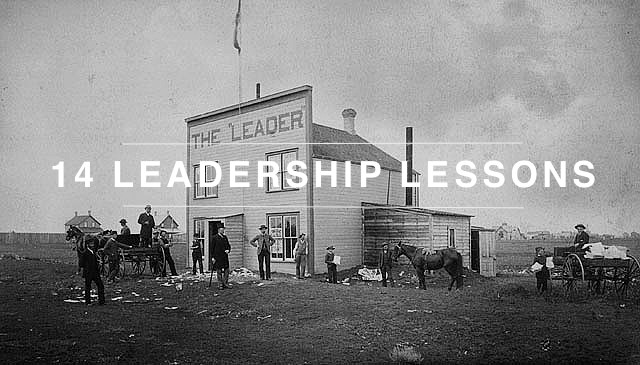
14 Leadership Lessons from 1 Samuel 14

The Leader

How are leaders supposed to interact with those they lead? How should they interact with other leaders under them? How should leaders handle failure? 1 Samuel 14 offers answers to these questions and more.

Recently, I have been preaching through 1 Samuel. My last two sermons have been from chapter 14, where I found that by contrasting Saul and Jonathan, and by highlighting the effects of Saul’s decisions, the writer shows Saul is an inadequate and ineffective leader.

Admittedly, that doesn’t sound like a great introduction to 14 leadership lessons. When you realize, however, it’s the contrast and the antithesis of Saul’s actions that we are after, valuable leadership lessons emerge. What are those lessons? Here are 14 from chapter 14.

14 Leadership Lessons from 1 Samuel 14

1. Godly leaders trust in God even when the odds are stacked against them (14:1;6 cf. 14:2-3).

2. Godly leaders evidence a relationship with God, which motivates others to follow and seek God (14:7 cf. 14:26;40).

3. Godly leaders recognize the Lord is the One who is in control (14:23).

4. Godly leaders think before they speak (14:24).

5. Godly leaders effectively communicate their expectations to those they lead (14:27). 

6. Godly leaders communicate to all to those they have placed in leadership, so they may communicate to those they lead (14:28).

7. Godly leaders do not place undue burdens on their people, which hinder their abilities and morale (14:29-30).

8. Godly leaders do not set their people up to sin (14:33).

9. Godly leaders know their role (14:35 – Saul was a king not a priest).

10. Godly leaders seek spiritual guidance (14:36).

11. Godly leaders present true heart change instead of external religious change (14:35-36).

12. Godly leaders grieve and mourn the sins of their people (14:35-36).

13. Godly leaders recognize when they have made a mistake, repent, and are willing to face the consequences (14:43).

14. Godly leaders know there are limits to their leadership (14:45).

Resource

Image

Prayer: The Minister’s Duty

Yesterday, as I was preparing to give a devotional at our church business meeting, I read through the book Joel Beeke and Brian Najapfour edited entitled Taking Hold of GodReformed and Puritan Perspectives on Prayer

In the chapter: Prayerful Praying Today written by Beeke, I found this quote by Charles Bridges (1794-1869). He writes on the need for revival in prayer based on Acts 6:4, which says,”We will give ourselves continually to prayer, and to the ministry of the word.”

Writing specifically to ministers, and commenting on that verse, Bridges writes,

Prayer is one half of our Ministry; and it gives to the other half all its power and success. it is the appointed medium of receiving spiritual communications for the instruction of our people. Those who walk most closely with God are most spiritually intelligent in the “the secret of his covenant.” Many can set their seal to Luther’s testimony, that he often obtained more knowledge in a short time by prayer, than by many hours of laborious accurate study. It will also strengthen our habitual engagedness of our hearts in our work, and our natural exercises and capacities for it. Living near to the fountain-head of influence, we shall be in the constant receipt of fresh supplies of light, support, and consolation – to assist us in our duties, to enable us for our difficulties, and to assure us of our present acceptance, and a suitable measure of ultimate success. 

Convicted

After reading Beeke and the quote from Bridges, conviction set in. I don’t pray enough. So today, I renewed my commitment to being a minister who prays more.

Challenge

Want you do the same if your prayer life is lacking? Half our duties as a minister is to be in prayer for our people, our work, our community, our family, and our personal growth in God’s Word. If we are not spending the necessary time, then we are neglecting half our God given duties. Neglecting half your work as a business man, farmer, or school teacher would not be acceptable, so why should it be acceptable for a pastor?

Questions for Reflection

  1. Is prayer a priority in your ministry?
  2. Do you spend time in prayer each day asking the Lord to strengthen you, give you insight, and wisdom?
  3. Do you too need to renew your commitment to pray more?

Resources

Taking Hold of GodReformed and Puritan Perspectives on Prayer, edited by Joel Beeke and Brian Najapfour, 228.

Image