What is a Priest and Why is Jesus Considered One?

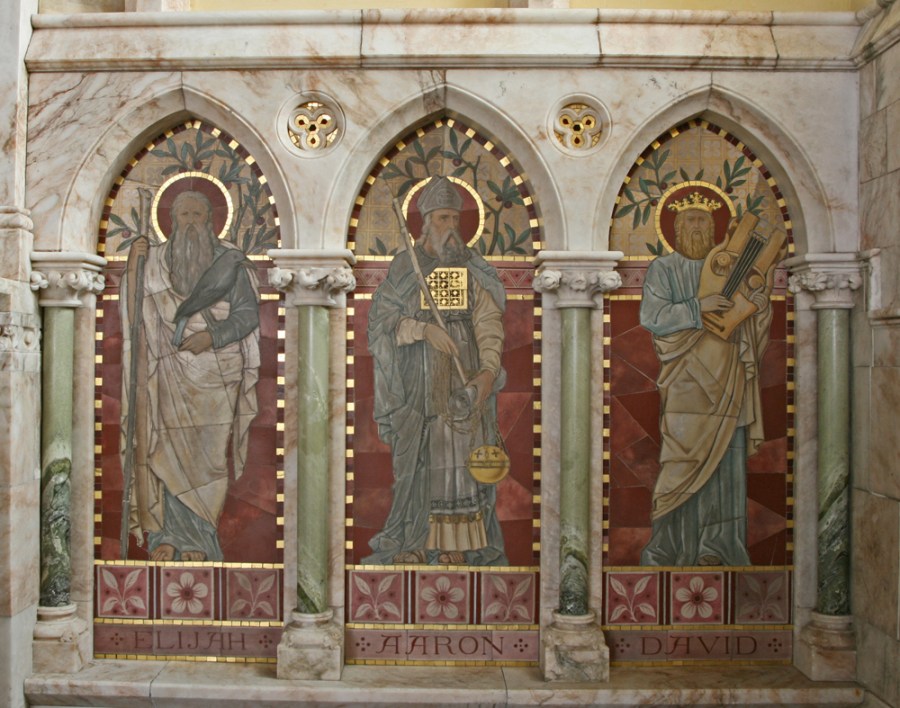
After God freed Israel from Pharaoh’s oppression in Egypt and brought them out into the wilderness to lead them to the Promised Land, God had Moses appoint Aaron and his sons as Priests (Ex 29; Lev 8). While all were priests, Aaron served in a slightly different and more elevated role. He was appointed as the High Priest. Essentially he was in charge of the other Priests and he was the one who offered the sacrifice on the Day of Atonement.

The Day of Atonement 

If you aren’t familiar, the Day of Atonement occurred once a year (Lev. 16:1-9). On this day, the High Priest entered the Holy of Holies. The Holy of Holies was located in the center of the Temple and was where the presence of God resided. In the Holy of Holies, the High Priest would offer a sacrifice to God for his and the people’s sins. The sacrifice he offered atoned or covered the peoples’ sin, making it possible for them to be reconciled or live at one with God for another year.

Constant Sacrifices 

Constantly offering sacrifices for the people was one of the main duties of the priests. That’s because the Day of Atonement wasn’t the only day sacrifices were offered. The priests offered sacrifices on behalf of the people all throughout the year. We don’t have time to get into all the different sacrifices but suffice it to say that the altar in front of the Temple was constantly covered with blood.

The Priests as Mediators

Because of their continued work, you can think of the Priests as mediators. If you aren’t familiar, a mediator is someone who comes between two parties in an effort to bring about peace and resolve a conflict. If you are a parent and have at least two kids, you act as a mediator all the time. I know I do.

The priests in the Old Testament acted as mediators because they came between man and God, offering sacrifices on their behalf in order to cover their sin and provide reconciliation and peace.

Jesus Acts as Our Mediator, as Our Priest

In the same way that the priests acted as a mediator, Jesus acts as our mediator, as our priest. He stands between us and God offering a sacrifice on our behalf in order to reconcile our relationship with the Father. The author of Hebrews makes it explicitly clear that Jesus serves as our Mediator, our High Priest, when he says in Hebrews 3:1-2,

Therefore, holy brothers, you who share in a heavenly calling, consider Jesus, the apostle and high priest of our confession, who was faithful to him who appointed him, just as Moses also was faithful in all God’s house.” (Heb 3:1–2)

Also, in Hebrews 6:19 and 20 we read,

“We have this as a sure and steadfast anchor of the soul, a hope that enters into the inner place behind the curtain, where Jesus has gone as a forerunner on our behalf, having become a high priest forever after the order of Melchizedek.” (Heb 6:19–20)

So we see then that Jesus is our Mediator, our High Priest.

Question for Reflection

  1. Do you see your need for a Mediator between you and God?

Resources

Image

Post adapted from my sermon Jesus as Priest

How Can I Delight in God’s Word?

As Christians, we are supposed to delight in the Bible. What I mean by that is that it should produce a sense of pleasure and joy in us when we read it. Our delight should draw us into the text.

For some of you, however, that might not be where you are at with the Bible right now. You might not delight in it. Since you don’t delight in the Bible, you don’t read it. Maybe you feel bad about not reading the Bible. Maybe you want to get to a place where you delight in it, you just don’t know how to make the switch. You might be asking: How can the Bible become something in which I delight?

How can the Bible become something in which I delight?

(1) Pray and ask God to help you delight in His Word.

One thing you need to do is pray. Prayer is powerful. It has the ability to change our heart.

For most of us, we know that’s true. We spend time praying for people’s salvation, their broken families, and this broken world. We spend the time doing those things because we know prayer changes things. If we know that, why not pray for our own heart, that God would change it so that we delight in God’s Word?

So one of the first things you should do when you sense your delight slipping is pray.

(2) Read it anyways. 

Besides prayer, I suggest you read God’s Word anyways. God’s Word is powerful. Just like prayer, the Bible is able to change our hearts and minds. We know that is true.

The church I serve as Pastor invites the Gideon’s to present once a year. When they come, we take up a love offering for their ministry so they can continue to distribute Bibles in our community and around the world. We give and they hand out copies of God’s Word because we both know God’s Word is powerful and able to change the heart of man.

Like the Gideon’s, many of you have probably given a copy of God’s Word to your children, another family member, a neighbor, or even a co-worker in the past. You spent your hard earned money on that Bible and asked them to read it, or even better asked them to read it with you. You asked them to read it and even spent time reading it with them because you wanted to see their lives changed, and you know the Bible has the ability to produce that change.

You see, we know the Bible is powerful and able to change the heart of man. We just need to apply the knowledge we already have to our own lives. So even if you aren’t delighting in God’s Word now, I encourage you to pick it up, read it, and see if your heart doesn’t change.

(3) You might need to check your heart.

If you do the above – pray and read, and your heart never changes, I suggest you check your heart.

Christians should delight in God’s Word. They should be drawn to it, and when they read it, it should produce joy and pleasure in them. While you may go through a season where you don’t delight in God’s Word, by and large, a delight should characterize your relationship with the Bible. However, if that delight never comes, even after praying and reading for a time, you might need to check your heart to see if you really are a follower of Jesus. Jesus delighted in the Bible and so should His followers.

When the Bible is our delight, we won’t let it sit around collecting dust. Instead, we will look forward to reading it each day; and when we don’t, we’ll miss our time in God’s Word.

Question for Reflection

  1. Do you delight in God’s Word?

Resources

Image

Post adapted from my sermon: What should we do with the Bible?

It’s Not Luck, It’s God

Today, in our journey through the Bible together, you should have read a portion of the Joseph narrative.

Pharaoh’s Dream

If you remember, Pharaoh has two crazy dreams. In the first, seven ugly and thin cows eat seven plump and fat cows but their appearance doesn’t change. The second dream involves seven thin and blighted grain eating seven ears of plump and good grain. Although Pharaoh is troubled by the dream, no one in the kingdom is able to interpret it for him, except Joseph.

The dream, Joseph tells Pharaoh, is about a future famine, which will occur after seven years of plenty. God is warning them of the famine so they can prepare during the years of plenty for the years of famine by storing up the excess.

The Future

After hearing Joseph’s interpretation, Pharoah places him in charge. Sure enough, seven years of plenty turns into seven years of famine. Since Egypt saved during the years of plenty, they were able to provide for the whole earth and grow economically during the famine as the entire earth came to buy food from them. Joseph’s long lost family were included in the ones who came. Fast forwarding a bit, after giving his brothers who sold him into slavery a hard time, Joseph reconnects with them. Eventually, his family settles in the land of Goshen where they become fruitful and multiple.

What Struck Me

As I read the story again this morning, I was struck by Joseph, Pharaoh, and his brother’s recognition that God is the one who is in control.

  • As Joseph is interpreting the dream for Pharaoh, he pushes Pharaoh to recognize that God is the one who is showing Pharaoh what He is about to do (Ge 41:28).
  • Pharaoh puts Joseph in charge because he recognizes God is the one who has shown the future to him (Ge 41:39).
  • Joseph names his first son Manasseh saying, “God has made me forget all my hardship and all my father’s house.” His second son he names Ephraim, “For God has made me fruitful in the land of my affliction” (Ge 41:51-52).
  • At one point, during their imprisonment, Joseph’s brothers come to the recognition that God is dealing with them concerning their sin against their brother (Ge 42:21-22).
  • On their way home, when Joseph’s brothers discover that the money they used to purchase the grain was placed back in their sacks, they say, “What is this that God has done to us?” (Ge 42:28).
  • Once Joseph reveals himself to his brothers, he gives God all the credit for what had been done (Ge 45:4-15)

These passages and more show us that Joseph, Pharaoh, and his brothers didn’t view these events as luck or chance. Nor do they pat themselves on the back for their ingenuity or intellect. Instead, these events led them to recognize God is the One who is in control.

We need to come to the same conclusion. Instead of attributing things in our life to luck or a lack thereof, we must recognize that God is the One who is in control and He is working out His plan, of which we are apart. You see, it’s not luck, it’s God.

Question for Reflection

  1. Do you recognize it’s God, not luck?

Resource

Image

How Do We Reject Jesus’ Prophetic Message?

Before the ball dropped and the New Year started, I posted an article entitled: Jesus the True and Better Prophet, Priest, and King. In my next several posts, I want us to explore those roles in more detail.

Much like the prophets of the Old Testament, Jesus’ message didn’t resonate with everyone, especially the high ranking officials in His day. Since He opposed their way of life and threatened their power and position, they rejected Him and had Him killed.

The Jews, however, weren’t the only ones to reject Jesus. We are still rejecting Him today

How Do We Reject Jesus’ Prophetic Message?

We reject Jesus’ message in a number of ways. Certainly, this is happening through:

Laws that are being enacted. 

Under the Bloomberg administration, New York City sought to keep churches from using public schools to hold worship services.

While this was disguised as an attempt to separate Church and State, it was clearly an attempt to silence the message of the gospel in New York City. Space in New York is limited and expensive. Without the ability to use the school’s facilities many churches would be forced to either move out of the city or quit gathering altogether[1].

Or think of the battle over bathrooms that is currently happening in our country. While the battle over bathrooms is generally taking place in the public sphere, in Massachusetts it’s even affecting churches. On September 1st, 2016 the Massachusetts Commission Against Discrimination released a Gender Identity Guidance legislation, which says, among other things, that all places of public accommodation have to allow people to use the bathroom of their choice.

Churches aren’t exempt from this ruling[2]. They say,

“Even a church could be seen as a place of public accommodation if it holds a secular event, such as a spaghetti supper, that is open to the general public.”

So if a church denies a person from using the bathroom of their choice, they could be prosecuted. Going even further, they say that the failure to use a person’s preferred pronoun at these events would also trigger anti-discrimination laws and the church could be held liable [3]. Clearly, this is an attempt to silence churches from speaking the truth by forcing them to participate or pay the price.

In the State of Texas, the city of Houston tried to silence pastors’ speech from the pulpit about these same transgender issues.

Those few examples are just the tip of the iceberg. There are people right now pushing for laws, legislation, and ordinances that seek to silence Christians.

Closer to Home

The above, however, aren’t the only ways Jesus’ message is rejected. Bringing it a little closer to home, there are people in Decatur, the town in which I live, who reject Jesus’ message.

We reject Jesus’ message because we don’t recognize we are sinners

Many think they can save themselves because they see themselves as good. For some reason, we have this idea that God keeps a tally of our good and bad actions. When we die and stand before Him, He is going to bring out His heavenly scale and weigh our good against our bad. If our good outweighs the bad, the pearly gates are going to open and we are going to be ushered into heaven.

This thinking, while it leads to moral living, at least moral living that is better than the guy down the street, ultimately leads to a rejection of our need for Jesus, because the core of this type of thinking believes that Jesus came not to save, but to provide the ultimate example of how we should live. In this way, then, we change Jesus’ prophetic message from one of repent and believe to follow My example and everything will be alright.

While some, then, may not be working to enact laws, or blatantly stifle Jesus’ message, we still rejecting Jesus’ prophetic message when we claim and even teach others that we can get to heaven by simply doing more good than bad. But that’s simply not true. We can’t work our way to heaven by doing more good than bad, which is why:

We Shouldn’t Reject Jesus’ Prophetic Message

Instead, we should listen to it.

The Bad News

Paul provides a good summary of Jesus’ message in his letter to the Romans. In Romans 3 starting in verse 10, Paul paints a startling picture of just how despicable we are when he says,

“as it is written: “None is righteous, no, not one; no one understands; no one seeks for God. All have turned aside; together they have become worthless; no one does good, not even one.” “Their throat is an open grave; they use their tongues to deceive.” “The venom of asps is under their lips.” “Their mouth is full of curses and bitterness.” “Their feet are swift to shed blood; in their paths are ruin and misery, and the way of peace they have not known.” “There is no fear of God before their eyes.”” (Ro 3:10–18)

This is us! This is the bad news. “no one is righteous”. “No one does good.

If no one is righteous and no one does good, how then can our good outweigh our bad? The answer is: It can’t! Our good can’t outweigh our bad if all we do is bad. So, even if God kept a tally and weighed our works on a heavenly scale, the “good” side would be empty. Instead of being ushered through the pearly gates, we would be ushered into eternal destruction, if it’s our works that we rely on.

You see, we are that bad, and since we are that bad we can’t save ourselves. In verses 19 and 20, Paul says,

“Now we know that whatever the law says it speaks to those who are under the law, so that every mouth may be stopped, and the whole world may be held accountable to God. For by works of the law no human being will be justified in his sight, since through the law comes knowledge of sin.” (Ro 3:19–20)

You see what he is saying? The idea that we can work our way to God is the same idea that condemns us. That’s because we learn what is good or bad through the law. Either the law of God given in the Bible, or in the case of those who don’t have a Bible, the law that is written on their hearts; the one that is apparent in their society (Rom 2:14-15).

Once we have this law, which we all have, we all stand condemned. “For by works of the law no human being will be justified in his sight”, Paul says. And “No one does good, not even one” (Rom 3:12b-c). We are all sinners who are incapable of working our way to God.

I don’t know about you, but that is enough to convince me that I need to listen to Jesus’ prophetic message. But in case you still think that you are a pretty good person, consider what Jesus, in His Sermon on the Mount, revealed about God’s knowledge of us. There we learn that God doesn’t just judge us by our outward actions, He also judges according to our heart. That’s a scary thought for someone who is trying to justify themselves by their works. Outwardly you might appear to be a good person. You might do and say all the right things, fooling yourself and those around you into believing you are a good person. But God looks past the facade. He peers into the very depths of your soul, judging you not just by what you do, but also by what you think, want, and desire. He knows the motivation behind every action. We all know our thoughts, wants, desires, and motivations aren’t always righteous, which means we really are that bad.

The Good News

We, then, need to listen to and believe Jesus’ prophetic message. Realizing that Jesus isn’t just a prophet announcing the coming of the Kingdom, instead, He is the One who brings the kingdom. He is the bread of life. The One in and through whom we find our salvation. He is the true and better Prophet who offers complete forgiveness and reconciliation.

Don’t Reject Jesus’ Prophetic Message

Instead, hear it, believe it, turn to Jesus as your Lord and Savior, and experience the good news of the gospel for yourself.

If you have already experienced salvation in Jesus, praise God for sending His prophet, His Son into the world, to not only announce the good news but to be the good news Himself.

Questions for Reflection

  1. Do you realize that you are that bad?
  2. Do you see your need for Jesus?

Resources

Post adapted from my sermon Jesus as Prophet

Image

[1] Washington Post

[2&3] Mass.gov AND Washington Post

What exactly is a Prophet and Why is Jesus Considered One?

Before the ball dropped and the New Year started, I posted an article entitled: Jesus the True and Better Prophet, Priest, and King. In my next several posts, I want us to explore those roles in more detail. Today we start with Jesus as Prophet.

What Exactly is a Prophet and Why is Jesus Considered One?

A prophet is a messenger sent by God, who functions as the mouthpiece of God. In other words, they speak for God. The Bible is full of Prophets – Isaiah, Jeremiah, and Ezekiel, as well as Hosea, Amos, and Malachi are just a few that you will find tucked between the pages of Scripture.

The Prophets Had a Three-Fold Ministry

(1) They witnessed on behalf of God. 

Meaning they told others about God — who He is, what He has done, what He promises, and what He expects. In other words, they speak to the people about God.

(2) They pointed out the sins of the people and called them to repent.

The beginning of the book of Isaiah offers a good example. Starting in verse 16 of chapter 1, Isaiah not only calls Israel out for their sins, but he invites them to repent when he says,

Wash yourselves; make yourselves clean; remove the evil of your deeds from before my eyes; cease to do evil, learn to do good; seek justice, correct oppression; bring justice to the fatherless, plead the widow’s cause” (Is 1:16–17)

Isaiah, speaking for God, confronts the people with their sin and calls them to repent so that they could experience the blessings of the Lord instead of His judgment.

(3) They also pronounced God’s forgiveness and pardon.

The message of the prophets wasn’t all gloom and doom. Again the book of Isaiah offers an example. In chapter 40, starting in verse 1 we read,

“Comfort, comfort my people, says your God. Speak tenderly to Jerusalem, and cry to her that her warfare is ended, that her iniquity is pardoned, that she has received from the Lord’s hand double for all her sins.” (Is 40:1–2)

So the prophets not only pointed people to God, preached against sin, and called others to repent, but they also proclaimed a message of pardon and forgiveness.

A Tough Ministry

While the prophets proclaimed the good news from time to time, being a prophet was a tough ministry. If you think about it, and if we are all honest, we don’t like to be confronted with our sin. The prophets weren’t just confronting you or I — good church going people, but large populations of people who were not only made up of the righteous but the unrighteous; the commoner as well as the high-ranking official, who had a lot to lose if they were exposed. So one of the hazards of a prophet was being killed for your message.

Jesus As Prophet 

When we think about Jesus’ ministry, His message and actions fit the description of a prophet well.

(1) Jesus came not only witnessing to God, but He is the Word of God. 

John 1:1 says,

“In the beginning was the Word, and the Word was with God, and the Word was God.” (Jn 1:1)

(2) Jesus also proclaimed our need to repent and believe in Him.

In Mark 1:15 He says,

“…“The time is fulfilled, and the kingdom of God is at hand; repent and believe in the gospel.”” (Mk 1:15)

(3) Jesus also proclaimed a message of pardon and forgiveness.

In that all familiar passage — John 3:16 — Jesus talking to Nicodemus says,

““For God so loved the world, that he gave his only Son, that whoever believes in him should not perish but have eternal life.” (Jn 3:16)

As well all know, Jesus’ ministry was tough. He was ridiculed, challenged, and ultimately killed just like the prophets of old.

Jesus’ ministry, then, fits that of a prophet.

The True and Better Prophet

Jesus, however, wasn’t just another prophet in the long list of prophets that had come before. Jesus is the true and better Prophet because He offers a message of complete forgiveness and reconciliation. He not only proclaims the good news; He Himself is the good news. He’s the One who has died in our place, offering Himself on our behalf so that we don’t have to suffer the wrath of God.

All those who believe Jesus’ message — that He is our Savior — will be forgiven. Their relationship with the Father will be reconciled and eternal life instead of eternal hell will be their’s. For that reason, Jesus is the true and better prophet for which Israel had been awaiting. The true and better prophet which we all have been awaiting.

There are many messages out there that offer us hope and salvation. None, however, deliver like Jesus. He is the only One who delivers on His promises. He is the only One who truly satisfies and saves, which is why Jesus is the true and better prophet.

Question for Reflection

  1. Do you believe Jesus is the true and better prophet?

Resources

Post adapted from my sermon Jesus as Prophet

Image

Jesus the True and Better Prophet, Priest, and King

One of my hobbies is photography. While my iPhone does a good job, the Digital SLR I have takes much better pictures. If you aren’t familiar with the lingo, it is one of those cameras that allows you to can change the lens. Being able to change the lens is important because each lens offers a different perspective.

Think about photographing a flower. You could use a macro lens to take a close up of a flower capturing it’s smallest details. Alternatively, you could use a wide-angle lens to capture the flower and the flower bed it’s in all at once, or you could use a telephoto lens to zoom in from far away, and even provide some depth of field to your photographs. It’s these different perspectives that make the picture unique and something we want to look at, and maybe even purchase.

In the same way that different lenses offer different pictures of the same flower, the Bible offers different pictures of Jesus. Three of those pictures are Jesus as Prophet, Priest, and King.

Jesus as Prophet, Priest, and King

When we think about Jesus as Prophet, Priest, and King, we have to understand that He’s not pictured as just any ordinary Prophet, Priest, or King. Instead, He is pictured as the true and better Prophet, Priest, and King, who serves as the culmination of all these roles.

True and Better Prophet

All throughout the Old Testament, the people were looking for a true and better Moses, who would not only proclaim the word of God but also, and more importantly, offer a message of complete forgiveness and reconciliation. But no prophet like Moses ever arose until Jesus came on the scene.

True and Better Priest

Take the Old Testament priests. They served as a mediator between God and man, offering daily sacrifices for the sins of the people so they could exist in relationship with God. But no matter how many priests came, none were able to offer a sacrifice that could reconcile man’s relationship with God forever. That is until Jesus came.

True and Better King

Finally take David. He was the great king of the nation of Israel. God even made a covenant with him. and called him a man after His own heart. But David nor any of the kings after him were able to lead the people to truly follow God, that is until Jesus came.

What this Means for Us

You see, Jesus isn’t just any old Prophet, Priest, or King, He is the true and better Prophet, Priest, and King, who is able to do what those who came before could not. Which tells us that Jesus is:

  • The true and better Prophet, whose message is worth listening to.
  • The true and better Priest, whose salvation is worth believing and hoping in.
  • Finally, the true and better King, whose leadership is worth submitting to and following.

Question for Reflection

  1. Do you believe Jesus is the true and better Prophet, Priest, and King?

Resources

Post adapted from my sermon Jesus as Prophet

Image