Meditating on Scripture

How often do you read your Bible? When you read it, do you spend time thinking through what the Lord is saying or is it something you desire to check off of a list? Reading Scripture is important, but it is even more important we spend time meditating on what we have read.

The Importance of Meditating on Scripture

In Joshua chapter 1 we are told why it is important we meditate on Scripture. Before Joshua crossed over to take the land of Canaan God said to him:

Only be strong and very courageous, being careful to do according to all the law that Moses my servant commanded you. Do not turn from it to the right hand or to the left, that you may have good success wherever you go. This Book of the Law shall not depart from your mouth, but you shall meditate on it day and night, so that you may be careful to do according to all that is written in it. For then you will make your way prosperous, and then you will have good success (Joshua 1:7-8).

It is here we learn the importance of meditating on the Word of the Lord, so that we may be careful to do according to all that is written in it.

A Way to Glorify God

If we want to be a people whose lives glorify God, then we must live in a God glorifying way, but we can’t live lives that glorify God if we do not know what it is that glorifies Him. We are not without hope though because God has left us His Word, so that we will know how to live in order to glorify Him. So then, reading and meditating on Scripture is a necessity if we want to live lives that glorify God. Reading Scripture is important so we are familiar with what it says. Meditating on Scripture is important so that it saturates our thinking.

Challenge

May we all heed the command the Lord gave to Joshua to meditate on the Word of the Lord day and night, so that we may be careful to do according to all that is written in it and glorify God.

Thanksgiving: A Reminder To Give Thanks For Everything

Thanksgiving is almost here. As I gear up to travel back to my home town to visit with friends and family, I am thankful for all the Lord has given me in my life. Even though I am thankful for what the Lord has done, my thoughts of thankfulness might just be too fleeting and ordinary. As I sat in church yesterday listening to the sermon, our pastor read a quote by G.K. Chesterton that caused me to see my fault in lifting up thanksgiving to the Lord. Chesterton says,

You say grace before meals. All right. But I say grace before the concert and the opera, and grace before the play and pantomime, and grace before I open a book, and grace before sketching, painting, swimming, fencing, boxing, walking, playing, dancing and grace before I dip the pen in the ink.

Chesterton says grace before all these events because he recognizes the Lord is sovereign over all things, and provides him with all things, even the ink in his pen. It was then that I realized I do not always thank God for everything I have or participate in.

Challenge

So let me challenge you, and myself as well, to not just lift up a thanksgiving prayer before the meal the Lord provides, but to lift up a prayer of thanksgiving for all the Lord has done in your life at all times. Give thanks to the Lord always since:

He sustains the seat you are seated in because He is the sovereign ruler of the universe, He allowed you to be born into the family in which you are apart, He provides you with the job you so often take for granted, He has given you your beautiful wife and children, He provides you with the church you attend, the car you are driving, the clothes on your back, the turkey you are going to set on the table, and even the coffee you are going to drink, while eating the dessert He gives the provisions to purchase. He also provides you with the ability to exercise, play sports, and even watch your rivals play football.

Instead of thanking God once over our Thanksgiving meal, we should thank Him always for everything He has graciously and mercifully given us, including the gift of His Son Jesus Christ, who died on the cross for our sins; thus, making a way for us to be reconciled to God.

Praise and Thank the Lord Like the Psalmist

Since the Lord provides for us in every area of life and at all times, we should lift up praises to Him like the psalmist in Psalm 100:

Psalm 100: A Psalm for giving thanks.
1 Make a joyful noise to the Lord, all the earth!
2 Serve the Lord with gladness!
Come into his presence with singing!
3 Know that the Lord, he is God!
It is he who made us, and we are his;
we are his people, and the sheep of his pasture.
4 Enter his gates with thanksgiving,
and his courts with praise!
Give thanks to him; bless his name!
5 For the Lord is good;
his steadfast love endures forever,
and his faithfulness to all generations.

Leaders Articulate Your Vision (Again)

This morning one of my friends sent me a link to the video below in which John Piper exhorts leaders to articulate their vision for their church, small group, missions agency, etc on a regular basis and in fresh new ways. The encouragement and reminder from Piper is well worth watching this two minute clip.

The Work of a Christian Leader from Desiring God on Vimeo.

The Wilderness Temptation

Have you ever thought about the purpose for the temptation of Jesus in the wilderness? Have you ever wondered why immediately after He is baptized He is driven into the wilderness for 40 days by the Spirit to be tempted by the devil? The temptations themselves seem odd and random, what holds them together?

Matthew, Mark, and Luke all present us with the temptation of Jesus. Matthew and Luke provides us with the details of the temptation, while Mark gives us a short summary telling us Jesus was tempted in the wilderness. Since Matthew and Luke both provide us with a more detailed account of Jesus’ temptation, we will focus in on those texts; specifically, we will look at Matthew’s account.

Parallel with Israel and More

Besides the obvious parallel with Israel, who was in the wilderness 40 days and failed and Jesus was in the wilderness for 40 days and succeeded, showing He is the new Israel – the chosen and anointed one, what else can we learn from this event? In looking at the temptations Jesus faces, we see that they all are self serving temptations that would take glory away from the Father. Let’s look specifically at each temptation to see Jesus’ response and what we can learn from it.

Stones Into Bread

Jesus had been in the wilderness for forty days fasting, He would have been extremely hungry. Satan comes to Him and tempts Him to turn some stones into bread (Matt. 4:2-3). But in doing so, Jesus would have rejected God as the sustaining power of life. Look at what He says in response to Satan: “Man shall not live by bread alone, but by every word that comes from the mouth of God” (Matt. 4:4). Jesus was sustained by His relationship with the Lord, He did not need to create something else in order to serve Himself, He knew the Lord would provide and would sustain Him.

The Pinnacle of the Temple

After Jesus refuses to turn the stones into bread, He is taken up to the pinnacle of the temple and is tempted to jump off, so that God will rescue Him (Matt.4:5-6). Jesus was sent to do the will of the Father, which was to go to the cross to die for the sins of mankind, so that man’s relationship with God could be restored, if man believes in Christ as their Savior. To jump off of the pinnacle of the temple, in order for God to have to save Him, would be putting the Lord to the test (Matt. 4:7). More pointedly, He would not be seeking to glorify the Father; rather, He would be serving Himself by seeking to show how important He really is to the plan of salvation.

The Kingdoms of the World

In the last temptation, Satan takes Jesus to the top of a high mountain and shows Him all the kingdoms of the world and their glory. He then tells Him He can have all these kingdoms if He will worship him (Satan). To which Jesus says, “Be gone, Satan! For it is written, ‘You shall worship the Lord your God and Him only shall you serve'” (Matt. 4:10). Here Jesus tells us who He is working to glorify and serve, namely, the Father.

Author’s Strategy

Jesus is not concerned with exalting Himself, He is concerned with glorifying the Father in Heaven and serving Him alone. He does not need to exalt and glorify Himself because He is perfectly content in His relationship with the Father and the Spirit. A relationship where mutual love and service has existed before the foundations of the earth. Matthew, Mark, and Luke seek to highlight this fact with their narratives. They want their readers to see that Jesus did not come to serve Himself, but to serve the Lord. In addition, in serving the Lord, He is perfectly content and joyful. He does not need to elevate Himself to a place of glory in order to find joy and happiness because He finds joy and happiness in His relationship with the Lord.

Application

We too can experience this type of love and joy. The gospel tells us that we are more of a sinner than we ever dare thought, but at the same time it tells us that we are more accepted than we ever could imagine. By finding our acceptance in God and not in the world through self-glory or power, we will be more content and happy than we ever thought we could because we are more loved by God in Christ than we ever thought possible. Whereas the world seeks first and foremost to use others for their own benefit, the gospel places service to others at its pinnacle by showing us that Jesus was perfectly content with serving the Lord and seeking His (the Father’s) glory over His own because He loved the Father unconditionally, and He understood the joy associated with His relationship with the Father, as well as the love and service the Father reciprocated to Him.

We too can experience the same lasting eternal joy and love Jesus experiences. All we need to do is believe that Jesus is our Lord and Savior, that our sin separates us from God and without Jesus’ sacrifice on the cross for our sins, we could not have a relationship with the Father. If you would like to learn more about the gospel message, you can read an earlier post I wrote by clicking here.

Image: prozac1 / FreeDigitalPhotos.net

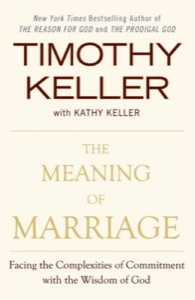
The Meaning of Marriage

Today I want to highlight a video webcast on Tim and Kathy Keller’s new book The Meaning of Marriage. In this book and webcast, Tim and Kathy tackle the preconceived notions people in our culture have about marriage setting those next to the Christian view of marriage, in order to provide today’s singles and married couples with the correct view of marriage. The book is excellent, as well as this video webcast. Check it out by clicking the code below, when you do another window will open with the full size video in it.

http://cdn.livestream.com/embed/penguinbooks?layout=4&clip=pla_dcb3291d-403b-419b-b9b7-fa5e56579dd2&height=340&width=560&autoplay=false

Watch live streaming video from penguinbooks at livestream.com

Who is Responsible for Religious Liberty In America?

Just recently in my Baptist Heritage class, I learned an interesting fact regarding who was responsible for religious liberty in America. Specifically, who was responsible for the establishment of the Bill of Rights and a separation of church and state. Here is what one author has to say:

In tracing the emergence of religious liberty in America, Joseph Dawson concluded, “If the researchers of the world were to be asked who was most responsible for the American guarantee for religious liberty, their prompt reply would be ‘James Madison.'” However, Dawson continued, “If James Madison might answer, he would as quickly reply, ‘John Leland and the Baptists.'” If that sounds too partisan, overlooking the role of other denominations, it does focus upon Baptists’ great contribution in winning religious liberty in America. Baptists provided many of the ideas undergirding religious liberty, and they spearheaded the public agitation which led to the Bill of Rights [1].

Without my Baptist Heritage class, I would have never known that Baptists were intimately tied to the fight for the Bill of Rights. I am grateful for their work as well as the sacrifice and persecution those men faced in working toward Religious Liberty in America.

Resource

[1] Leon McBeth, The Baptist Heritage, 283.