Faithfully Preach the Text

I was sent the following quote as an encouragement this week. It is by John Broadus, who was the President of Southern Seminary from 1889 to 1895. Read what he has to say regarding our faithfulness in preaching the text:

It is so easy and pleasant for men of fertile fancy to break away from laborious study of phraseology and connection, to cease plodding along the rough and homely paths of earth, and sport, free and rejoicing, in the open heaven; the people are so charmed by ingenious novelties, so carried away with imaginative flights, so delighted to find everywhere types of Christ and likenesses to the spiritual life; it is so common to think that whatever kindles the imagination and touches the heart must be good preaching, and so easy to insist that the doctrines of the sermon are in themselves true and Scriptural, though they be not actually taught in the text, – that preachers often lose sight of their fundamental and inexcusable error, of saying that a passage of God’s Word means what it does not mean. So independent too one may feel; so original he may think himself. Commentaries, he can sneer at them all; other preachers, he has little need of comparing views with them. No need of anything but the resources of his own imagination, for such preaching is too often only building castles in the air.

Resource

Quote originally published at For Christ and Culture

Prayer: Assurance, Questions, and a Right Perspective

In 1 John 3:21-22, John tells us that those who are confident before God have their prayers answered. Confidence comes to those who have examined themselves with the test of love John provides in 1 Jn 3:16-19. After examining themselves they have found that they are able to persuade their hearts that they are God’s children because they see evidences of biblical love present in their lives. As a result, they can and should go boldly before God in prayer, knowing they will receive what they ask of God because they keep His commandments and do what is pleasing before Him. John writes,

Beloved, if our heart does not condemn us, we have confidence before God; and whatever we ask we receive from him, because we keep his commandments and do what pleases him.
(1 John 3:21-22 ESV)

God is Not Our Cosmic Genie in the Sky

With these verses, John is not turning God into a Cosmic Genie and supporting a Health Wealth Gospel, which is evident because after telling us God answers our prayers, he provides the reason our prayers are answered at the end of verse 22.

What is the Basis for Answered Prayer?

The basis for answered prayer is two-fold and requires we:

(1) Keep God’s commandments

(2) Do what is pleasing to Him

When a person keeps God’s commandments and does what is pleasing to Him, they show they are a true believer. True believers will pray according to God’s will because His will has become their will.

In addition to seeking God’s will, when John tells us that answered prayer comes to those who do things that are pleasing to God, it includes things we ask for in our prayers. This means believers would not ask God to make them into a millionaire, give them a new car because it makes them look cool, or ask God to cause a jury to acquit them, when they are guilty of their crime. These things are not done in obedience to God’s commandments, nor are they done to please God; rather, they are done to please oneself.

So, those who desire to obey God’s commandments and do those things which please Him, will have their prayers answered because their prayers will be inline with God’s commandments and with what pleases Him.

When God Does Not Answer Prayer

In talking about answered prayer, the question usually arises: What about those times when we are confident before God, coming boldly to the throne room of prayer, obeying His commandments and seeking to do those things that please Him, as well as we are praying according to God’s will, but our prayer is seemingly not answered right away, why does this occur?

In other words, what are we to think when God does not seemingly answer our prayers?

Charles Spurgeon, one of the greatest preachers of all time, when faced with this question gives this counsel:

If you have been knocking at the gate of mercy and have received no answer, shall I tell you why the mighty Maker has not opened the door and let you in? Our Father has reasons peculiar to himself for keeping us waiting. Sometimes it is to show His power and His sovereignty, that men may know that Jehovah has a right to give or to withhold. More frequently the delay is for our profit.

You are perhaps kept waiting in order that your desires may be more fervent. God knows that delay will quicken and increase desire, and that if He keeps you waiting, you will see your necessity more clearly, and will seek more earnestly; and that you will prize the mercy all the more for its long tarrying. There may also be something wrong in you that has need to be removed, before the joy of the Lord is given. Perhaps your views of the gospel plan are confused, or you may be placing some little reliance on yourself, instead of trusting simply and entirely in the Lord Jesus. Or, God makes you tarry awhile that He may the more fully display the riches of His grace to you at last.

Your prayers are all filed in Heaven, and if not immediately answered; they are certainly not forgotten, but in a little while shall be fulfilled to your delight and satisfaction. Let not despair make you silent, but continue instant in earnest supplication [1].

In another place He also says,

Still remember that prayer is always to be offered in submission to God’s will; that when we say that God hears prayer, we do not intend that He always gives us literally what we ask for. We do mean, however, that He gives us what is best for us. If He does not give us the mercy we ask for in silver, He bestows it upon us in gold. If he does not take away the thorn in the flesh, He says, “My grace is sufficient for thee, and that comes to the same in the end [2].

So, if it seems that God does not answer our prayer, there are a number of reasons for that, but we always are to pray that God’s will be done and rest in that.

Conclusion

In these verses, John seeks to assure believers who are confident before God, obey His commandments, and do what is pleasing to Him, that God will answer their prayers, even if it does not seem like He does. As a result, we are to come boldly before God in prayer, lifting our requests up to Him. After which, we are to remain confident He has heard us, and we are to know that He will answer in due time and in the way He sees fit, if He has not answered already.

So then, may we all examine ourselves to see if we are true believers. If we are true believers, may we all go boldly to God this week in our time of prayer, knowing the Lord hears us and will answer us in due time.

Resources

[1] Spurgeon on Prayer: How to converse with God, compiled and edited by Harold J. Chadwick, 59-60.

[2] Spurgeon on Prayer: How to converse with God, compiled and edited by Harold J. Chadwick, 304.

Image

The Sanctifying Work of the Holy Spirit | Part 2

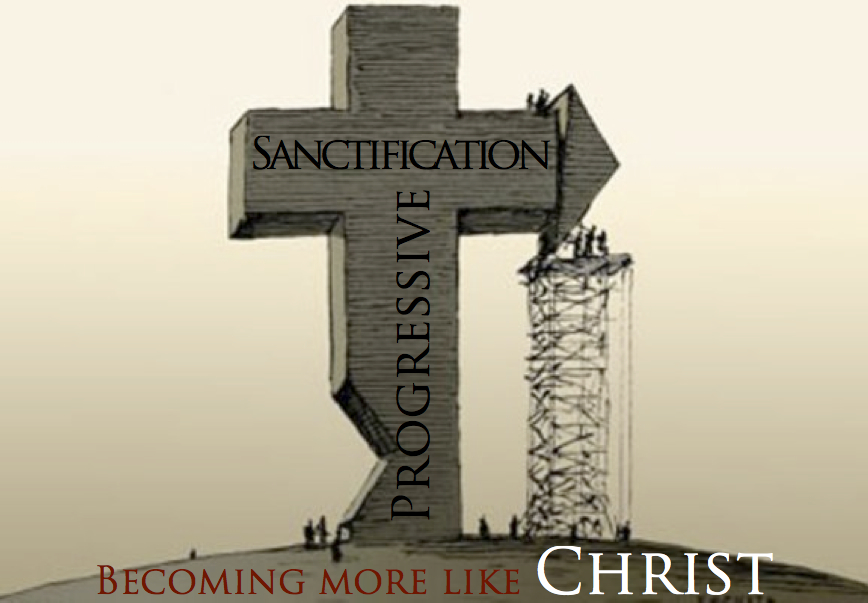
In my last post in this series, I defined sanctification and talked about the objective moment when we are set apart as God’s children. In this post, I want to introduce the concept of Progressive Sanctification.

Progressive Sanctification: A Definition

Progressive Sanctification is defined as the ongoing work of the Holy Spirit in our lives to reveal our sin, in order to remove it, so that we continue to become more and more free from sin and like Christ in our daily lives. It differs from Definitive Sanctification in that it is a continual process, whereas Definitive Sanctification is an objective point in time-space history where we are set apart as Children of God.

A Process that is Never Complete

The process of Progressive Sanctification continues until our death at which time we receive our glorified bodies and finally become like Christ (1 John 3:2). Since Progressive Sanctification is never complete, we will never be without sin before Christ’s return because we live in a sinful body, and our flesh continually wars against our spirit (1 Kings 8:46; Prov. 20:9; Eccl. 7:20; Matt 6:11-12; Rom. 6:12-14; 7:13-25; James 3:2; 1 Jn 1:8).

Instead of reaching a state of perfection, we will continue to grow in Christ’s likeness as the Holy Spirit works in our lives. This does not mean we are to give up, throw our hands up in the air and say, “What is the point of all this then, if we will never be perfectly like Jesus this side of the grave.” Our lack of perfection does not mean we should despair or continue in sin.

We Should Not Despair

In Romans 8:15-16 Paul says,

For you did not receive the spirit of slavery to fall back into fear, but you have received the Spirit of adoption as sons, by whom we cry, “Abba! Father!” The Spirit himself bears witness with our spirit that we are children of God, and if children, then heirs—heirs of God and fellow heirs with Christ, provided we suffer with him in order that we may also be glorified with him.

We should not despair if we do not attain to perfection in this life. The Holy Spirit bears witness to our salvation and adoption as sons. We are not to be racked with guilt over our sin, nor are we to listen to the accusations of Satan that a child of God need be perfect. When we see change occurring in our lives, we can be sure the Holy Spirit is the one working to bring about that change, which proves we are God’s children.

We Should Not Continue To Sin

In Romans 6:1-7 Paul says,

What shall we say then? Are we to continue in sin that grace may abound? By no means! How can we who died to sin still live in it? Do you not know that all of us who have been baptized into Christ Jesus were baptized into his death? We were buried therefore with him by baptism into death, in order that, just as Christ was raised from the dead by the glory of the Father, we too might walk in newness of life.

For if we have been united with him in a death like his, we shall certainly be united with him in a resurrection like his. We know that our old self was crucified with him in order that the body of sin might be brought to nothing, so that we would no longer be enslaved to sin. For one who has died has been set free from sin.

God in His grace saves us from eternal damnation through the death, burial, and resurrection of Jesus Christ. When we believe in Jesus as our Lord and Savior, we are united with Him in His death and resurrection, so that His death and His resurrection become our death and our resurrection.

When we are united with Jesus, we are released from the bondage of sin and are free to worship and glorify God in our bodies. We no longer have to follow our former master Satan. The enslavement we once knew has been broken, and we are not to continue as we lived formerly when we were in bondage to Satan and his rule. In other words, we are not to continue to sin because we have been set free from a life of sin through our relationship with Jesus Christ, as well as we are not to presume upon the grace of God.

Conclusion

So we see the the process of Sanctification is also Progressive, in that it continues throughout our entire lives. As the Holy Spirit works in our life to convict us of sin, we grow more and more like Jesus in our daily lives.

We also saw Progressive Sanctification is a process that is never complete. We will never be perfect in this life because of our sinful bodies. Even so, we are not to despair because the Holy Spirit’s work in our lives testifies to our salvation and adoption as sons of God. In addition, we are not to continue to sin presuming upon God’s grace, nor are we to continue to sin because we have been freed from the bondage of sin to a life that is able to live as our Savior Jesus Christ.

Looking Forward

In my next post in this series, I will talk about how the Holy Spirit works in our lives to bring about change Monergistically (by Himself).

Resources

Jerry Bridges, The Transforming Power of the Gospel, Ch. 8

Wayne Grudem, Systematic Theology, Ch. 38.

The Underestimated Gospel

In Romans 1:16-17 we read,

For I am not ashamed of the gospel, for it is the power of God for salvation to everyone who believes, to the Jew first and also to the Greek. For in it the righteousness of God is revealed from faith for faith, as it is written, “The righteous shall live by faith.”

Here we learn that the gospel is the power of God for salvation to everyone who believes. But do we really believe the gospel has the power to save everyone? Thabiti Anyabwile, one of the speakers at the T4G conference challenged us to believe the gospel has the power to save everyone. He spoke on 1 Timothy 1:12-17 and the title of his talk was: Will your gospel transform a terrorist?

In 1 Timothy 1:12-17 Paul is discussing who he was before his conversion to Christianity. As you know Paul heavily persecuted the church. In this text, he lists himself as the chief of all sinners. Even so, Christ saved him. He received God’s grace and mercy despite his persecution of the church.

The Underestimated Gospel

Often I think we, myself included, believe the gospel cannot save those who are that far gone. We do not really believe our gospel will transform a terrorist. The reason we believe that is because we underestimate the power of the gospel, which was the theme of the conference I attended.

The purpose of the conference was to show that the power of the gospel is not to be underestimated. It can, will, and does change those who we may believe are unchangeable. In order to show this, we heard a number of sermons, as well as testimonies about the power of the gospel. Some of these testimonies came from people who grew up in Christian homes, but others were from people who were power hungry, selfish, and only seeking to make a name for themselves. While others gave testimony that the gospel saved them from gang life, alcohol, and drugs.

The Articulated Gospel

Not only did we learn that the gospel has the power to save everyone, and that we should not underestimate its power to bring about change in a person’s life, we also learned that we must articulate the gospel to others. In other words, we must actually tell it to others.

And so, if we believe the gospel has the power to save even the worst of the worst, if we believe the gospel has the power to save a terrorist, then we must articulate it’s message to everyone in society. Never thinking that someone is too far gone, because when we start to think like that, we are underestimating the power of the gospel.

My Challenge

I want to challenge you, just as I have been challenged this week, to not underestimate the power of the gospel to save everyone. As well as I want to challenge you to articulate its message to all you come in contact with. For it is a message that took Paul from a hardened persecutor of the church, to its greatest advocate. May it do the same in someone’s life we take the time to tell this good news to. Don’t underestimate the power of the gospel!

For He Has Risen, as He Said!

Tomorrow is Easter Sunday. The day we will celebrate the Resurrection of our Lord and Savior Jesus Christ. This Easter I have the privilege of preaching on the resurrection at Sycamore Baptist Church, where I am now the Lead Pastor. I will be preaching over Matthew’s account of the resurrection. In that account, the angel of the Lord tells the two Mary’s who come to the tomb:

“Do not be afraid, for I know that you seek Jesus who was crucified. He is not here, for He has risen, as He said. Come, see the place where He lay.”

Their dialogue tells us that Jesus knew about His crucifixion and resurrection. It was not a mystery, nor was it plan B.

Jesus’ Announcements of His Resurrection

Jesus actually announced His resurrection several times during His ministry:
  • In Matthew 12:40, He compares Himself to Jonah saying that as Jonah was in the belly of the fish three days, I will be in the grave three days.
  • In Matthew 16:21, we learn that “Jesus began to show His disciples that He must go to Jerusalem and suffer many things from the elders and chief priests and scribes, and be killed, and on the third day be raised.”
  • In Matthew 17:23, 20:19, and 26:32, Jesus again foretells His death, and in Matthew 26:32 He even tells His disciples where He would go after His resurrection, which is Galilee.

What does this tell us?

It tells us that Jesus’ resurrection was not unplanned, nor unknown. In fact, His death, burial, and resurrection was and always has been apart of God’s sovereign plan. God knew Adam and Eve would sin in the garden, even before the foundation of the earth since Ephesians 1:3-4 tells us that we are chosen (predestined/elected) before the foundation of the earth to be blessed in Christ. In other words, we are chosen before the earth even began to be saved from our sins through the death, burial, and resurrection of Jesus Christ.

So we learn that Jesus’ death, burial, and resurrection were apart of God’s plan from the beginning and Jesus knew this plan and shared it with His disciples.

What does Jesus’ death and resurrection accomplish?

His death and resurrection accomplishes salvation for all those who repent of their sins and confess that Jesus Christ is Lord and Savior.

Through His death He paid the price for our sins, taking on the wrath of God, and dying the death we deserved, so that all those who believe in Him would be reconciled to God and could experience eternal life.

His resurrection proves all He said was true. In the resurrection, God places His stamp of approval on all of Jesus’ claims to be the Messiah, the Savior, the Chosen one, as well as His cross work, which means that His death really does cover our sins. His death really does reconcile our relationship to God. His death really does provide us with eternal life. We should recognize that and worship Him.

Conclusion

So this Easter, do not forget the resurrection. Amidst all the fun with friends and family hunting Easter eggs, cooking out, and dressing in your Sunday best, do not forget that this day was planned from before the earth began. Do not forget that this day Jesus our Lord and Savior was resurrected from the grave. Do not forget that this day all that Jesus said about Himself was confirmed, when His hand began to twitch in the grave and life was breathed back into His crucified body. Do not forget to worship the Lord, FOR HE HAS RISEN, AS HE SAID!


The Sanctifying Work of the Holy Spirit | Part 1

As Christian, we are set apart by God to glorify Him in our bodies (1 Cor. 6:19-20). The way we glorify God in our bodies is to become more like His Son, Jesus Christ. The way we become more like His Son is through the transforming work of the Holy Spirit in our lives, which is known as Sanctification. In my next series of posts I want to explore the sanctifying work of the Holy Spirit.

Sanctification: A Definition

When I talk about sanctification, I simply mean the process by which we are set apart unto God for His use. There are two types of sanctification. The first is Definitive Sanctification, and the second is Progressive Sanctification. We will discuss Definitive Sanctification today, and leave it to my next post to discuss Progressive Sanctification.

Definitive Sanctification

Definitive Sanctification can be defined by saying our belief in the gospel occurs at a definitive moment in space time history through the work of the Holy Spirit in our lives. He is the one who first sets us apart by opening our hearts to the gospel message, allowing us to understand it, and believe in it as our only hope of salvation (2 Thess. 2:13-14; 1 Peter 1:1-2; Jn 3:5-8; Titus 3:5).

Without an objective moment in time occurring where we are set apart through the work of the Holy Spirit in our lives, we would not be able to begin to be more like Christ because we would be in bondage to our sin, as well as we would be spiritually dead (Eph. 2:1-5; Col. 2:13-14). In Christ, we are made alive, we are a new creation (2 Cor. 5:17). As those who have been made alive by the work of the Holy Spirit, we can begin to become more like Christ, but not before we are raised from the dead in Christ through the work of the Holy Spirit.

This means that we are only able to become more like Christ after we have been set apart by the work of the Holy Spirit. The gospel does not tell us that we have to first clean ourselves up before we come to Christ. It tells us that the only way we can believe in Christ is if we are made alive by the work of the Holy Spirit in our lives.

Application

Believing the Holy Spirit is the one who awakens dead sinners hearts has radical implications in regards to our evangelism and preaching. By understanding it is the work of the Holy Spirit who awakens a sinners dead heart, we can say several things:

(1) We are freed from the pressure of feeling like we must close the deal every time talk with someone about Christ.

Rather than feeling like we cannot share the gospel with someone until we have our presentation fine tuned, we can share what we know, in the way that works best for us, trusting the Holy Spirit is the one who will close the deal by awakening their heart. No matter how good of a presentation we may give, or how persuasive of a closing argument we have, people will not believe the gospel unless the Holy Spirit has awakened them to it.

From experience you know this is true. Have you ever spent hours on end pleading and showing someone the truth of the gospel only to have them reject it? You answered all their questions, your presentation was solid, you provided them with example after example of how the gospel has changed your life and how you have more joy in Christ than you ever thought possible, but they still do not believe, they still are not ready to commit their lives to Christ. Why you ask? Because the Holy Spirit has not awakened them to the reality of the gospel.

So then, instead of trying to find the next best way to close the deal, be real with people. Share your heart and trust the Holy Spirit will use what you say, no matter how inadequate you believe it to be, to awaken their hearts to the gospel.

(2) We are freed from the belief that people’s blood is on our hands if we do not tell them about the gospel.

In saying this I do not mean to say that we should not seek to tell everyone we meet about the gospel. Rather, I mean that we have a different motivation for presenting the gospel to them. Our motivation is not out of guilt or fear, but out of gratitude for what God has done for us and love for that person. When we tell others about the gospel, we should not tell them the gospel simply to make ourselves feel better, we should present the gospel to them because we want them to experience the same joy, love, and freedom from sin that we experience in Christ as a new creation.

(3) We are freed from manufacturing a worship service that plays on people’s feelings and emotions. 

Rather than manufacturing feelings in people, we are to clearly and boldly explain the gospel message, believing the Holy Spirit will use the Word of God to awaken ones heart to believe in Jesus as their Lord and Savior.

Looking Forward

In my next post in this series, I will introduce and define the concept of Progressive Sanctification.

Resources

Jerry Bridges, The Transforming Power of the Gospel, Ch. 8