How Do You Know You Are Apart of Jesus’ Family

Church Family

Who is apart of your family? That’s easy, it’s either those born into the family, those adopted, or those who married in. If they weren’t born or married in, or if they weren’t adopted, they aren’t apart of your family.

Jesus’ criteria for being apart of His family is different. You can’t be born in and you can’t marry in. But you can be adopted. The only way to be adopted is to believe in Jesus as your Lord and Savior.

How do we know who are apart of Jesus’ family? Anyone can say they are apart of the family. How can we know for sure they, or we, are in?

Who Are Apart of Jesus’ Family?

In Matthew 12, Jesus tells us who are apart of His family. Starting in verse 46 Jesus says,

While he was still speaking to the people, behold, his mother and his brothers stood outside, asking to speak to him. But he replied to the man who told him, “Who is my mother, and who are my brothers?” And stretching out his hand toward his disciples, he said, “Here are my mother and my brothers! For whoever does the will of my Father in heaven is my brother and sister and mother.” (Matthew 12:46-50, ESV)

Jesus is explicit. Those who do the will of the Father are apart of His family. In other words, those who desire to live according to God’s Word are apart of His family, and those who don’t, aren’t apart of the family.

Jesus’ family members desire and live according to the Father’s will.

An Important Point

Jesus’ criteria is an important concept to grasp. There are many who claim to be Christians. Who claim to know God. Who claim that Jesus is their Savior. These same people, however, don’t desire, or do, the will of the Father. They don’t live according to God’s Word, which means they are not apart of Jesus’ family.

Jesus is explicit. If you don’t do the Father’s will, you aren’t apart of His family. If you don’t submit to God and allow Him to call the shots in your life, you aren’t apart of His family. If you don’t live according to God’s Word, you aren’t apart of His family.

You might be religious. You might be spiritual. You might be a good person. You might come to church every week. You might rub elbows with Christians. You might help everyone in your neighborhood. But if you don’t do the Father’s will, you aren’t apart of Jesus’ family.

Questions for Reflection

  1. Do you search God’s Word to determine His will?
  2. Do you desire to live in obedience to God’s Word?
  3. Do you allow God to be number one in your life?
  4. Do you allow God to direct your life?
  5. Do you seek to follow Jesus on a daily basis?

Resources

Image

Post adapted from my most recent sermon: Jesus’ Family Doesn’t Need A Sign

The Intentional Father

This last Friday night I went to The Real Men of Impact Men’s Rally at Travis Avenue Baptist. It was one part of the Equip Conference. Steve Stroope, Pastor of Lakepointe Church and co-author of Tribal Church, spoke from Deuteronomy 6:1-9. He challenged men to be the spiritual leader of their families.

Two Ends of the Spectrum

When you think about leading your family spiritually, two thoughts may come to mind. On the one hand, you may believe you are leading your family spiritually by making sure they are in church on Sunday and Wednesday and by leading them in a prayer before your meal.

On the other hand, you may believe you are only leading your family spiritually if you are having a devotional every night with them. While we probably need to do more than just take our families to church and lead them in a prayer before a meal, we all may not have the time to sit down every night and walk our families through a text of Scripture. This does not mean we do not shoot for that, or seek to make it a priority in our schedule. Spending time in the Word and praying with your family is necessary and important. However, if we can’t do that one day, it doesn’t mean we have failed, and we should throw in the towel. It is possible to lead our families spiritually as we go through our everyday routine. The way we do this is by being intentional.

The Intentional Father of Deuteronomy 6

In the midst of giving the Lord’s commands to the people of Israel, Moses writes:

And these words that I command you today shall be on your heart. You shall teach them diligently to your children, and shall talk of them when you sit in your house, and when you walk by the way, and when you lie down, and when you rise.” (Dt 6:6–7)

These two verses tell us how we can be the spiritual leaders of our houses. Notice that Moses tells the men first that these commandments are to be on their heart. That means they themselves must know them. Once they know them, they are to teach them to their children diligently. Notice when Moses says they are to teach their children: When they sit in their house, when they walk by the way, when they lie down at night, and when they rise in the morning.

Here is the connection point: We all sit around our house at night, take our kids to school, put them to bed, and make breakfast for them in the morning. It is during those everyday activities that we are to speak with our children about God’s Word. In order to do that, it will take us being intentional, but working to find ways to connect God’s Word to our everyday lives is worth the effort.

Questions for Reflection

  1. How do you lead your family to have a greater understanding of God’s Word?
  2. What are some ways you connect God’s Word to your everyday activities?
  3. Do you know God’s Word well enough that you can connect its teachings to your daily routine?

Resources

Image

What I Learned at Royal Ambassador’s Camp

I spent this last week at Camp Copus with four of our boys from church who are in the Royal Ambassadors Program. I had never been before, so I did not know what to expect, but what I learned was significant. Here are just a few things.

What I Learned at Camp

(1) We need godly men to train boys to be godly men

After attending camp all week. I noticed the heart of the RA program is for godly men to train boys to be godly men. There were many godly men at camp this last week, but more are needed. More are also needed in our churches.

While there are many godly women who participate in church activities, we need godly men who are willing to step up and train the future generation.

In short, we need godly men who are not only following the biblical mandate to train up their own children and grandchildren in the way of the Lord, but we need them to participate in our churches as well (Ephesians 5; Deut. 4:9-14).

(2) Scripture memory should be a regular diet in our churches and families

At camp they made a big push for the campers and counselors (that would be me) to obtain a power band. The way you get your power band is by memorizing and reciting the Romans Road (Rom. 3:23; 6:23; 5:8; 10:9-10; 10:13).

As I committed these verses to memory and helped my boys do the same, I saw first hand the value and importance of memorizing God’s Word. Not only because it is God’s Word, but because, when you do so, Scripture is always there with you. No matter what situation you are facing, you can quickly recall a verse that could help you. In the case of the Romans Road, you are always able to tell others how they might be saved, since it is the plan of salvation. So may we all be spurred on to regularly memorize Scripture.

(3) You cannot talk about the gospel enough

At every service and every activity that we attended the gospel was presented. Not only was the plan of salvation presented, but how the gospel affects the way we live our everyday lives. You see the gospel is not the ABC’s of the Christian life. It is the A to Z. Everything stems from the gospel. Since this is true, we cannot talk about the gospel enough.

(4) Children can understand deep theological concepts

After a day of hearing different aspects of the gospel, the boys and I gathered each night for a devotional. As I led them in a devotional every night, I soon realized they were really wrestling with deep theological concepts. Even though they did not use these terms, they asked questions about God’s Fairness/Justice, God’s Love, Mercy and Grace, God’s Righteousness, Substitutionary Atonement, Heaven and Hell.

As I fielded their questions, I was both encouraged and shocked that they were thinking on such a deep level. Which leads me to believe we often forget that children can and do understand biblical concepts. As a result, we can go deep with them as long as we find a way to relate the concepts to their world.

(5) Churches need to invest in their children’s theological education

While most churches have a children’s program, these programs offer nothing more than man-centered principles for living a good life. We need to do better. We need to go deeper. We need to understand that our children can and do understand the gospel. They can and do understand theological concepts. They can and do wrestle with the same questions adults have.

As a result, we need to present these concepts to them in ways they can understand and let them wrestle with it. As well as we need to make time to allow our children to ask us tough questions. When they do, we need to have a good response for them. So then, we need not only invest in their education, but ours as well, so we can answer the tough questions. But more importantly, we need not sell our children short.

Resources

Here are a few books and a Scripture memory tool that can help you to begin training your own children:

Training Your Child In Righteousness

Recently, I did a photo shoot for my brother and sister-n-law’s new baby girl, Taylor. She is a newborn right now, but will soon grow up like her big brother. I remember when their son, Taylor’s brother, was born two years ago. As we looked back over his baby pictures it was hard to believe he has grown so much in the last two years. He has progressed from being fully dependent on mom and dad for everything to being able to walk, talk, and play. It is during these formable years that parents need to start actively teaching their children about their sinful hearts and need of a Savior. In order to help parents in the shepherding process, I am recommending a book. It is Shepherding a Child’s Heart by Tedd Tripp.

Here is a brief summary of Tripp’s book:

Ted Tripp’s book is focused on the heart of the child, not just his behavior. He begins by explaining that children’s behavior stems from the condition of their heart. Using techniques only designed to modify behavior does not tackle the real problem (4). Non-believers will act like non-believers, and believers will act like believers, so simply modifying behavior does not turn an unbeliever into a believer (3). Since behavior modification does not change a child’s heart, Tripp explains that parents must not be satisfied to only get their children to obey; they must also “help [their] child ask the questions that will expose that attitude of the heart that has resulted in the wrong behavior” (5). By helping children see that their heart is the real problem, parents are able to show their children their need for a Savior (6), which is the main goal of parenting, not parental convenience (27). Parents must “not try to shape the lives of [their] children as pleases [them], but as please [H]im (28)

In order to help parents shape their child’s life in a way that pleases God, Tripp offers a plethora of advice. He begins by helping parents understand the outside influences that shape their child’s life (10-16), while at the same time explaining to parents that changing these influences alone will not produce a more godly child (16-25). Before continuing with the child’s heart, Tripp turns toward the parent, helping them better understand their task by informing them of their God given authority (26-38), and by calling them to examine and rework their parenting goals (39-57). Tripp also takes the time to point out unbiblical parenting methods, such as pop psychology and emotionalism to name a few, and help parents evaluate the use of these methods from a biblical standpoint (58-69). Tripp then walks parents through biblical methods of parenting, explaining the importance and how to of communication, discipline, and appealing to the conscience (70-121). He shows parents how to shepherd through each stage of childhood by alternating between training objectives and procedures (127-210).

Conclusion

If you are looking for a book that seeks to address the condition of your child’s heart, then Tripp’s book is for you. His reasoning and methods are thoroughly grounded in Scripture. And he does a fantastic job teaching parents that behavior modification is not the ultimate goal. Rather, a changed heart through the saving and sanctifying power of the Gospel is the main goal parents should be working to achieve. I would recommend Tripp’s book to any parent seeking to learn how to shepherd their child from a biblical standpoint, which should be each and every parent.

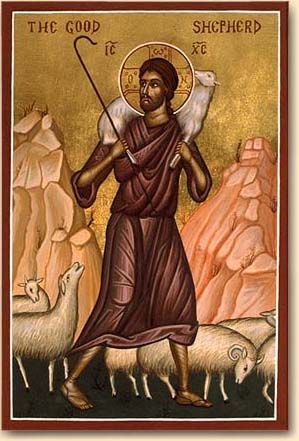
The Good Shepherd: Teaching us how to shepherd our family

Just last year, God blessed my brother and sister-n-law with a new addition to their family. Taylor came into the world weighing in at  7.1 lbs. This new addition to their family of three has been a joyous time, yet it comes with great responsibility. Not only are they to care for their children’s physical needs, but they are also to attend to their families spiritual development.

Specifically, the husband is to shepherd his family. Whether the family consists of the husband and wife, or a family of four, men are called to be the pastor’s of their household. Our local pastor is not the only one called to shepherd the flock. We are called to this task as well.

Jesus is our example and as Christians we are to walk as He walked (1 John 2:6), imitating Him (Eph. 5:1, 1 Cor. 11:1) in all things. Since He is our example, it is only right that we should look to Him for the “how to” of shepherding.

Here are a few guiding principles to get you started:

(1) We must know those we shepherd.

John 10:14 tells us Jesus is the Good Shepherd and He knows His own and His own know Him. In order to shepherd our families well, we must spend time getting to know them. This means turning off the t.v. during dinner and engaging your family in conversation.

(2) We must lead by example.

Jesus taught His disciples to pray by example (Matt 6:5-15). He showed them how to serve one another by example (John 13:3-5), and He also taught His disciples how to minister to others by example (Luke 8:1-9:6). As leaders of our household, we must do the same, which necessitates that we know how to pray, how to serve others, and how to minister to friends and family.

(3) We must protect our families from both physical and spiritual danger.

Jesus tells us that the Good Shepherd is willing to lay down His life for His sheep (John 10:11-13). He lays down His life because He cares for them. And in caring for them, He protects them from both physical and spiritual harm. In order to protect our families from spiritual danger, we must know what they are watching, reading, and who they are friends with. We must understand the culture in which we live, knowing how to combat cultural teachings with Scripture. This means we must not only have a deep understanding of our culture, but also of the Word of God.

(4) We must instruct our families.

Jesus intimately instructed His disciples during His earthly ministry, teaching them how to both read and understand the Word of God (Acts 1:3). We also must instruct our family in God’s Word, teaching them how to read it and understand it. This can be accomplished through a nightly family devotion, a weekly Bible study, or by talking about the sermon over lunch.

Conclusion

These four suggestions for better shepherding are not all that a shepherd does, but it is a good start. If we are committed to knowing our families better, leading by example, protecting them from both physical and spiritual danger, and instructing our families in the Word of God, we are on the right path to shepherding our families well.

Resource

The Exemplary Husband by Stuart Scott (117-130).