What is Salvation?

Salvation involves much more than being delivered from earthly ruin or loss. It involves deliverance from God’s Wrath and everlasting punishment.

Our Need

Deliverance is something we all need because we are all sinners who have rebelled against God. That’s our natural position because we are all born connected to Adam — the father of the human race. Adam’s rebellion against God — in what is known as the Fall of man — plunged this whole world into sin (1 Cor. 15:21). As a result, we deserve to be punished by God.

God’s Plan

God, however, had a plan to rescue and save us from punishment. His plan is Jesus. In 1 Corinthians 15:22, Paul says,

“For as in Adam all die, so also in Christ all shall be made alive.” (1 Cor. 15:22)

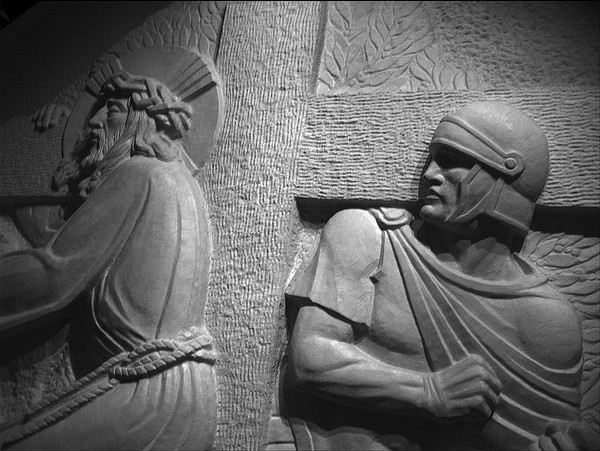
Jesus Christ came, lived a perfect life, and even though He wasn’t deserving of death or punishment, He died on a cross. As terrible a death as the cross was, that wasn’t the only punishment He faced. In fact, He faced a punishment much more horrifying — the wrath of the Father. The reason the Father’s wrath was poured out on Him was so He could pay the penalty for our sin.

Our Response

All those who believe Jesus paid the penalty for their sin that day on Calvary by dying the death and facing the punishment they deserve, and all those who admit they are a sinner, repent of their sin, and believe Jesus is their Lord and Savior, will be saved from God’s wrath, and they will experience eternal life with Christ. As well as they are called into God’s mission. He uses us as His instruments to make more disciples, which is simple amazing, because we were once God’s enemies, who were bound to face His wrath, but we are now drawn into His mission.

Question for Reflection

  1. Do you believe Jesus is your Savior?

Resources

Image

Post adapted from my sermon: Only in Christ are our deepest longings fulfilled

Why Aren’t Christians Growing?

Why aren’t Christians growing? More specifically, why do Christians become stagnant in Christ-like growth?

What Occurs in Salvation?

If we think about some of what occurs in salvation, this question becomes even more urgent. When we come to Christ, we are:

  • Delivered from the domain of darkness and transferred to the kingdom of Christ, releasing us from bondage to sin and Satan (Col. 1:13; Rom. 6:5-7).
  • Redeemed from God’s wrath and forgiven our sin, restoring our relationship with God (Col. 1:14).
  • Given the Holy Spirit (Eph. 1:13; Rom. 8:9-11).
  • Made a new Creation (2 Cor. 5:17).
  • Given a new desire for the things of God (Rom. 7:22).

If these things, and more, occur in salvation, how can we be stagnant in Christ-like growth?

How is it Possible to be Stagnant in Christ-like Growth?

Paul addresses this issue with the Corinthians in 1 Corinthians 3, when he says starting in verse 1,

But I, brothers, could not address you as spiritual people, but as people of the flesh, as infants in Christ. I fed you with milk, not solid food, for you were not ready for it. And even now you are not yet ready, for you are still of the flesh (1 Cor. 3:1-3a).

The reason they had not grown. The reason Paul wasn’t able to feed them solid food, even after some time, was due to their source of wisdom.

Prior to penning the opening verses of chapter 3, Paul spends the better part of two chapters expounding the difference between the world’s wisdom and God’s wisdom. Paul ends chapter 2, by telling us the natural person is not able to understand the wisdom of God; therefore, they believe it is foolish. On the other hand, Paul tells us, the wisdom of God is understandable to the Christian, and it is prized instead of rejected.

Why are Christians able to understand God’s wisdom, when the world can’t? Christians are able to understand and prize the wisdom of God because they have the mind of Christ. They possess His mindset, which leads them to see God not as a foolish old man in the sky, but as a wise Father who is to be worshipped, sought, led and governed by.

The Ability Isn’t Used

But while the Corinthians have the ability to understand the wisdom of God, they are not seeking it, nor are they living by it. That is the reason they aren’t growing. They aren’t looking to God for wisdom, even though they are able; they are, instead, looking at the world, allowing its wisdom to direct and guide them.

We Do the Same

The Corinthians aren’t the only ones guilty of leaving their God-given ability on the table. We do the same. I believe that is because we often forget the pervasive nature of the world’s wisdom. We forget that the world’s wisdom is there confronting and influencing us every time we turn on the radio, television, and computer. It is there when we open the newspaper and magazine. It is there wherever we go. Since the world’s wisdom is all around us, influencing us in ways we may not readily be aware, we naively believe that that’s just how things are supposed to be done.

We Must Fight With a Christian Worldview

We, however, must fight the tendency to go along with the status quo of society, thinking that is the way we must do things. We must instead turn to God’s Word, to His wisdom, as often as we can, in order to develop a distinctly Christian worldview. One that allows us to judge the world’s advice, thoughts, and judgments with Scripture. One that causes us to look to God’s Word for advice, instead of the latest New York Times best seller. One that causes us to seek Christian counsel, instead of asking our non-Christian co-worker what therapist, pill, or self-help guru pulled them through their latest crisis. If we do that – if we turn to God’s Word and use our God-given ability to discern and understand His wisdom, we would see more Christ-like growth in our lives.

So why do Christians remain stagnant in their growth in Christ-likeness, in their ability to understand the deep things of God’s Word? Because we consistently seek and live by the world’s wisdom, rather than God’s wisdom.

Question for Reflection

  1. Whose wisdom do you often turn to in times of need?

Resource

Image

10 Ways to Get More Out of Your Daily Devotions

Every Wednesday, our church hosts a prayer meeting and Bible Study. During the Bible study portion, I usually throw out a question for discussion. This week the question had to do with our daily devotionals. Here is what we came up with as a group.

10 Ways to Get More Out of Your Daily Devotions

(1) Do Them – This should be a no brainer, but it is worth stating. If we want to get anything out of Scripture, we have to actually read it.

(2) Read Out Loud – Instead of reading the text silently, read it out loud. For this one, you may want to stick to your home, car, or office, instead of the local coffee shop.

(3) Association – Find a way to associate the text to an experience you have had in the past, or something you are going through right now.

(4) Use an Understandable Version – Let’s face it, some versions of the Bible – I am looking at you KJV – are difficult to understand. Old English is called Old English for a reason. Instead of trying to plod through a version from yesteryear, find a good modern translation you can actually understand. I recommend the ESV. It is literal, yet fluid enough to sit down and read.

(5) Pray for Understanding – Before you read, pray the Lord would open the text up to you.

(6) Pray the Text – After you read, pray through the text. Praying the text isn’t rocket science. Start with the first verse you read and pray whatever comes to mind. When you have milked that verse dry, move on to the next, and then the next, until you have prayed all the verses you read. If you want further ideas and reasons why praying the text is helpful, Donald Whitney has written an excellent book Praying the Biblewhich I highly recommend.

(7) Meditate on the Text – If all you do is read a chapter, close your Bible, and go about your day, chances are you aren’t going to remember much of what you read, which means you probably aren’t going to apply much of what you have read to your life. In comes meditation. By meditation, I don’t mean sitting with your legs crossed, arms out, palms up, trying to clear your mind. I have in mind just the opposite. Instead of trying to clear your mind, you should fill your mind with the text. There are several ways to do that:

  • Think through the key words in the text.
  • Write out the text.
  • Journal the text.
  • Memorize a key verse(s).
  • Visualize the text by drawing it (probably more for you artsy types).
  • Think of how the text applies to your life, your family, or your community.
  • Formulate the main idea of the text. Think about what the text is telling you is true, and then ask what you should do, think, or believe based on that truth.
  • Ask yourself how the text points to Jesus.

(8) Listen to the Text – Listening to a professional reader read the text is a great way to help it come alive. Plus, different mediums help you discover things you may not have discovered in the past. There are a several apps that help with this; check your OS’s app store.

(9) Study the Text – Grab a commentary, study Bible, or devotional magazine, like Table Talk, and start diving deeper into the text.

(10) Study in a Group – Studying together is a great way to get more out of your daily devotions. I am in a study group that meets every Friday morning. It has been a blessing to me. As we have worked our way through several books of the Bible, I have discovered things about God’s Word that I would not have on my own. If you aren’t already, I highly encourage you to join a study group.

Question for Reflection

  1. What do you do to get more out of your daily devotions?

Resource

Image

If Paul has not arrived…

If Paul has not arrived, then neither have we. The apostle Paul, arguable the greatest Christian to walk on the face of this earth, tells us in Philippians 3:11-16 that he has not arrived. He has not attained the prize. He is still running the race and pressing forward. He says,

that by any means possible I may attain the resurrection from the dead. Not that I have already obtained this or am already perfect, but I press on to make it my own, because Christ Jesus has made me his own. Brothers, I do not consider that I have made it my own. But one thing I do: forgetting what lies behind and straining forward to what lies ahead, I press on toward the goal for the prize of the upward call of God in Christ Jesus. Let those of us who are mature think this way, and if in anything you think otherwise, God will reveal that also to you. Only let us hold true to what we have attained.”

Why does Paul not believe he has attained the prize?

Paul has not attained the prize because he is not yet in heaven with his Savior. Nor has he received his glorified body at the second resurrection. Since he is neither in heaven, nor clothed in his resurrected body, he has not yet finished the race.

Paul believes only those who persevere in the Christian life will be raised to be with Christ for all eternity.

A one time confession of faith is not enough for Paul. Yes, he believes the phrase “once saved always saved.” But there is more to that phrase than most people want to include. Along with a confession of faith, there must be growth in Christlikeness and endurance until the end. A one time confession of faith. A trip down the aisle. A faith that has no growth will not do.

That is not to say we muster up Christlike character and endurance on our own. No, it is God who empowers us to live the Christian life and endure to the end (Phil. 2:13; 3:3). He is the One who predestines, saves, sanctifies, and glorifies (Rom. 8:29-30).

We still must endure

Even though God has promised that those who are His will be glorified, we still must endure. We cannot become complacent, prideful, and apathetic, thinking we have attained the prize, when we have not. This thought is what leads Paul to say,

that by any means possible I may attain the resurrection from the dead.” (Phil. 3:11)

An objection

Some of you may be thinking:

“Hold on a minute. Are you telling me that Paul, the greatest Christian to ever live, is not sure if he will be with Christ in heaven?”

Yes, in one sense I am saying that, because Paul is saying that. Paul believes he is saved and as one who is saved he believes he will endure to the end. However, since the end has not yet come, he holds this assurance in tension with what he knows of his own sinful heart and what he doesn’t know about the future. He will only know that he has “arrived” when he crosses the finish line at the end of his life.

You see, Paul knows those who have professed faith in Christ and lived like Christians, only to have walked off the track never to return and cross the finish line. You all know people like that as well. People you thought were solid Christians, who denounced their faith, lived the rest of their lives like atheists, and died, having never returned to the race. At one time, you may have thought they were a shoe in for the finish line, but it turns out they were not. Since they did not finish the race, they will not attain to the resurrection from the dead to eternal life when Christ returns.

Hope and a Challenge

For good measure, may I also add that those who never finish the race prove they were never in the race to begin with, even though they thought they were, because those who are in the race will finish the race.

While we know that those who are in the race will finish, we cannot become complacent, we cannot stop running, we cannot take our eye off the prize. If we lose focus, if we are attracted by the lures of the world, we may run off the track and never finish. We must keep pressing on, using every means possible to attain to the resurrection from the dead.

No matter if you have been a Christian for 1 day, 1 month, 1 year, 10 years, or 50 years, you have to keep pressing on. You have to keep running the race, using any means possible to attain to your prize, Jesus Christ.

Again, this does not mean we run in our own power. God is the One who is ultimately working in us to cause us to endure, changing our desires and empowering us through the Holy Spirit. Even so, we must still run.

So then, Christian, hope in Christ. Trust God will glorify those whom He has saved, but don’t become complacent and apathetic. Use any means necessarily by the power of God to attain to your prize. Keep running! Keep pushing! The finish line is in sight!

Questions

  1. How does Paul’s view of finishing the race change your view of salvation?
  2. Have you ever thought of the Christian life as a race that must be finished in order to attain Christ?
  3. Do you know that God is the one empowering you and causing you to endure in the race? How does knowing that change the way you run the race?

Resources

Image

How Should Christians React to the Same-Sex Marriage Decision?

Christian Community Occurs In and Through Jesus

Jesus Cross

Dietrich Bonhoeffer in Life Together, a book exploring Christian community, says,

“Christianity means community through Jesus and in Jesus.” 1

Bonhoeffer blends two concepts into one succinct sentence.

Bonhoeffer’s Two Concepts

(1) Only those who profess Jesus as their Lord and Savior experience Christian community. 

You can’t pay your way into Christian community. Only through Jesus’ payment on the cross and our subsequent salvation are we granted entrance.

In other words, only through a relationship with Jesus Christ are we able to experience Christian community.  That’s because Christian community isn’t a club or organization. It is a gathering of believers whose hearts have been changed by the gospel.

(2) Only those who are empowered by Jesus can live in Christian community.

We not only must experience the grace, love, mercy, peace and forgiveness of God before we can express it in community, but we must also be empowered by Jesus to live in Christian community in a way that honors Him.

Christian community is comprised of people from every walk of life, nationality, race, socioeconomic class, etc. It is a melting pot that is ignited and sustained by Jesus. Only through His empowering are we able to live together in a way that honors Him.

Conclusion

Bonhoeffer is right. Without Jesus there is no Christian community. We need Him to create it through His death on the cross. As well as we need Him to sustain it through His empowerment.

Christian community then, in Bonhoeffer’s words, does in fact occur “through Jesus and in Jesus.”

Questions for Reflection

  1. Do believe Christian community occurs in and through Jesus?
  2. How have you experienced Jesus bridging the gaps between you and others who are not like you?
  3. How have you experienced Jesus empowering you to live in Christian community?

Resources

Want to learn more? You should check out:

Image

_____________


  1. Dietrich Bonhoeffer, Life Together, 21.